Scott Aaronson and Cynthia Dwork warn: a new order tells the Census to protect privacy like it's 1975
A June directive orders the Census Bureau and BEA to drop modern disclosure methods and revert to 1970s coarsening and suppression — banning the 'noise infusion' that was slated for the 2030 count. The signatories say the old way protects no one.
Their demonstration is a brewery: five aggregated statistics about beer-related businesses form a solvable system of equations that recovers individual firms' employee counts, even after careful rounding. Coarsening, they argue, loses usefulness AND fails at privacy — the worst of both.
The thread added context and doubt. A Stanford CS voice noted 2020 was the first census to use differential privacy, that lawsuits question its constitutionality, and that citizenship status could be inferred by cross-referencing products. A practitioner just sighed that an interesting technology had gone political.
What DAO 216-26 orders, and why the signatories are alarmed

Scott Aaronson and Cynthia Dwork, with a group of computer scientists including John Abowd and Salil Vadhan, warn about DAO 216-26, a departmental directive issued June 4, 2026, ordering the Census Bureau and the Bureau of Economic Analysis to abandon modern disclosure-avoidance methods and revert to 1970s-era techniques — data coarsening and suppression — while banning "noise infusion," i.e. differential privacy. Their central claim is that this fails on both axes at once: coarsening data (rounding, aggregation) sacrifices statistical usefulness and still fails to protect anyone.
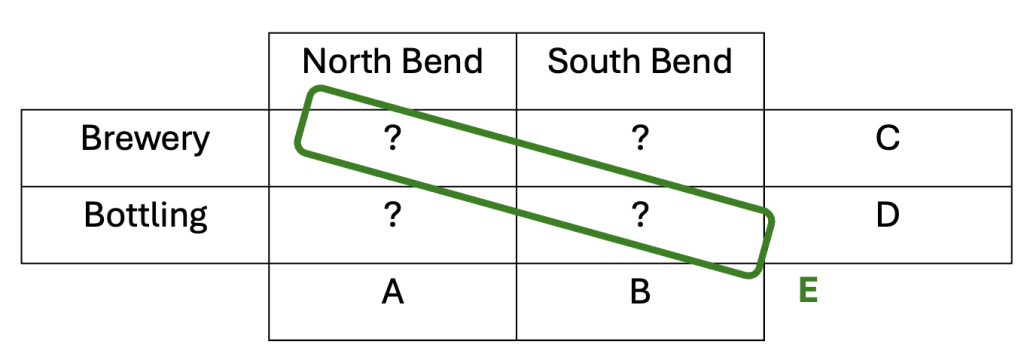
They prove the point with a small, concrete example: five aggregated statistics about beer-related businesses form a solvable system of equations that recovers individual companies' employee counts, despite good-faith coarsening. Differential privacy — first used in the 2020 Decennial Census and planned for 2030 — is, they argue, "the best currently known approach for obtaining the most data utility for any given level of privacy." They tie the directive to tension with the Census Act's confidentiality requirement (13 U.S.C. § 9) and to the possibility of inferring citizenship status, and they ask readers to contact Congress and archive disappearing documentation.
The thread added the history — and the doubt
A differential-privacy practitioner gave the weary insider's read:
"It's too bad this has become political. I do differential privacy work for GDPR compliance and it's an interesting technology." — an engineer doing differential-privacy work for GDPR compliance
A Stanford computer scientist supplied the contested backdrop the post mostly asserts:
"2020 was actually the first Decennial Census that used differential privacy… There are lawsuits about whether differential privacy is constitutional… There is also the possibility that citizenship status can be inferred by using multiple census products put together." — a computer scientist at Stanford
And a genuinely dissenting voice took aim at the call to action itself:
"calling your legislators is going to do precisely nothing… The true crisis here is in the captured political system… Thomas Massie has $35M+ spent against him in his primary, making it the most expensive in US history." — a commenter citing specific campaign-finance figures
Strip the politics and a strange technical fact remains: the "privacy-protecting" method the order mandates is the one that a handful of published aggregates can invert on the back of an envelope. The fight sounds like statistics arcana, but the thing actually at stake is whether the numbers the country runs on can be trusted to keep individuals out of them.
Get breakdowns like this every day
The top Hacker News stories, unpacked — by email, Telegram, or RSS.
'You can't find bugs by reading code.' A one-line post about code review split the experts
Mark Jason Dominus argued the primary purpose of code review is to find code that will be hard to maintain — not to find bugs, because 'it is not in general possible to find bugs by examining the code.' Then the thread discovered nobody agrees what review is even for.