Microsoft's carbon emissions jumped 25% in a year building AI data centres
Add Amazon and Google's cloud businesses and the three companies emitted 119 million tonnes of CO2 last year, a total the Guardian sized against a third of France's entire national output. Microsoft alone says the real figure would have been far higher without programmes it can't fully show its work on.
Google's emissions grew 18% on capital-goods spending for new capacity, and Amazon's cloud arm burned an estimated 78,000 gigawatt-hours in 2025, its largest jump on record.
In the thread, one reader flagged a live preview: Irish datacentres already draw 23% of the country's entire electricity supply, up from just 5% in 2015 - not alarming, another shrugged, since datacentres will simply "ride the transition to green energy for free."
119 million tonnes, and the country picked to make it legible
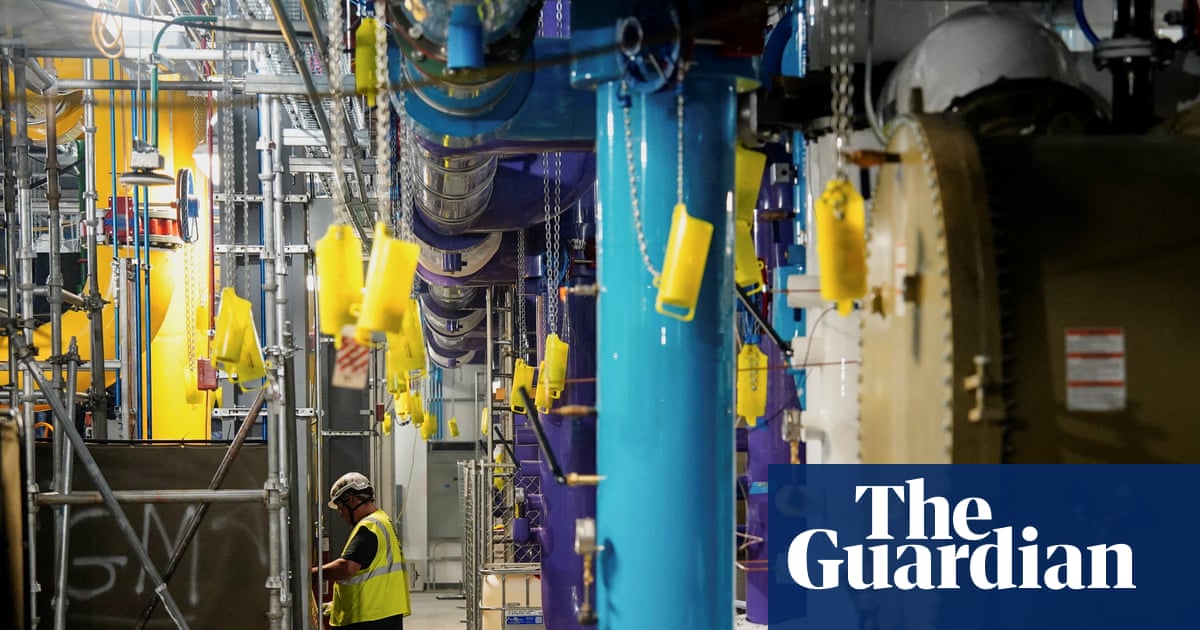
In the fiscal year through early 2026, Microsoft, Amazon and Google together reported 119 million tonnes of CO2 equivalent, up from 101 million tonnes the year before. The Guardian sized that total against France's entire national output: about a third. All three companies name the same cause: building and running the infrastructure behind AI.
Microsoft's own emissions rose 25% to 21 million tonnes, its steepest one-year climb since the pandemic. The company says the true number would have hit 34 million tonnes without its internal efficiency programmes, though it doesn't explain how that counterfactual was calculated. Google's emissions grew 18%, mostly booked as capital-goods spending, the servers, chips and buildings going into new capacity, about 9 million tonnes on their own. Amazon's total climbed 16%, its largest jump on record, with supply-chain emissions up 20%; outside estimates put Amazon's data-centre electricity draw at roughly 78,000 gigawatt-hours in 2025.
| Company | Latest figure | Year-over-year | What drove it |
|---|---|---|---|
| Microsoft | 21m tonnes CO2e | +25% | Datacentre build-out |
| ~9m tonnes (capital goods) | +18% | Supply chain / infrastructure spend | |
| Amazon | ~78,000 GWh (electricity, est.) | +16% (record) | Supply chain +20%, cloud power draw |
| Combined | 119m tonnes CO2e | up from 101m | ≈ a third of France's national emissions |
Cecilia Rikap, an economics professor at University College London, and Shaolei Ren, who studies AI's environmental footprint at UC Riverside, were the outside voices brought in to check the companies' math. Their read: the growth tracks the AI build-out too closely to be coincidence, and the savings the companies claim from efficiency work aren't something anyone outside the building can verify.
The thread isn't sure a country is the right yardstick
On Hacker News, the France comparison didn't land the way the headline intended.
"France relies heavily on automotive transport, plus it's a home to enormous agricultural sector... To a certain degree, structurally it resembles USA a lot." — a reader in the thread
The point: stacking a tech sector's emissions against a whole country's flatters neither side, because national totals bundle in cars, farms and heating that have nothing to do with servers.
Ireland already shows where the curve goes

A more concrete number came from a reader citing Ireland's own grid data:
"Irish datacenters now guzzle 23% of the country's electricity... Their share rose to 23 percent in 2025 after passing 20 percent in 2023 and 14 percent in 2021 – up from just 5 percent way back in 2015." — a commenter with 24,000-plus karma, on HN since 2008
The same reader closed with: "Luckily this will all be offset by the pot of gold at the end of the AI rainbow."
Not everyone read the numbers as alarming. "Pretty small if you consider the value they provide, honestly. And they'll ride the transition to green energy for 'free'," wrote a commenter with 4,400-plus karma, betting that renewable buildouts driven by tech demand will eventually absorb the load anyway.
One reader's fix: build reactors, tax the carbon properly
A different angle skipped the accounting fight and went straight to policy:
"Datacenters don't burn anything, right? Powerplants do... So the answer is to build the damb nuclear power and a lot of it and price CO2 emissions at the actual cost of sucking the thing back out of the atmosphere." — a backend engineer who lists ASN.1 and X.509 debugging among his day job
Nobody in the thread disputed the raw figure. What they didn't buy was the frame: a comparison to a whole country's economy makes 119 million tonnes feel unanswerable, when the sharper question is smaller and local, whose grid absorbs the next server hall, and who pays for the reactor or the gas peaker plant that keeps it running.
Get breakdowns like this every day
The top Hacker News stories, unpacked — by email, Telegram, or RSS.
Biopsies find long-COVID patients' stomachs missing half their nerve fibers
Twelve people with long COVID had their stomach lining biopsied during routine gastroscopies, and pathologists counted the nerve fibers under a microscope: density fell from 3.9 to 2.1 in the upper stomach and from 3.9 to 1.9 lower down, compared with people who'd never had COVID-19. It's the first physical evidence that the autonomic symptoms of long COVID might trace back to nerve tissue that's actually gone missing, not just signals that are misfiring.