Auto-download daily
Issue · July 12, 2026

Top of Hacker News

30 stories of the day: AI, technology, business and simply interesting discussions — recapped and unpacked.

A new US rule to kill degree mills could also defund Juilliard (npr.org)

Roughly 800,000 students sit in college programs projected to fail a new federal earnings test, mostly for-profit certificate mills and a slice of elite conservatories. The bar: beat a high-school-only paycheck, or the program loses federal loans.

One HN reader ran a real school's numbers through the government's own earnings tool; a 16-year veteran called higher ed "a cash incinerating inferno"; another noted for-profit schools have faced this exact test since the Obama-era "Gainful Employment" rule.

Not just a headline — the discussion unpacked

The top HN threads: facts from the discussions, both sides, insider voices. Email, Telegram, or RSS.

George Hotz wants an AI that never refuses you, even to hide a murder (geohot.github.io)

Hotz's essay dismisses the idea that a smart-enough AI beats physical reality, then mocks a rival AI-safety plan for illustrating its case with a render of an ocean datacenter. His proof today's AI is broken: a screenshot where ChatGPT tells him to call 911 instead of helping him hide a body.

HN's read split: replies mocked the murder test as a bad look even from people who share his conclusion, while others ran his line about tokens never taking over the world into a counterexample, dictators who conquered nations with nothing but words.

The camo trick meant to fool AI drones may make trucks easier to spot (economist.com)

The Economist's report has soldiers painting trucks in looping stripes and blotches to throw off the machine-vision models steering today's autonomous strike drones, a decades-old fix aimed at a machine that costs far more to build than a can of paint.

One high-karma engineer in the thread called it battlefield theater: modern strike drones barely have the resolution at altitude to make out a stripe, and the pattern may flag the truck to a detection model rather than hide it.

SQLite happily stores the text 'garbage' in a column typed INTEGER (evanhahn.com)

It's not just numbers pretending to be text. SQLite also accepts a column declared with a type it's never heard of, like DATETIME, JSON, or a typo such as BLOBB, no questions asked. Evan Hahn's fix is one word: STRICT.

In the thread, an engineer traced a real data-corruption bug back to exactly this looseness: a UUID silently turned into the wrong number, caught only after rebuilding the table under STRICT.

xAI's Grok CLI Uploaded a File It Was Explicitly Told Not to Read (gist.github.com)

On a 12-gigabyte test repository, xAI's coding CLI quietly uploaded 5.1 gigabytes as a background git bundle, against 192 kilobytes that actually passed through the chat with the model — a 27,800-to-1 gap the researcher used as proof the whole repo goes up, read or not.

Turning off the CLI's own "Improve the model" setting changed nothing; the server kept reporting uploads as enabled. In the thread, one developer dropped Grok Build over it, others started sandboxing every coding agent behind their own network proxies.

A JS runtime's 'built from scratch' claim ran into a months-old GitHub issue (antjs.org)

Ant is a solo-built JavaScript runtime and ecosystem: an engine, a package registry, sandboxing and even a desktop-app layer, pitched as near-V8 speed in a fraction of the download size of Node or Deno.

The Show HN thread pushed back on both fronts: an outside benchmark project contradicting the speed claim, and a GitHub issue tying the 'from-scratch' engine to an existing AGPL codebase, plus blunt questions about who's behind the project and its unfinished company site.

A Veteran Told Her To Ask Claude. She'd Tried Twice Already. (blog.yaelwrites.com)

Grauer's essay names the moment exactly: a mentor she'd built up over years waved her toward a chatbot instead of sharing the judgment he'd use himself. She says she'd already asked twice.

The 105-comment thread split between engineers who called the redirect disrespectful and others who defended it as an earned shortcut, until one open-source maintainer admitted Claude would likely nail 98% of his own advice anyway.

22 Billion UPI Payments a Month Move Through One Central Switch (timeseriesofindia.com)

Every UPI payment routes through seven separate parties, and the PIN you type never reaches the app collecting it - a certified chip on the phone encrypts it before your bank's sponsor even signs off. When both sides bank with the same sponsor, NPCI skips the whole relay and waives its own resolution fee.

One HN reader dismissed the whole design as a government ledger dressed up as peer-to-peer cash, tied to your phone number and identity at every hop rather than free of intermediaries.

🚀Tech ★ 216 · 💬 102 · Jul 12 · #economy#policy#privacy#Alipay#Google Pay#NPCI+3

Mesh LLM pools strangers' GPUs for AI — the speed number was missing (iroh.computer)

Mesh LLM, built on the peer-to-peer networking library iroh, splits large AI models across whatever GPUs happen to be online: a laptop holds layers 0 through 15, a server holds the rest, and the pool answers as one OpenAI-compatible API. The project's own writeup shipped without a single benchmark.

A commenter dug the only number out of the model catalog anyway, a modest one for a flagship-sized model, right as four existing rivals for the same idea surfaced in the replies.

ClickHouse turned PgBouncer's one CPU core into sixteen for 4x throughput (clickhouse.com)

On a 16-vCPU box, one PgBouncer process topped out around 77,000 transactions per second at 256 clients while using under 8 percent of the machine. ClickHouse's Postgres team ran sixteen processes on the same port instead, using a kernel trick called so_reuseport, and throughput jumped to 336,000 — roughly 4x — with a fix for cancel requests that used to vanish into the wrong process. One reply in the thread was blunter: Yandex already ships a pooler built to do this natively, no patch required.

Nvidia's $2 Billion Stake Covers Just 6% of CoreWeave's GPU Spending (io-fund.com)

CoreWeave's first-quarter free cash flow came in at negative $4.71 billion even as revenue more than doubled. To close the gap, it raised $3.5 billion in new debt this week alone, on top of $24.86 billion already owed, with interest payments now eating over a quarter of revenue.

One HN reader ran the actual math: Nvidia's investment is only 5.7% of CoreWeave's yearly GPU budget, making it "hardly circular." The real story, he argued, is who is financing the other 94% and what happens when Treasury yields keep climbing.

📈Biz ★ 314 · 💬 128 · Jul 12 · #AI#big tech#markets#CoreWeave#Meta#Microsoft+2

Rescued after 55 years of slavery in Brazil, she has nowhere else to go (english.elpais.com)

Maria worked unpaid for three generations of the same Brazilian family, from 1971 until investigators freed her this month. The settlement came to 50,000 reais, Brazil's currency, which works out to roughly three dollars for every week of the 55 years she spent there.

On Hacker News, two Brazilian commenters split hard on how it happened: one called arrangements like hers common well into the 1980s; a self-described Brazilian doctor said actual slavery like this was something he'd never personally encountered.

A Grand Canyon guide rowed solo to Hawaii, faster than any man (theguardian.com)

Pfendler, 32, guides river rafts through the Grand Canyon for a living. Her boat carried two sealed cabins, bow and stern, for sleeping and food, and nothing else: 21 feet long, 730 pounds, no engine, no way to call the trip short once she left in May.

A Hacker News reader caught what the article's headline missed: by the numbers, Pfendler didn't just break the women's record for this crossing. She rowed it faster than any man ever has, too.

A lender was fined $60m for a hotline built to stall your refund (theguardian.com)

The Consumer Financial Protection Bureau's case started with insurance products bundled into car loans that buyers never asked for. The refund fight was what came after.

On Hacker News, readers pushed back on the idea that shopper rage is an overreaction. Companies build complaint mazes on purpose, one argued: the only way to get a straight answer is to make enough noise that ignoring you costs more than helping you.

A Doctor's Cousin Declined Chemo and Died at Home for $20 (archive.cancerworld.net)

Ken Murray, a retired family doctor, watched a colleague named Charlie turn down surgery that could have tripled his pancreatic-cancer survival odds. Charlie died months later without chemo or radiation.

A reader in the resurfaced HN thread found HN's own algorithm had cut the headline in half: the original ends "but it should be," turning a curiosity into an argument for the rest of us. Physicians in the thread confirmed the pattern, one describing giving his dying mother a final dose of morphine himself.

🌍Other ★ 214 · 💬 123 · Jul 12 · #culture#health#policy#Cancerworld#Ken Murray

For Fifty Years, a GM-Funded Doctor Set the 'Safe' Dose of Lead (smithsonianmag.com)

Thomas Midgley Jr. discovered tetraethyl lead in December 1921, silencing his engine's knock, and was bedridden with lead poisoning before the first tank of it sold in 1923. A year later, five refinery workers making the stuff for Standard Oil were dead.

The government cleared the fuel anyway in 1926. The only scientist researching lead safety for the next fifty years was a doctor General Motors itself paid, and the thread's sharpest reply asks what a modern equivalent of that arrangement would look like.

Mice that squatted for food beat runners on blood sugar control (news.vt.edu)

The findings, from Virginia Tech physiologist Zhen Yan's lab, target people who can't sustain long cardio: resistance training may guard against Type 2 diabetes just as well as running, through a mechanism that has nothing to do with bigger muscles.

Hacker News wasn't fully sold. Readers flagged that the weightlifting was forced before every meal while the running was optional, and diabetics in the thread said their own glucose monitors show a messier picture than mice ever could.

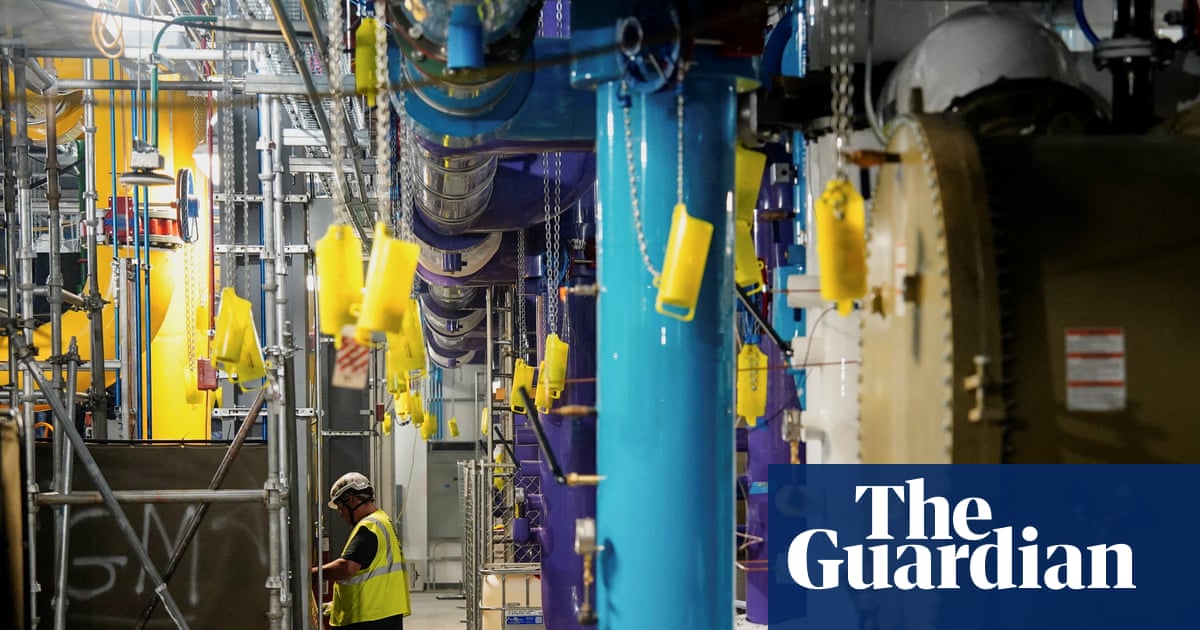
Microsoft's carbon emissions jumped 25% in a year building AI data centres (theguardian.com)

Google's emissions grew 18% on capital-goods spending for new capacity, and Amazon's cloud arm burned an estimated 78,000 gigawatt-hours in 2025, its largest jump on record.

In the thread, one reader flagged a live preview: Irish datacentres already draw 23% of the country's entire electricity supply, up from just 5% in 2015 - not alarming, another shrugged, since datacentres will simply "ride the transition to green energy for free."

🌍Other ★ 63 · 💬 84 · Jul 12 · #AI#big tech#energy#Amazon#France#Google+2

Biopsies find long-COVID patients' stomachs missing half their nerve fibers (ijidonline.com)

A new biopsy study found long-COVID patients' nerve damage is gut-specific: skin biopsies from the same patients came back normal, while gastric nerve density tracked with heart-rate variability and a cardiac marker, pointing to a structural cause behind the nausea and bloating many patients report.

A reader flagged what the headline skipped: the control group was eight people. A physician in the thread went further, arguing gut damage is the smaller half of long COVID's real driver, one seated in the brain instead.

USAA closed 51% of home claims unpaid the year its CEO made $14 million (expressnews.com)

USAA closed just over half its 2025 home insurance claims without paying a cent, per compiled industry data — a rate that sits above the 48% average among the 14 largest US home insurers. USAA disputes the framing: it says under 6% of claims were true denials once reopened and consolidated cases are stripped out.

One 20-year USAA customer described two 2025 claims that took months and a lawsuit threat to get paid. Another member, with two claims the same year, said USAA settled both without a single hassle.

Terry Tao Let AI Coding Agents Rebuild His 1999 Math Applets (terrytao.wordpress.com)

Tao's applets, which visualize Besicovitch sets and the honeycombs he co-designed with mathematician Allen Knutson, had stopped working on modern browsers entirely. An AI coding agent rewrote roughly two dozen of them in JavaScript, plus a new special-relativity sketchpad and a supplement for his recent Gilbreath conjecture paper.

Not everyone in the thread was charmed: one commenter said the more Tao talks about AI, the more he suspects an undisclosed conflict of interest, backed by a link to a Reddit thread.

The Math That Powers Modern AI Was Invented Three Times, Separately (math.ucdavis.edu)

Eugenio Beltrami published the singular value decomposition in 1873. Camille Jordan published the identical result a year later in France, apparently without reading Beltrami. James Joseph Sylvester found it again in 1889. G.W. Stewart's 1993 paper, now on Hacker News, retraces how a tool now core to linear algebra got invented three separate times before anyone noticed.

In the thread, a computer vision researcher who has used SVD professionally for years admitted Claude and Codex now write most of that code for him.

A glowing 3D replay of AI coding sessions leaves HN asking what it's for (github.com)

Mindwalk replays a coding agent's session (Claude Code or Codex) as a 3D city built from your own repo. Files sit dark until touched, then light up moss green for a glance, white for a read, amber for an edit, while a timeline scrubs through the whole run.

One reply called it 'Xerox PARC days' for agent interfaces. A rival builder said he skips the visuals entirely, tracking the same file changes on a binlog in 3-5 milliseconds. A third commenter asked why anyone would rewatch a session instead of just reading the diff.

An engineer designed a RISC-V game console's CPU, GPU, and PCB from scratch (github.com)

RISCBoy fits on a $65 prototyping board, but nothing above the silicon was borrowed: a custom RISC-V core that passes the official compliance and formal-verification suites, a from-scratch graphics pipeline, and a complete KiCad PCB layout, all written solo in Verilog.

The thread placed the author fast — Wren also built the RP2040's DVI video trick — then produced a bigger reversal: the founder of an open-silicon shuttle service says a version of RISCBoy already got taped out as real hardware. He still doesn't know if it works.

Cory Doctorow: the 'reverse centaur' who takes the blame for AI's mistakes (pluralistic.net)

A Hearst freelancer got a byline on a 64-page summer reading guide full of hallucinated books — work that used to take three interns and a fact-checking desk. Cory Doctorow's name for that setup: a "reverse centaur," where the machine drives and the human absorbs the blame.

On Hacker News, John Nagle, who read Doctorow's full book on the idea, said it undersells how cheaply AI now lets corporations run the kind of surveillance only a government once could afford.

🚀Tech ★ 107 · 💬 67 · Jul 12 · #AI#economy#Cory Doctorow#Hearst#John Nagle+2

One essay's fix for AI chaos is giving every worker their own agent (off-policy.com)

An engineer used 64 Claude Code instances in parallel to rewrite 535,496 lines of Zig into Rust in 11 days, about 750 engineer-days of work. Gavriel Cohen calls it proof AI agents need a human directly accountable for what they ship, not a handful of AI labs deciding for everyone.

On Hacker News, a SaaS founder said the alarm over ungoverned agents smelled like the "shadow IT" scares vendors sell before pitching a governance platform, while a survey the essay cites found 52% of workers already run unapproved AI tools anyway.

Years of Thunderbolt dock wake failures ended with a new monitor, unexplained (fabiensanglard.net)

Sanglard tried two CalDigit docks three years apart, on both a MacBook Pro and a ThinkPad, plus a Thunderbolt 4 certification that explicitly mandates reliable wake-from-sleep. None of it worked. What finally fixed it was replacing the monitor, not the dock, and he still can't explain the mechanism.

In the thread, dozens of readers reported the identical bug across Anker, HP, Dell, OWC and Lenovo hardware — and one found a $20 used Lenovo dock, after a firmware update, more reliable than a $400 CalDigit.

A Liquid With No Elastic Memory Just Fractured Like Glass (quantamagazine.org)

The threshold turned out oddly sharp: push the liquid past 300 millimeters a second and it snaps clean instead of stretching thin; at 100, it just flows like any ordinary liquid. Lima first caught the crack years earlier, testing hydrocarbons in a project with the oil company Exxon Mobil.

On Hacker News, the pushback arrived fast: if any liquid flows, why wouldn't all of them crack this way under enough force?

In 11 of 74 Autopsied Hearts, the Coronavirus Was Still Replicating (my.uscap.org)

Pathologists autopsied 74 people who had lived with COVID for at least 60 days before they died. In 11, the virus was still replicating inside the heart, and those 11 were far more likely to have died with the chest pain, palpitations, and breathlessness of cardiac long COVID: 82% versus 37%.

The finding is a conference abstract, not a published paper. A physician in the thread flagged the catch: the same theory was already tested with extended Paxlovid in real long COVID trials, and both came back negative.

🌍Other ★ 108 · 💬 24 · Jul 12 · #health#science#Long COVID#Paxlovid#SARS-CoV-2+1

A story blaming modern decor for headaches misread its own source study (studyfinds.com)

StudyFinds says striped floors and flickering LEDs may be quietly overloading your visual cortex, citing a 32-author review in the journal Vision. Readers went straight to the open-access paper and found the site had the science backwards: the actual mechanism is luminance contrast, not vaguely defined "visual complexity."

Even the thread's own leading theory - that minimalism exists because everyone expects to move - got shredded by a reader who pointed out that rich homeowners are its biggest fans.