A Fields medalist said he cried when OpenAI released its math proofs
Hugo Duminil-Copin, a 2022 Fields Medal winner, said of OpenAI's release: "They have annihilated my field of research."
OpenAI has published hundreds of results in number theory, theoretical computer science and logic, many on problems that resisted the best mathematicians for decades. Derek Thompson's essay says the mathematicians weep because a shared conversation across generations just got cut short.
On HN, one commenter was "kind of disgusted by the tears" and blamed decades of chasing results and money. Another checked the pay at their own university: two associate professors on $80-85K, after postdocs that push tenure-track starts into the mid-30s.
Thompson's argument: science is a conversation, and the machine cut in
Derek Thompson's essay starts from the pattern that humans combine craft (imitation and iteration) with sociality, so discoveries compound across generations. Science, he says, is both a craft of discovery and a conversation among discoverers, collaborative and adversarial. OpenAI is strong at the craft half. By solving problems outright, it cuts the conversation short.
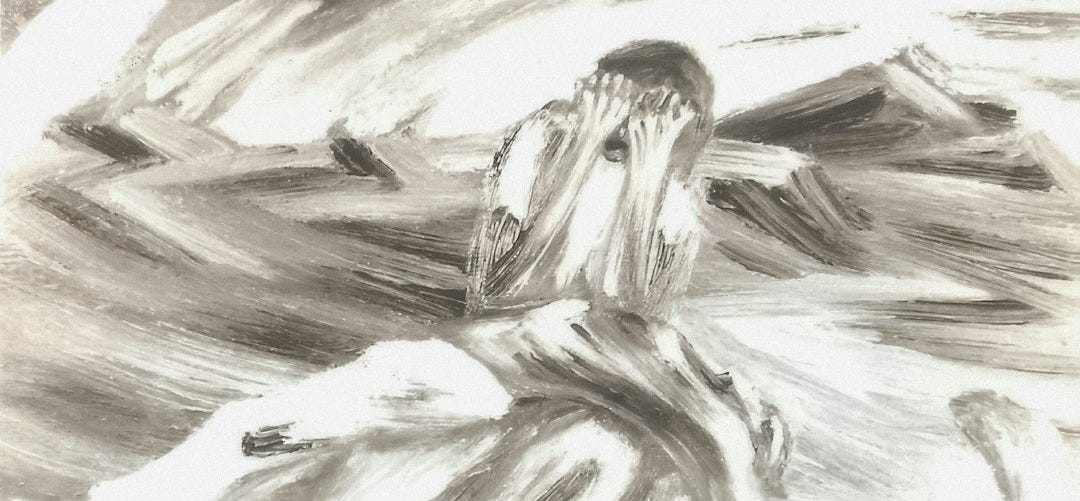
Steven Strogatz of Cornell describes disorientation, exhilaration and "enormous grief". Thompson does not expect hundreds of millions of jobs to vanish within five years. He does expect the same grief to reach physicists, economists, illustrators and writers.
The money argument against the tears meets a payslip
The harshest reaction came from a commenter with no bio to show for it, who blamed "many decades of complacency" and thought the people crying were mainly "results-oriented", enjoying "the results and money". The reply came from a commenter who checked pay at their own university, and it worked by arithmetic:
"I just checked the salary of two associate professors at my university: $80-85K." — commenter who checked associate-professor pay at their own university
Those salaries come after several postdocs, they added, with a tenure-track start in the mid-30s "not common". Then they turned the charge around: the person crying in the essay loves the process and fears the human connection will be gone, which is the opposite of results-orientation.
Is the grief really about livelihoods?
A different skeptic ran a thought experiment. If AI solved your field but you still enjoyed it and got a UBI (universal basic income), would you still weep? The commenter who posed it said no, and concluded that most of the anguish must be about "a direct economic hit to people's livelihoods", so the conversation should be framed that way.
A reply said the hypothetical misses what mathematicians are paid in:
"Virtually every professional mathematician is motivated by personally making a permanent contribution to human knowledge, no matter how small." — commenter replying to the UBI hypothetical
On that reading, a UBI replaces the salary but not the thing the salary was a side effect of: a contribution with the mathematician's name on it.
Hard to feel sorry for mathematicians when engineers are being laid off
A software engineer started a thread of their own: engineers are being laid off, mathematicians are not, and the blogs about plight are lopsided. The strongest answer came from a commenter whose bio reads "grocer engineer + polynomial enjoyer":
"I don't personally grieve for the likes of Strogatz or Tao, it seems likely both of them will be fine however this pans out. But many more mathematicians have been toiling away in precarity and obscurity and without tenure for years and years." — self-described grocer engineer and polynomial enjoyer
The same commenter added that many mathematicians moved into private-sector roles as software engineers, actuaries and ML engineers, and "have been displaced there, too". A commenter with 26k karma came at the engineer from the other side: software people spent 50 years eliminating clerical and secretarial work, and few outside the profession are sorry now that it faces the same fate.
The tarp, and who is left to read the proof
Thompson's picture got its best restatement from a former pharma researcher who helped develop drugs from biomedical images:
"They're now aware that they may never again have the joy of being the first to pull up the edge of the tarp of ignorance and see the raw truth beneath for the first time." — former pharma researcher who developed drugs from biomedical images
A growth-equity investor answered that discovery is not the only human act in the loop. Even now, verifying and understanding the AI proofs is "a massive endeavor", and turning a finding into an intuitive distillation "remains an open challenging demanding expertise". That leaves a different job for the field: reading the proof. It also marks the limit of Thompson's forecast that economists, illustrators and writers will mourn next. Mathematics can check a machine's answer; those fields have no verifier that settles whether the machine is right.
Get breakdowns like this every day
The top Hacker News stories, unpacked — by email, Telegram, or RSS.
Meta's open-weight Muse Spark has 816B parameters. Two Mac Studios can run it
Meta says two Apple M5 Ultra Mac Studios, with up to 512 GB of unified memory each, can run Muse Spark Open locally through MLX.