A Theranos documentary 'deceives' its audience, and Hacker News disagrees about whether that's a review or a stunt
At a screening of the Elizabeth Holmes documentary, a woman yelled 'Criminal!' at the screen, and it wasn't aimed at Holmes. A Substack writer built a whole essay on that moment.
Substack writer Pompliano says Nathan Fielder and Lance Oppenheim's three-hour film nudges viewers' feelings with close-ups and the order of reveals, then lets them mistake those feelings for conclusions. Her proof is a Canon experiment where six photographers shot one man, each told he was someone different.
Readers split on whether she showed any of this. One said the essay 'says nothing at all about how the documentary deceives you'.
Six photographers, one man, six strangers
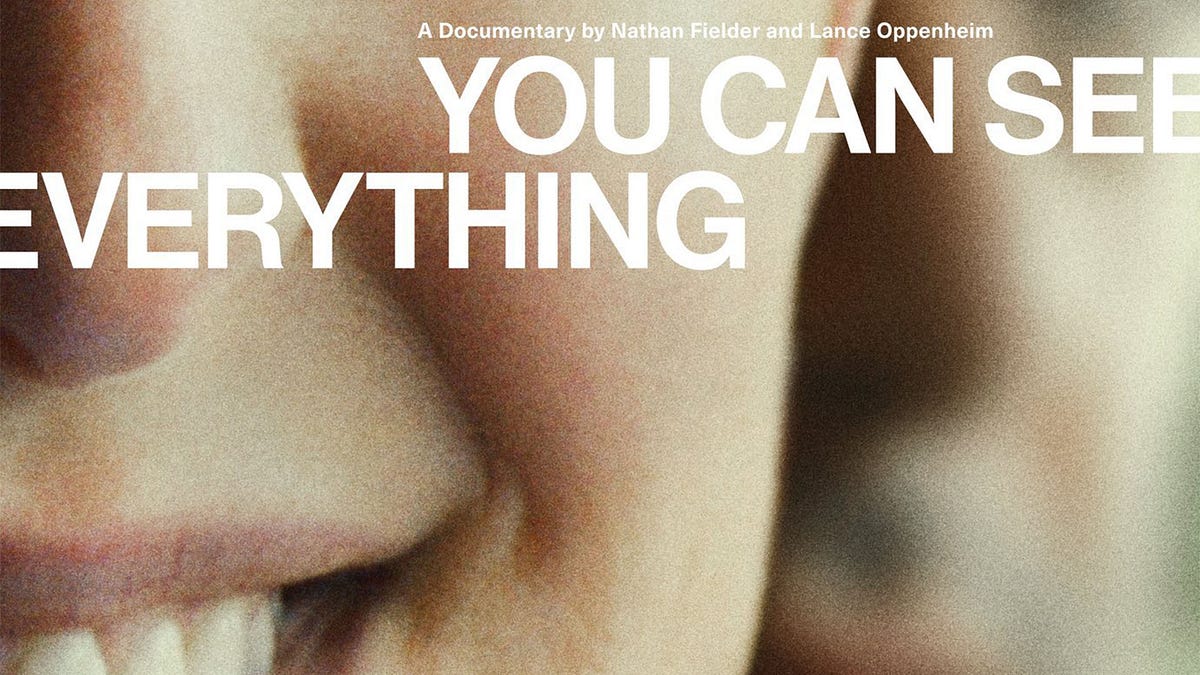
The essay argues that You Can See Everything, from Lance Oppenheim and Nathan Fielder, is less about Elizabeth Holmes than about how easily audiences are steered. People form an emotional impression first, the author says, then build a belief on it, then hunt for facts. "Beliefs built on emotion are nearly impossible to reason with."
Her anchor is a 2015 Canon experiment: six photographers shot the same man in the same place, each told he was a millionaire, a convict, a fisherman, an alcoholic, a psychic or a lifesaver. The portraits came out wildly different. A Canon representative's takeaway, as she quotes it: "a photograph is shaped more by the person behind the camera than by what's in front of it."
She applies this to the film's opening, where an unblinking close-up makes Holmes look sinister, a wider shot of her bouncing her baby makes her human, a long pause from her husband plants doubt and then a smile undoes it. Over roughly three hours, she writes, the framing shifts gradually. She also asks whether Fielder, who lived with the couple for a month before Holmes went to prison, can be a neutral narrator.
The legal footnote she says gets lost: Holmes was acquitted on all four counts of defrauding patients and convicted for misleading investors who put in more than $700 million.
"Is this a parody lol?"
That footnote drew the most heat. A startup and devops builder quoted it back with one line of contempt:
"trying to minimize fraud? what a weird article." — a commenter who builds companies and runs devops
Another commenter answered the acquittal point with numbers: Theranos generated around 7.8 million test results for Arizona consumers alone, and roughly 834,000 had to be voided or corrected.
The theater scene got no kinder reading. After the essay's description of a packed room shouting at the screen:
"Is this a parody lol?" — a reader skeptical of the theater scene
Did the essay show the deception, or just claim it?
The bigger split was over method. One commenter was blunt:
"This actually says nothing at all about how the documentary deceives you. It simply claims that it does, with no evidence provided." — allturtles
Another described the genre: reviewers writing vague yet meaningful-sounding things about a film's obvious subtext as if it were a revelation. Viewers who had seen it disagreed with the essay from the other side. A commenter with an astrophysics and React background, who watched it the day before, saw "no magic sauce": the film runs in three acts, "deception, sympathetic, puppeteer," and left him asking whether Holmes is the most manipulative person we have seen, or oblivious. One more, also fresh from the screening:
"For me it was too little butter spread over too much bread." — a viewer who saw it the same night
The reading nobody argued with
One commenter took a different lesson from the film, comparing it to the Martha Stewart documentary: "the law goes for you much harder if you are a woman" while others "deceive and produce vaporware for decades." Whether or not the film steers its viewers, the thread shows it steered them to very different places, which is the essay's thesis proved by its own comment section.
Get breakdowns like this every day
The top Hacker News stories, unpacked — by email, Telegram, or RSS.
Anthropic's junior share of technical hires fell from 27% to 9%, by Anthropic's own count
The company's own labour economists studied what happened to hiring once coding agents spread inside Anthropic. Commits per engineer rose about fivefold, and the entry-level pipeline shrank.