Topic

Startups & Funding

54 stories

Anthropic's S-1 shows $16.3 billion in six months and an $80.7 billion net loss (sec.gov)

Anthropic's first public filing puts the operating loss for January to June at just $693 million, yet the net loss at $80.7 billion. The gap is accounting for convertible notes and derivatives, not cash burned on GPUs.

Commenters spent their time on a different number: how much of that revenue is one product, and whether anyone can buy in at a trillion-plus valuation and still get Amazon-sized returns.

📈Biz ★ 1.5K · 💬 1454 · yesterday · #AI#markets#startups#Amazon#Anthropic#Claude

Not just a headline — the discussion unpacked

The top HN threads: facts from the discussions, both sides, insider voices. Email, Telegram, or RSS.

Ask HN: if the models are so good, why doesn't OpenAI start 100 companies? (news.ycombinator.com)

An Ask HN thread of 665 comments put the question to OpenAI. One answer: the labs need revenue now, and selling tokens through long-running agents is the only thing that is provably growing.

A rival answer: the models are not good enough yet, and a fully automated business at scale would be a landmark nobody has delivered.

💬Ask HN ★ 594 · 💬 665 · 4 days ago · #AI#economy#startups#McKinsey#OpenAI

Arc browser stops working on December 22, and The Browser Company cites security (arc.net)

The Browser Company says keeping a browser secure is growing work with AI, so its engineers move to Dia. On mobile, AI features and tab sync end on November 23.

Dia imports Arc passwords, bookmarks, extensions, history and tabs; Spaces become Profiles and Folders become Tab Groups.

📈Biz ★ 230 · 💬 210 · 5 days ago · #startups#web#Arc#Dia#The Browser Company

Railway paused all deployments after attackers may have read decrypted environment variables (blog.railway.com)

Railway believes the attack is part of a wider campaign against platform companies and AI inference providers, and has asked upstream providers to revoke keys. Deployments are paused during the investigation.

In the Railway Discord, users say stolen keys were already being used, and one says usage climbed on keys created only for Railway, 10 hours into the incident.

🚀Tech ★ 319 · 💬 156 · 6 days ago · #dev tools#security#startups#Railway

A Theranos documentary 'deceives' its audience, and Hacker News disagrees about whether that's a review or a stunt (readtheprofile.com)

Substack writer Pompliano says Nathan Fielder and Lance Oppenheim's three-hour film nudges viewers' feelings with close-ups and the order of reveals, then lets them mistake those feelings for conclusions. Her proof is a Canon experiment where six photographers shot one man, each told he was someone different.

Readers split on whether she showed any of this. One said the essay 'says nothing at all about how the documentary deceives you'.

Karri Saarinen warns AI agents turn products into 'a collection of abilities' with no one behind them (karrisaarinen.com)

Saarinen writes that good software shows the fingerprints of its makers: what they chose to build, leave out, and keep polishing after it already worked. He says Linear runs on intuition formed by customer contact, not on process or data.

His worry is additive growth: features that work alone but weaken the whole. Agent-driven workflows could accelerate that.

📈Biz ★ 318 · 💬 136 · Oct 19 · #AI#dev tools#startups#Karri Saarinen#Linear

OpenRouter joins Stripe as model routing becomes payment infrastructure (openrouter.ai)

OpenRouter’s value is its single interface for routing requests across model providers; the deal puts that choice layer beside Stripe’s existing billing machinery.

HN readers liked the developer experience but asked the obvious question: why is a middle layer worth so much when model makers already expose APIs?

🚀Tech ★ 641 · 💬 342 · Aug 20 · #AI#dev tools#startups#OpenRouter#Stripe

ProvenMetal wants faster circuit boards, but sourcing still sets the clock (provenmetal.com)

ProvenMetal is pitching faster PCB assembly for hardware teams, including upstream feedback on bills of materials and lead-time alternatives.

The thread welcomed the ambition but warned that domestic assembly, component sourcing, and price competition are the hard constraints—not the upload form.

DeepMind’s leader changes jobs as Jeff Dean starts Discovery Loop (blog.google)

Google’s leadership announcement combines two large changes: Demis Hassabis is becoming chair of Google DeepMind, while Jeff Dean, Sanjay Ghemawat, Oriol Vinyals, and Quoc Le will build Discovery Loop outside Google. Google remains an investor and cloud provider.

HN readers treated the personnel move as the headline, but the sharper question was institutional: how much of Google’s AI research culture is leaving with a group that says it wants to automate scientific and engineering discovery?

JetZero promises 50% less fuel. HN asks about certification (jetzero.aero)

The Z4 is designed for international range and has backing or purchase options from Alaska and United, while JetZero has begun its Greensboro assembly campus and raised a $175 million Series B.

HN’s response was less about aerodynamic promise than the bottleneck behind it: pressurisation, evacuation rules, airport gates, support equipment, and certification all favor the familiar tube and wings.

A Postgres guide told startups to normalize their schema first. HN said monitoring should come before that (hatchet.run)

Hatchet's Postgres guide walks startups through schema design, query optimization, and scaling, with real thresholds — sequential scans get costly past 20k rows, autovacuum runs over an hour mean tuning is overdue.

A commenter who'd run Postgres at an early-stage startup pushed back: monitoring deserved to rank above schema design, because failure modes like transaction ID wraparound give almost no warning — and the AWS alert email is easy to miss, especially on Boxing Day.

A founder says he runs Chinese AI models at a twentieth of Anthropic's price (werd.io)

One reader tested the censorship complaint directly, asking four Chinese models (Kimi K3, two Qwen variants, and GLM 5.2) to write a function named FreeTaiwan(). All four wrote clean, working code with the banned name intact.

A different reader called the whole framing suspicious: the post reads like the argument Palantir's CEO made on CNBC days earlier, and enterprises don't actually care whether a model is open: they care whether the vendor promises to delete their data.

Paid to delete AI code: is cleanup a real business or Sisyphus's labor? (odra.dev)

Slopfix is a three-person software house with one product: deleting AI-generated code. One week, three senior engineers, $10,000, and the bill scales to results. Promise a 50% cut, hit 20%, and you pay $4,000, with a two-week warranty on anything they break.

The thread split fast. Some engineers say cleaning up after coding agents is already their best-paying work; others call it Sisyphus's labor and would rewrite from scratch. And the anti-slop pitch itself reads AI-written: the shop admits it uses Claude Code to do the deleting.

Vercel acquired the open-source auth library built to replace the one it already owned (better-auth.com)

Engida frames it as relief, not a sale: joining Vercel lets the team stop 'shaping strategy around monetization' and get back to 'keeping auth open source, framework and platform agnostic.'

The thread wasn't buying the framing. Developers who'd just shipped Better Auth to production started drafting backup plans, one worry leading: nothing stops Vercel from tying the library to its own paid cloud. A blunter read on the whole genre of these deals: 'open source isn't really open any more, it's just pre-acquisition.'

Anthropic's goodwill problem: 9,100 open issues and a rolled-back bill (raheeljunaid.com)

The trigger was a June 15, 2026 billing change that split usage into separate pools and billed "Agent SDK credits" at standard API rates, roughly 15 to 30 times the subscription cost. Anthropic paused and rolled it back after the backlash.

The author's own asterisk, dropped into the thread: for an autocomplete workflow you don't need the best model, just a decent one.

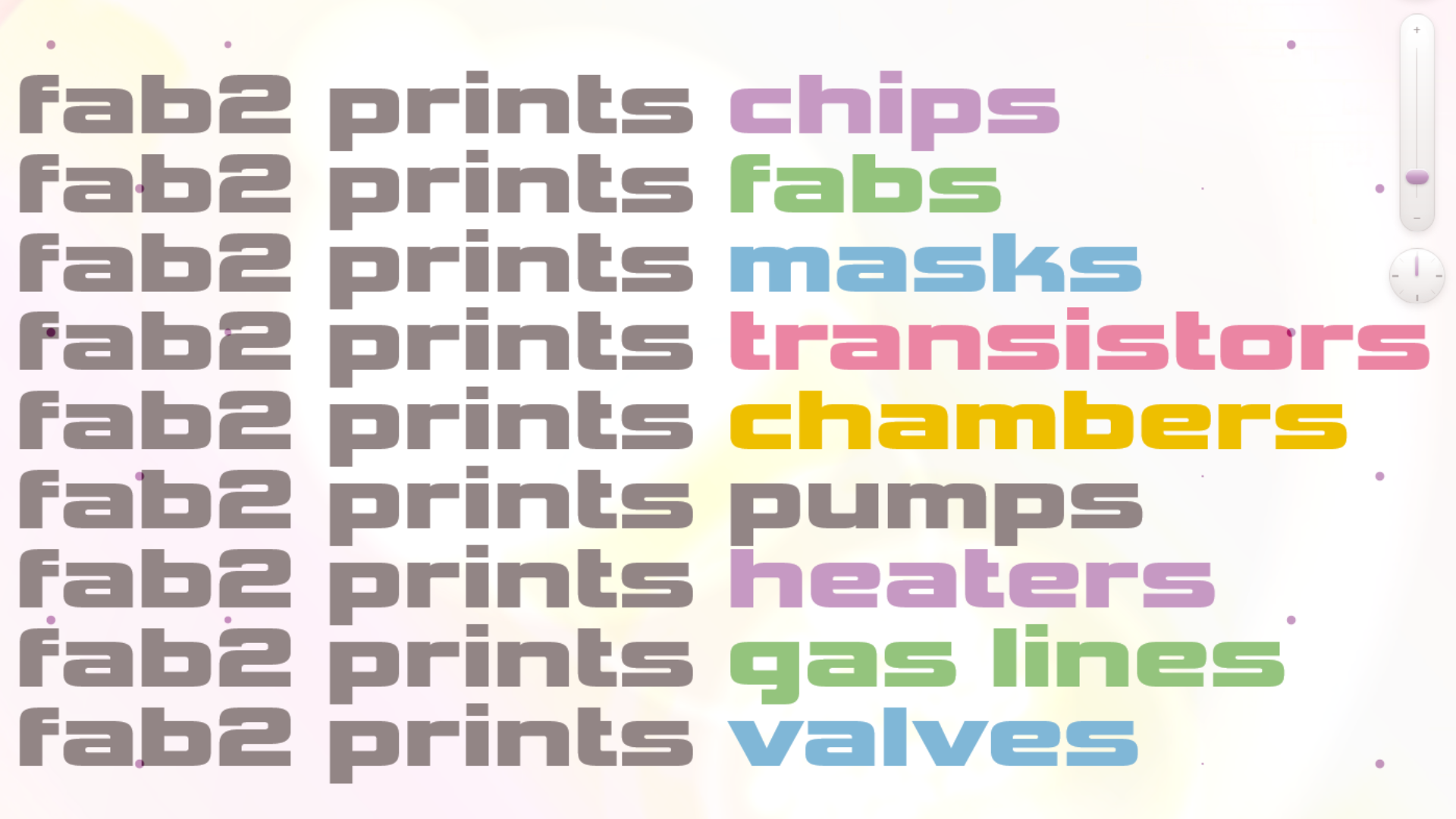
Jim Keller's startup wants to mass-produce chip fabs from Texas — a semiconductor expert calls it smoke and mirrors (tomshardware.com)

Fab2 now runs three sites — a 120,000 sq ft Austin HQ, a 30,000 sq ft Lockhart "fab fab," and the original SF garage fab — chasing the idea of mass-producing small chip fabs rather than chips, co-founded by Jim Keller and DIY-fab pioneer Sam Zeloof.

A semiconductor insider is unimpressed: no fundamental manufacturing advance, likely electron-beam lithography that suits prototypes, not volume — and why not just verify in simulation?

📈Biz ★ 110 · 💬 28 · Jul 6 · #hardware#startups#Atomic Semi#Fab2#Jim Keller+2

A startup fable about an oven that mis-bakes a third of the time — and the thread realizing it's also a Tesla origin story (weli.dev)

The allegory: an oven startup mis-bakes a third of the time, so instead of fixing the core it promises impossible features to close a 500-unit order, drowns engineering in feature creep, burns out its founding engineer, and repeats the cycle with a cheaper replacement. The moral is misaligned incentives — 'the commission is paid at signing.'

The thread's twist is that the same sequence of events, told with more luck or capital, is the Tesla playbook — failure and success are the identical story seen from different ends.

📈Biz ★ 1.2K · 💬 369 · Jul 4 · #culture#economy#startups#James Bach#Tesla

A $7,999 home robot that phones a human to finish your laundry (weaverobotics.com)

Isaac 1 costs $7,999 plus about $449/month and ships Fall 2026. Weave's own copy says it finishes "Laundry Flow" and "Daily Reset" autonomously by default but falls back to a human teleoperator to guarantee task completion.

That line drove the thread: commenters note the demo video cuts away at the hard folding moments, peg the design as a Roborock arm on a pole, and ask why $449/month beats a cleaner who won't stream your home to a remote worker.

A rocket startup is buying a 30-year-old satellite network for $8 billion (investors.rocketlabcorp.com)

Iridium throws off $871.7M in revenue and a 57% margin on a constellation born from 1990s Motorola. Rocket Lab gets its globally-coordinated L-band spectrum, 2.55 million subscribers, and a guaranteed launch backlog as it scales its Neutron rocket.

The skeptics in the thread aren't sold: a 30-year-old network won't out-speed Starlink, and a much smaller company swallowing one twenty times its size only has to make sense to Wall Street.

A $180k SF salary buys you 'junior', and the thread blames Prop 13, not OpenAI (nytimes.com)

The article pins SF's squeeze on demand from AI money — OpenAI and Anthropic salaries pushing rents up. One person quoted thought $200k meant never worrying; she and friends now skip restaurants for potlucks.

A startup founder in the thread said $180k now mostly buys 'new grads or relatively junior talent', and a househld near $400k calling itself 'not completely hopeless' drew scorn. The sharpest replies pointed past salaries to Prop 13, zoning, and a metro with almost no high-rises.

Headlines said 'Asian startups clone Mythos.' One is Japanese, Khosla-backed, and the 'clone' claim is unproven (techcrunch.com)

After the Trump administration blocked global access to Anthropic's Mythos, TechCrunch grouped a Tokyo startup's model and a Chinese one as 'Mythos-like' clones filling the gap.

A CTO in the thread pulled it apart: 'Asian' lumps a Khosla-backed Japanese ally in with China, and the 'distilled from Anthropic' line is unproven — these are different multi-model architectures. A skeptic added the obvious tell: you don't ship a frontier model out of nowhere with nothing released before it.

🚀Tech ★ 158 · 💬 137 · Jun 28 · #AI#policy#startups#360#Anthropic#Fable 5+2

A fintech handbook hit the front page. Then the author showed up — and so did engineers who'd built the real thing (w.pitula.me)

A solo-posted Fintech Engineering Handbook — money as integers, ledgers, idempotency, webhooks — climbed the front page, and the author turned up in the replies, baffled by his own reach.

What followed was a working seminar. Ex-fintech CTOs validated the core; others flagged the 'minor-units' integer trick as a trap with stablecoins, called event-sourcing-everywhere overkill, and argued the PII-deletion advice would get a compliance team a very bad day with regulators.

OpenAI's own advisers are telling Altman to delay the IPO until 2027 (nytimes.com)

The New York Times reports that Sam Altman's advisers want OpenAI to hold its IPO until next year, citing SpaceX share volatility and OpenAI's own financial strain. The first reaction on HN was to quote that line back and ask the obvious question.

If the company isn't blowing smoke, one reader wrote, what's there to fear from public markets? An established commenter was blunter: the delay reads as a company in deep trouble, kicking the can until sentiment improves.

📈Biz ★ 100 · 💬 87 · Jun 26 · #AI#markets#startups#OpenAI#Sam Altman#SpaceX

Papermark says a YC startup didn't vibe code its data room, it copied source (twitter.com)

Papermark, the open-source DocSend alternative, went public on X accusing a YC-backed founder of passing off its AGPL code as a fresh "vibe coded" product, demanding the data room come down as license-infringing fraud.

The thread split fast. Some pointed out you can't "steal" open source if you keep the license; others noted AGPL forces you to publish your own source the moment a user touches it over a network. The screenshots showed whole pages copied verbatim, design and text.

Om Malik, who urged tech to write "like a human," has died at 59 (om.co)

He founded GigaOm in 2001, turning a one-person blog into a media company, then spent years as a True Ventures partner who cared about founders more than their decks. The thread that followed reads less like an obituary than a roll call of people he answered when they were nobody.

"He would have been amongst the first 10 readers," wrote one early blogger he mentored. A heart scare near 40 had already pushed Om to narrow his life to what gave him joy: writing, photography, travel.

🌍Other ★ 544 · 💬 55 · Jun 26 · #culture#startups#web#GigaOm#Leica#Om Malik+1

He spent €9,654 and 152 days to found a company he still can't bill from (paolino.me)

The line that stings is the share capital: €2,000 frozen in an account because, as the founder explains, that money is the company's risk, not his. The notary, court, register, tax, and legal fees pile on from there.

Then German founders and accountants showed up in the thread and turned the complaint on its head: he picked the most baroque structure on the menu, they said, when a plain UG takes weeks and a few hundred euros.

Hoffman calls SpaceX 'the IAC of AI', buying its way into relevance (fortune.com)

SpaceX's S-1 projects $320bn of AI-services revenue by 2030 at a 74% margin, dwarfing launch and Starlink, which is how the IPO valuation was supported. Its 2025 AI segment was mostly Twitter, with Grok near $0.5bn.

The thread's flip: Hoffman invests in both OpenAI and Anthropic and sits on Microsoft's board, so commenters weigh the vested interest against numbers that still don't add up.

📈Biz ★ 224 · 💬 255 · Jun 25 · #AI#markets#startups#Anthropic#Cursor#OpenAI+3

Elastic cuts 7% while promising headcount will grow this year (elastic.co)

The memo spends few words on the cut and many on a brighter future, blaming AI and a leaner reorg while pledging to keep adding customer-facing sales roles.

Ex-staff and readers call the math a tell: a 7% trim that an ordinary hiring freeze would have reached, dressed as a sign of confidence.

The contrast with Elastic's 2022 layoff is the sharper point. Then it was framed as ZIRP ending; now, in good times, the cut is 6 points deeper.

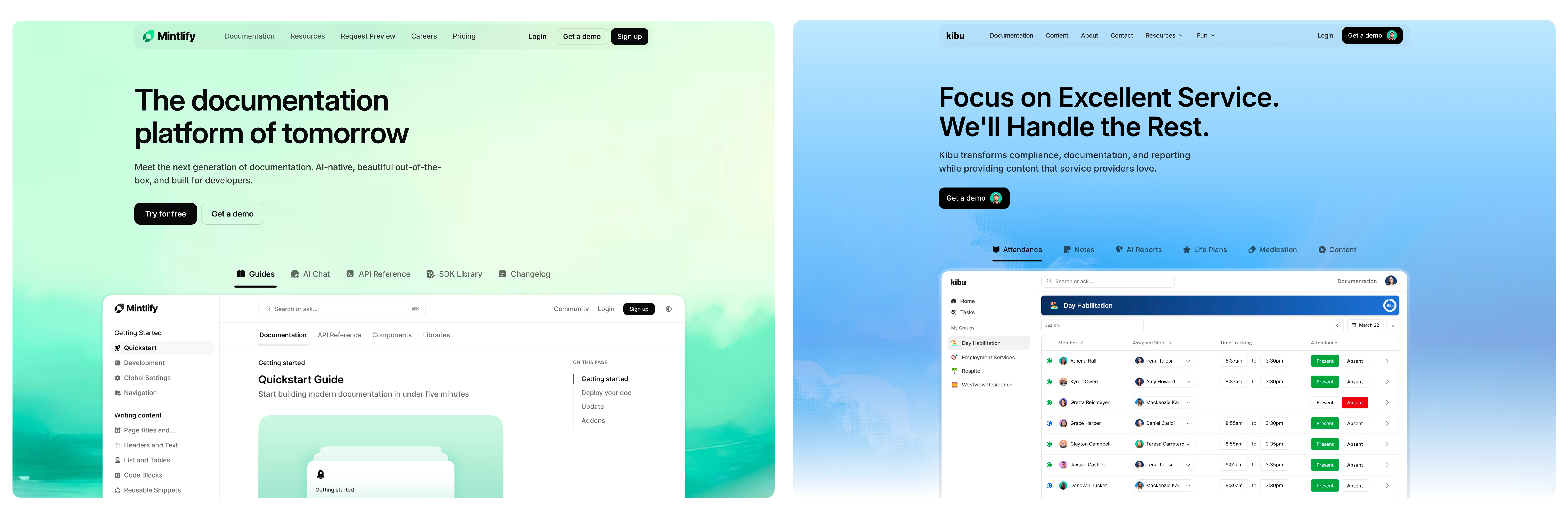
They rebuilt Kibu's site by copying Mintlify pixel by pixel (ben-mini.com)

The honesty is the hook: the 3% wasn't rigid. In practice it crept to roughly 50% once the team trusted its own instincts, swapping in team photos on buttons and favoring video over screenshots.

The thread's reversal is that this isn't stealing at all. Stealing means taking the idea and remixing it, several argue; copying the finished output line-by-line just manufactures sameness. One twist nobody resolved: Mintlify's 2025 look was itself lifted off Stripe.

A signup form 'validated' his email by mailing him spam about magnets (milek7.pl)

An engineer testing Pangram's signup found that the act of entering his email address triggered an unsolicited message from a churn of throwaway domains, its payload a base64 HTML blob of physics filler buried off-screen.

Then the company's founder turned up in the thread: 'I had no idea this was happening' — he traced it to a third-party validation vendor in his own stack.

NSF cuts core research to fund a venture program that can skip peer review (science.org)

Final FY2026 appropriations say no NSF directorate may be cut more than 5 percent below 2024 levels. The new program can hand awards to venture firms or limited partnerships created solely to receive them, and make follow-on awards without reviewing a new application.

A startup asked for SAT scores, and so, it turns out, does Epic (mrmarket.lol)

Hiring research now ranks structured interviews and work-sample tests above raw cognitive scores, with unstructured "chats" near the bottom. The likely real motive is fishing for raw, non-AI-assisted intelligence, now that every resume and cover letter has been polished by a chatbot.

When both résumé and interview are AI, hiring selects for performers (hbr.org)

Cover letters, résumés, scripted "tell me about a time" answers, even live video calls: each is now, in the authors' words, "infinitely scalable and practically free." Strip the signal from both sides and you select for talent at being hired, not at the job.

The fix on offer is friction: sudden constraints, a defended tradeoff, a culture prizing honesty over polish. The thread shrugged. Qualified people were filtered out by invisible wires long before any model arrived, and the cleanest counter-signal turned out older than software.

Did my old job only exist because of fraud? A decade later, the SEC answers (david.newgas.net)

A single 2014 internal email reframed everything: "Right now we need 2 more companies to cover our costs." If a startup is kept alive only to justify the fees charged against it, was its work ever real?

The author's verdict cuts the other way. The core database tech was real and his code shipped; the chef-and-cleaner expenses were someone else's scheme. The fraud sat above him, not in his commits.

The thread surfaced uglier cases: engineers who had unknowingly stood inside far larger frauds, from markups to a $10B telecom collapse.

📈Biz ★ 269 · 💬 124 · Jun 22 · #culture#economy#startups#Frost VP#GenieDB#SEC+2

Jira pencils out at 4 hours a month; Salesforce demands 1.5 engineers (brandur.org)

Price a $200k engineer at roughly $96 an hour and the math gets blunt. A $400/month tool needs only about four maintenance hours a month to justify rebuilding; a $25k/month Salesforce contract implies about 1.5 engineers to stand still.

So the cheap tools fail build-vs-buy and the expensive ones pass it, the opposite of intuition. The post doubles as a launch for River, Brandur's open-source queue.

The thread's counter: the real cost was never the features. It's SSO, audit logs, and the integration web — the moat an LLM won't clone.

George Hotz: AI doom narratives exist to contextualize the valuations (geohot.github.io)

Hotz contrasts Anthropic's policy-and-danger output with rivals' plain engineering posts, and reads recursive-self-improvement warnings as marketing copy. The doom, he claims, values the industry on hypothetical future capability, not today's.

The thread's best objection turns his evidence on him: if institutional investors think mass unemployment is nonsense and invest accordingly, where is the doom-to-valuation link?

Another notes the export-control fight makes danger talk expensive, not profitable; one calls the post projection.

Stop asking your manager for yes; announce it and let them say no (mooreds.com)

The reframe is tiny: never request approval for work already in your lane. State the action, attach a deadline, and the silence becomes a yes.

It transfers the cognitive load. Saying no takes one click; saying yes makes the manager co-own a decision they would rather not study.

But the same sentence reads as initiative or as a hostage note, depending entirely on whether the thing you announced was a prototype or a push to prod.

A free 'AI-powered' Crunchbase alternative listed Anthropic at an $18B valuation. The real number was off by 50x (startupwiki.tech)

The maker pitches AI agents plus community contributions and an 'agent ledger'. Commenters found stale figures, missing companies and badges that link to nothing.

The most useful fix offered: federate with Wikidata, which would pull in connections back to Crunchbase and other sources for free.

Craigslist's founder gave away half a billion, from a site that barely charges (independent.co.uk)

Craig Newmark has directed about half a billion dollars to charity, much of it to military veterans and cybersecurity defense. The puzzle the thread fixated on: how does Craigslist make that kind of money when it charges only for job and a few other postings, and runs almost no ads?

A former eBay/PayPal security engineer who once saw its setup described the infrastructure as almost trivially simple. The harder pushback came on philanthropy itself: two decades in, what has billionaire giving actually changed?

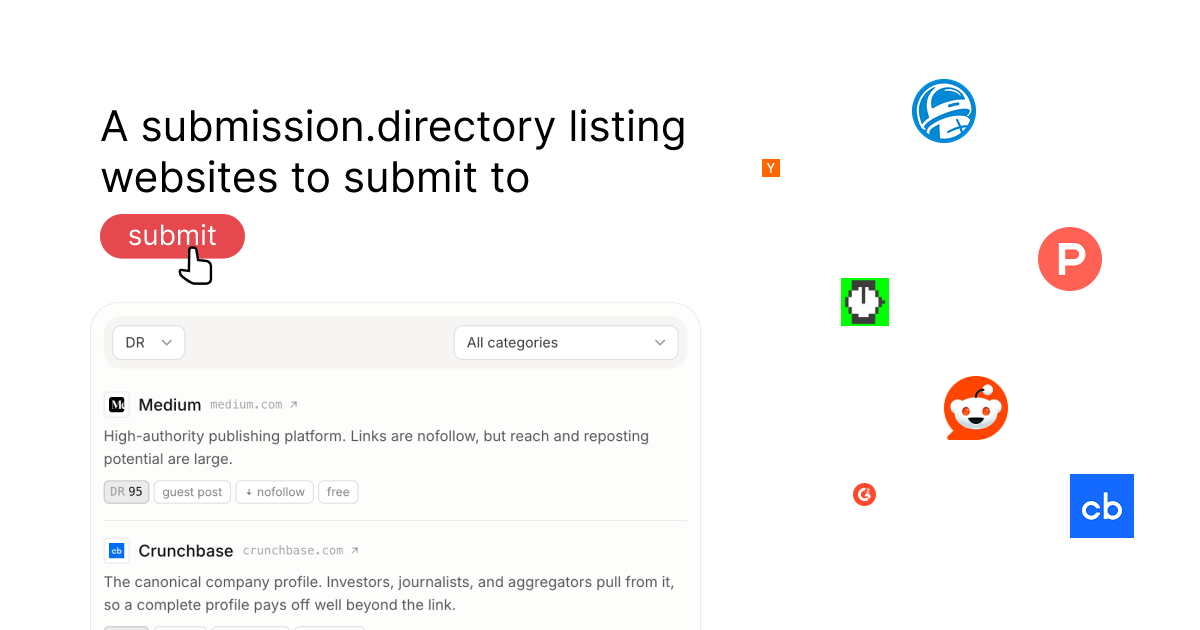
A site listing 50 places to submit your site; the SEO trick that died (submission.directory)

submission.directory is one page: 50 sites where indie makers can post their project for "quality backlinks" - Product Hunt, Reddit, Indie Hackers, Awwwards, Dev.to. It climbed to 410 points by reviving a 1990s ritual: submitting your URL everywhere by hand.

The man who built one of the first such lists 16 years ago showed up to explain why he made it. An SEO veteran came with worse news: backlinks have never mattered less to Google than they do now.

Anthropic publishes a four-stage 'founder playbook' — the thread calls it an MLM (claude.com)

Anthropic's playbook argues AI now lets non-technical founders ship production apps, and lays out four stages — idea, MVP, launch, scale — with prompts and case studies, ending in a pitch for Claude, Claude Cowork and Claude Code.

"Founding cannot be a commodity," one commenter wrote — if it is, you're interchangeable and collapse. Another saw an older shape entirely: "We have seen that category in the past, in MLM."

A YC startup open-sourced text-to-CAD — an embedded engineer called the V8 demo 'a lie' (github.com)

Adam's open-source core, CADAM, wraps Claude (with OpenAI/OpenRouter fallback) around OpenSCAD compiled to WebAssembly: describe a part, get parametric code with auto-generated sliders. Parameter tweaks skip the LLM via a regex edit on the source.

The benchmarks lead with a V8 engine and a turbofan. "That's a lie," wrote an embedded engineer — "a bunch of boxes with no fasteners to hold them together." Another user fed it a real part number and got wrong pitch, wrong pin positions, missing pins.

📈Biz ★ 156 · 💬 81 · Jun 18 · #AI#open source#startups#Adam#CADAM#Claude+2

SpaceX is paying $60B for a VS Code fork that wraps rivals' models (reuters.com)

Cursor's founders went from zero to multigenerational wealth in four years, on a product the thread keeps calling a wrapper: an editor fork, a harness, and prompts. Its in-house model, Composer 2.5, is built on Kimi K2.5.

The structure is the catch: this is not a cash deal. SpaceX pays in its own stock, diluting shareholders, while telling IPO investors it sees a $26T addressable market.

And the loudest skeptics can't explain why investors keep funding it anyway.

Salesforce buys Fin (the company that was Intercom a month ago) for $3.6B (techcrunch.com)

Fin's pitch is an AI agent that resolves support tickets across chat, email, phone, WhatsApp and Slack, powered by a proprietary model called Apex that it claims beats frontier models on resolution rate.

Two people who built in the space called the category a grift: the bots don't solve the reason a human contacts support in the first place, and customers would rather wait for a person than loop with a wrong answer.

📈Biz ★ 276 · 💬 208 · Jun 16 · #AI#markets#startups#Fin#Intercom#Marc Benioff+2

'We trusted them because they didn't seem to want our attention.' What happened to nerds? (mrmarket.lol)

The essay's exhibit A is a Founders Fund 'mafia' video where Sam Altman, Palmer Luckey and others play deception games — reality TV as a laundering technology that turns someone you'd keep at arm's length into a recurring guest.

HN's pushback reframes the whole complaint: you're describing business and management people who learned to perform, not engineers who lost their way. The split is whether 'nerd' was ever a job or always a temperament.

Paul Graham says you can earn a billion honestly. The thread did the accounting (paulgraham.com)

Graham frames the billion as pure exponential math: growth rate times market size, and "it will happen automatically if you just keep making customers happy." His honest-earner examples are Airbnb, Apple, Facebook.

The sharpest pushback wasn't outrage but bookkeeping. Creative destruction credits the creation and quietly writes off the destruction, one engineer argued. Another did the YC math back at him: out of ~6,500 funded, about 30 billionaires, under 0.5%.

What 595 hackers are building in June 2026: baby trackers, formal proofs, and a JVM in Go (news.ycombinator.com)

The standout pattern isn't 'AI side-project' — it's the backlash to it. A search engine you can download the source of after 12 months as a paying customer. A baby tracker with zero analytics and on-device-only data. A publishing platform with 'strictly human content' and no algorithm.

And the deep cuts: a JVM written entirely in Go, a formally verified motion planner using arbitrary-precision math to fight numeric instability, and Magic: The Gathering played over webcam with whole-frame card detection.

An open-source LLM tool archived itself overnight. The founder says most of the $7.3M is unspent (github.com)

The $7.3M seed closed in 2024 and was only announced in 2025, and the team spent less than half of it before deciding to wind down. This is a deliberate stop, not a money fire.

The repo's selling line, that it fueled '~1% of global LLM API spend,' is the claim engineers prodded hardest, alongside a colder verdict: an LLM gateway has no moat when anyone can rebuild it in a weekend.

📈Biz ★ 243 · 💬 159 · Jun 14 · #AI#open source#startups#TensorZero

Pool money behind a prompt and an AI builds it in public. The thread smelled a rug pull (fablepool.com)

Live examples include "an open-source Turbopuffer-style search database" at $44 of a $339 target. The bot estimated one job at $0.35, spent $0.55 — "almost as bad as I am at estimating projects."

Two real worries cut through the enthusiasm: who is the anonymous "Barras Industries" behind it, and does "it's MIT, we all own it" survive contact with copyright law?

📈Biz ★ 252 · 💬 148 · Jun 12 · #AI#open source#startups#FablePool#Turbopuffer

OpenAI may slash prices to fend off Anthropic. The thread asked how it survives selling dollars for 50 cents (cnbc.com)

The cynicism was specific: cut prices now, IPO while the hype holds, and the comment everyone nodded at — how long can you keep selling a dollar for 50 cents?

A genuine market split surfaced too: developers prefer Claude for coding, while ChatGPT owns the mainstream. A price war defends the consumer base the rival isn't really attacking.

📈Biz ★ 116 · 💬 85 · Jun 12 · #AI#markets#startups#Anthropic#ChatGPT#Claude+1

A 3-person startup raised $5.5M to make Postgres shard without touching your code (pgdog.dev)

You change only your connection string, not your app. The open-source version has 1.4M Docker pulls; the round is from Basis Set, YC and Pioneer Fund.

Simon Willison's request was the most telling product feedback: ship a plain binary, because he won't fire up Helm or Docker just to kick the tires.

📈Biz ★ 389 · 💬 198 · Jun 11 · #data#dev tools#startups#PgDog#PostgreSQL#Rust+1

Eric Ries on why good companies rot: it's not corruption, it's 'financial gravity' (news.ycombinator.com)

Ries argues founders obsess over strategy and org charts while ignoring the deeper layer — structure, governance, boards, the relationship with investors. That's where missions die.

The AMA's funniest moment was self-inflicted: he linked a site he'd had Claude Code build to 'summarize' his book tour — and readers pointed out it had built a marketing page with no summaries in it.

Why has nobody dethroned Ticketmaster? Because you and I were never its customers (news.ycombinator.com)

The thread's unifying insight: Ticketmaster's real customers are venues, promoters and artists. The fees let artists keep a 'fair' face price while TM absorbs the hatred and funnels the money back.

An ex-competitor laid out the moat: a chicken-and-egg content problem, and incumbents who'll sign big venues at a loss just to deny you the catalog.

Pearl Jam tried to route around it in 1994 and got turned away by contract-locked venues.