Topic

Health & Medicine

60 stories

A 2015 image classifier beat GPT-6 Astra and Claude Fable 5.1 at spotting skin cancer (lynchlab.net)

The test set was built to be hard: 100 lesions that should stay under care and 100 safe to discharge, every one confirmed by biopsy. On the 30 melanomas the margin is thin: the old network got 13 right, the chatbots 8 and 11.

The thread's sharpest question was whether the network was simply tuned to this benchmark.

Not just a headline — the discussion unpacked

The top HN threads: facts from the discussions, both sides, insider voices. Email, Telegram, or RSS.

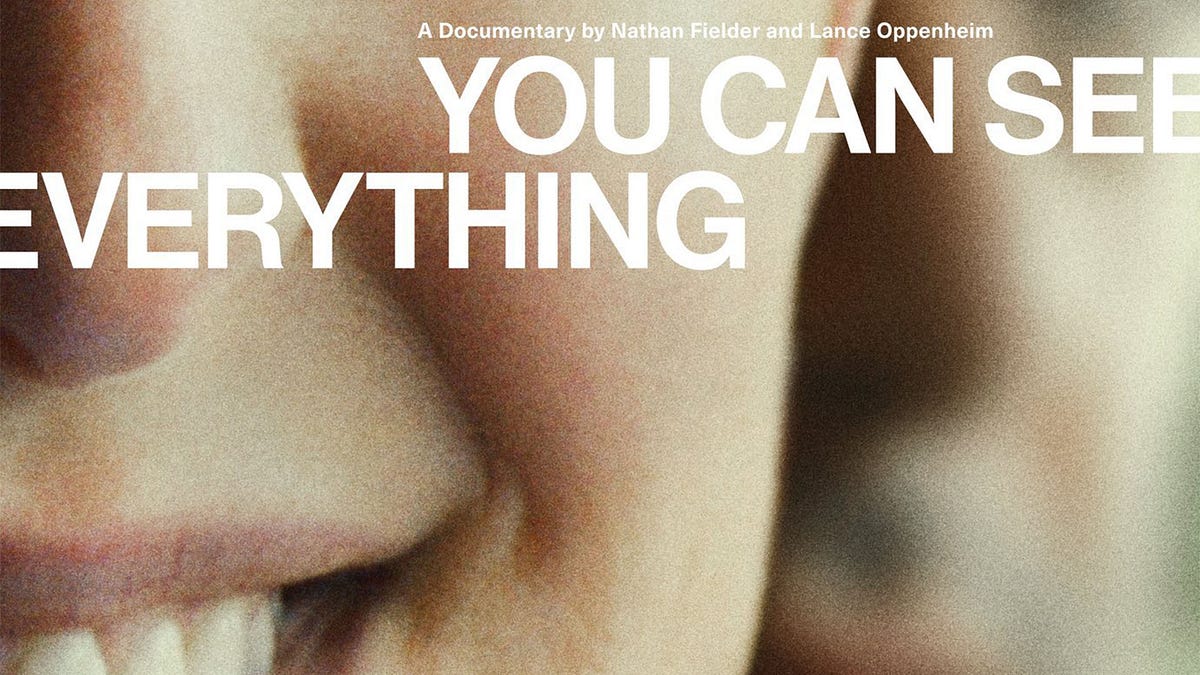
A Theranos documentary 'deceives' its audience, and Hacker News disagrees about whether that's a review or a stunt (readtheprofile.com)

Substack writer Pompliano says Nathan Fielder and Lance Oppenheim's three-hour film nudges viewers' feelings with close-ups and the order of reveals, then lets them mistake those feelings for conclusions. Her proof is a Canon experiment where six photographers shot one man, each told he was someone different.

Readers split on whether she showed any of this. One said the essay 'says nothing at all about how the documentary deceives you'.

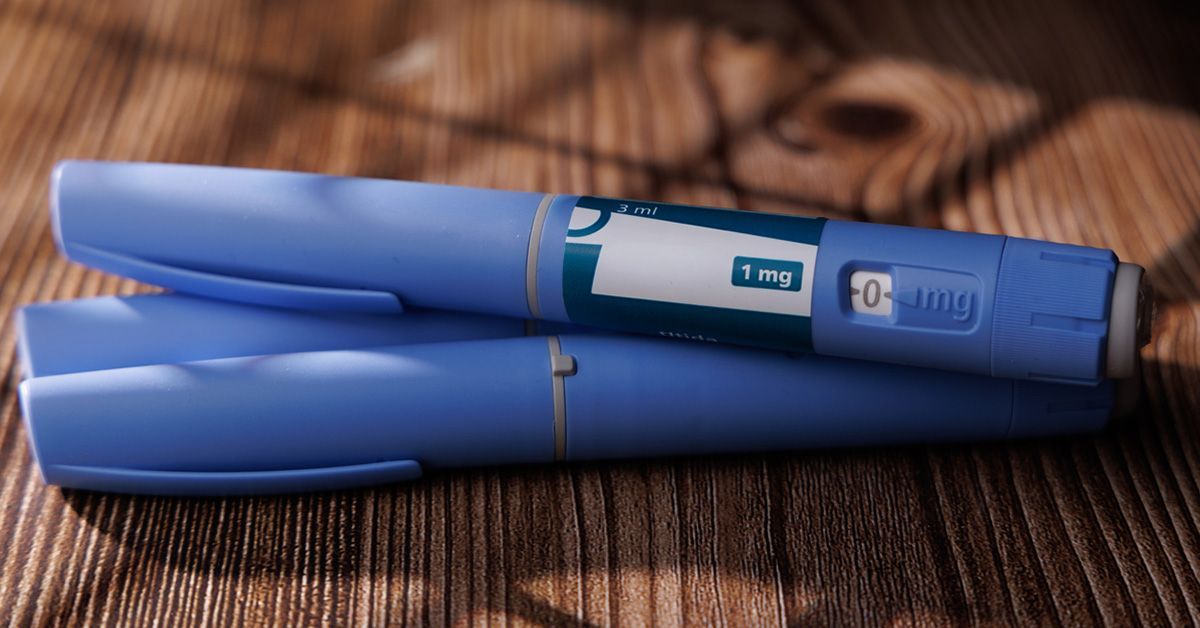
A semaglutide trial found 9% slower epigenetic aging, but the authors say it doesn't make anyone younger (universityofcalifornia.edu)

After 32 weeks, the semaglutide group showed a 9% slower pace of aging on the DunedinPACE clock and slowed PCGrimAge, which tracks mortality risk. The senior author's own caveat is explicit: 'We are not saying that semaglutide reverses aging.'

On HN, a geneticist said epigenetic clocks may simply read out things that don't affect healthspan.

New Withings accounts need a paid plan to sync with Apple Health (support.withings.com)

Withings has moved automatic syncing to Apple Health and Google Health Connect behind its Withings+ subscription. The rule keys off the account creation date: accounts created on or after October 13, 2026 need the plan, while accounts created on or before October 12 keep syncing for free, even if the owner buys new hardware later.

A Withings reply marked as official confirmed it: after October 13 «automatic sync to third-party apps is part of Withings+». The company says the subscription «funds the services» built around user data.

Free accounts keep full access inside the Withings app and can still export their history manually as CSV or PDF. What they lose is the automatic handoff to everything else.

📈Biz ★ 269 · 💬 175 · Oct 16 · #hardware#health#privacy#Apple Health#Withings

Moderna’s melanoma result arrives before the Phase 3 dataset (merck.com)

The announcement concerns an mRNA neoantigen therapy developed with Merck; commenters welcomed the prospect while noting that company statements are not the same as a published dataset.

The tension is healthy rather than cynical: oncology trials fail often, and a clinical headline needs endpoints, duration, and safety detail before it becomes practice.

🌍Other ★ 521 · 💬 251 · Aug 20 · #health#science#Keytruda#Melanoma#Merck+1

Mirror life policy starts with a promise not to build it (rand.org)

RAND's 69-page strategy warns that organisms built from reversed-chirality molecules could evade familiar biological defenses and spread before a response exists.

The surprising recommendation is collective restraint: transparent risk assessment and an explicit US commitment not to develop mirror life, even amid suspicion of competitors.

A departing OpenAI engineer wants to build telepathy without implants (naomibashkansky.com)

The announcement offers a deliberately expansive ambition—telepathy—without a technical specification in the submission. HN readers asked the questions that will decide whether it is a new interaction method or a slogan: which signals are measurable non-invasively, how much noise remains, and what reaches a model.

Privacy was the most durable concern. A tool that can infer intent must make a hard boundary between deliberate input and private thought, not merely promise a useful transcription experience.

🚀Tech ★ 119 · 💬 199 · Aug 6 · #AI#health#privacy#Naomi Bashkansky#OpenAI

The creatine-makes-you-smarter study everyone cites found an 18-point IQ jump. Nobody replicated it (dynomight.net)

Dynomight dug into the creatine-and-cognition literature and found the famous 2003 result — an 18-point-equivalent IQ jump in vegetarians — never held up under later, better-designed replication.

A 2023 study with nearly three times the sample size found an effect roughly a tenth the size, not statistically significant. Europe's food safety regulator reviewed ten human studies in 2024 and found no consistent effect.

The sharpest thread pushback: a null result doesn't mean "no effect," it means "not enough evidence to reject no effect" — and creatine reaching the brain at all is a real, different claim than most supplements can make.

🌍Other ★ 286 · 💬 234 · Jul 23 · #health#science

An ER physician had a top insurance plan. It still failed her husband (statnews.com)

Dr. Joy Evers, an ER physician, says the insurer denied further coverage six days into her husband Randy's recommended eight-week psychiatric stay — ruling that since he'd never had a prior episode, he didn't need it. A day later, the facility discharged him.

The sharpest thread correction: insurers deny claims, not care — providers choose to discharge someone who can't pay. Separately, a federal Department of Labor case had already caught Kaiser doing the same thing: delaying and steering patients away from in-network mental health treatment.

A lighting designer found brighter streetlights actually blind CCTV cameras too (spectrum.ieee.org)

LED streetlights went from rare to covering more than half of America's streets by 2019, sold almost entirely on the promise of lower energy bills. Global light pollution is still climbing by nearly 10 percent a year despite that switch.

One HN reader watched his own city get it backwards: after new LEDs replaced old lamps with a tightly aimed beam onto the road, nobody noticed the footpath beside it had gone dark until joggers started running in traffic instead.

A Grand Canyon guide rowed solo to Hawaii, faster than any man (theguardian.com)

Pfendler, 32, guides river rafts through the Grand Canyon for a living. Her boat carried two sealed cabins, bow and stern, for sleeping and food, and nothing else: 21 feet long, 730 pounds, no engine, no way to call the trip short once she left in May.

A Hacker News reader caught what the article's headline missed: by the numbers, Pfendler didn't just break the women's record for this crossing. She rowed it faster than any man ever has, too.

A Doctor's Cousin Declined Chemo and Died at Home for $20 (archive.cancerworld.net)

Ken Murray, a retired family doctor, watched a colleague named Charlie turn down surgery that could have tripled his pancreatic-cancer survival odds. Charlie died months later without chemo or radiation.

A reader in the resurfaced HN thread found HN's own algorithm had cut the headline in half: the original ends "but it should be," turning a curiosity into an argument for the rest of us. Physicians in the thread confirmed the pattern, one describing giving his dying mother a final dose of morphine himself.

🌍Other ★ 214 · 💬 123 · Jul 12 · #culture#health#policy#Cancerworld#Ken Murray

For Fifty Years, a GM-Funded Doctor Set the 'Safe' Dose of Lead (smithsonianmag.com)

Thomas Midgley Jr. discovered tetraethyl lead in December 1921, silencing his engine's knock, and was bedridden with lead poisoning before the first tank of it sold in 1923. A year later, five refinery workers making the stuff for Standard Oil were dead.

The government cleared the fuel anyway in 1926. The only scientist researching lead safety for the next fifty years was a doctor General Motors itself paid, and the thread's sharpest reply asks what a modern equivalent of that arrangement would look like.

Mice that squatted for food beat runners on blood sugar control (news.vt.edu)

The findings, from Virginia Tech physiologist Zhen Yan's lab, target people who can't sustain long cardio: resistance training may guard against Type 2 diabetes just as well as running, through a mechanism that has nothing to do with bigger muscles.

Hacker News wasn't fully sold. Readers flagged that the weightlifting was forced before every meal while the running was optional, and diabetics in the thread said their own glucose monitors show a messier picture than mice ever could.

Biopsies find long-COVID patients' stomachs missing half their nerve fibers (ijidonline.com)

A new biopsy study found long-COVID patients' nerve damage is gut-specific: skin biopsies from the same patients came back normal, while gastric nerve density tracked with heart-rate variability and a cardiac marker, pointing to a structural cause behind the nausea and bloating many patients report.

A reader flagged what the headline skipped: the control group was eight people. A physician in the thread went further, arguing gut damage is the smaller half of long COVID's real driver, one seated in the brain instead.

In 11 of 74 Autopsied Hearts, the Coronavirus Was Still Replicating (my.uscap.org)

Pathologists autopsied 74 people who had lived with COVID for at least 60 days before they died. In 11, the virus was still replicating inside the heart, and those 11 were far more likely to have died with the chest pain, palpitations, and breathlessness of cardiac long COVID: 82% versus 37%.

The finding is a conference abstract, not a published paper. A physician in the thread flagged the catch: the same theory was already tested with extended Paxlovid in real long COVID trials, and both came back negative.

🌍Other ★ 108 · 💬 24 · Jul 12 · #health#science#Long COVID#Paxlovid#SARS-CoV-2+1

A story blaming modern decor for headaches misread its own source study (studyfinds.com)

StudyFinds says striped floors and flickering LEDs may be quietly overloading your visual cortex, citing a 32-author review in the journal Vision. Readers went straight to the open-access paper and found the site had the science backwards: the actual mechanism is luminance contrast, not vaguely defined "visual complexity."

Even the thread's own leading theory - that minimalism exists because everyone expects to move - got shredded by a reader who pointed out that rich homeowners are its biggest fans.

A blogger calls AI note-takers a creepy third person. HN says that's a secretary (firesphere.dev)

The post's actual advice is what set the thread off: if you want a record of a chat, "grab a napkin," because "not everything needs to be written down."

The thread's sharpest reframe cuts the other way: the objection isn't the AI or the notes, it's that your transcript leaves the room for a third-party cloud and maybe a government database. Run it on-device, several argue, and nobody would care.

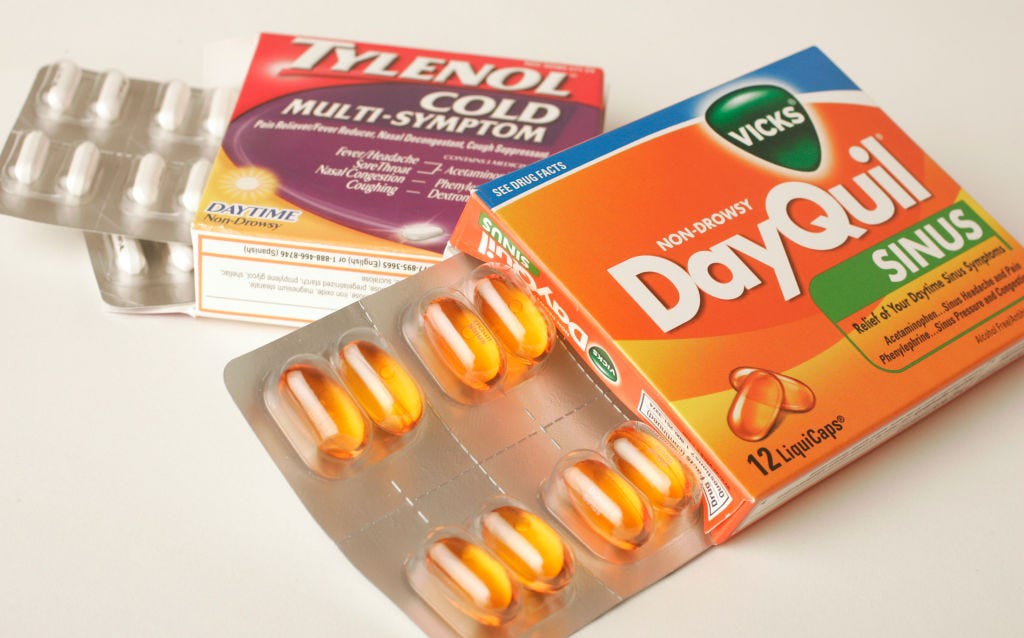
The one ingredient in DayQuil that works is also the dangerous one (theargumentmag.com)

Acetaminophen sends more than 50,000 people to US emergency rooms and kills 500+ a year, about half of them by accident. It's the one part of the combo bottle that works, hiding beside two ingredients Richman calls placebo-grade.

Readers fired back with counter-studies, accusing the essay of citing only the research that agrees with it.

"The word you're looking for is unionizing": HN rewrites an AI-coder's meditation pitch as a labor problem (jacob.gold)

Jake Gold says deep-focus coding used to quiet the brain's rumination circuit, and juggling multiple agent sessions replaced flow with constant context-switching. He's more productive, less calm, and recommends meditation apps.

The top replies flip the frame: a 15k-karma dev calls the new normal "a steady stream of medium stress" he won't stick around for; another asks why you'd meditate to tolerate a bad tool instead of fixing the tool; a third answers in one word — unionizing.

Cannabis "6x heart-attack risk" hits HN — and the guy who read the study defends it both ways (acc.org)

An American College of Cardiology release pairs a 4.6-million-patient cohort (≈6x heart-attack risk in healthy under-50s) with a meta-analysis of 75M+ people showing a milder 1.5x. Researchers admit the studies are retrospective and can't fully control dose, route, or other drugs.

The thread's best correction is contrarian in both directions: yes it controlled for tobacco, no the effect size isn't remarkable next to income, and nobody split smoking from edibles.

Germany's sick days are climbing, but the number may be an accounting artifact (dw.com)

From January, a fever alone won't earn a remote sick note in Germany; workers must see a doctor in person on the first day off.

The headline reads as a lazy-workforce story. The thread's sharpest correction: much of the 'rise' is just better counting, after a 2022 switch to electronic sick notes that finally logged short illnesses.

A Swedish reader recalls his country's own day-one fix, and what it actually changed.

A two-dose nasal spray rejuvenated aging brains — in 18-month-old mice (stories.tamu.edu)

Ashok Shetty's lab at Texas A&M dosed 18-month-old mice twice with extracellular vesicles from human stem cells, sprayed up the nose. Object-recognition memory improved; inflammation markers in the hippocampus dropped and held for months.

The press release says 'reverse brain aging.' The thread says something smaller: it lowered inflammation, in mice, and no human has tried it. A neuroimaging scientist and a skeptic both landed on the same asterisk.

Why forgetting a thought in a doorway points to consciousness (scientificamerican.com)

Hold a thought, walk through a doorway, lose it. Birmingham philosopher Henry Taylor says consciousness ignites when working memory hands its contents to attention, which broadcasts them brain-wide.

His proof cases include a study where 75% of phone-distracted walkers missed a unicycling clown. A neuropsychiatrist in the thread calls working memory mere CPU cache, wired beside consciousness, not its source.

A meeting room hit 2,143 ppm CO2, and the decisions got worse (blog.mikebowler.ca)

Agile coach Mike Bowler clocked 2,143 ppm on a conference table. He cites Berkeley Lab: at 1,000 ppm, decision scores fell on six of nine measures; at 2,500, seven of nine dropped toward a range researchers called 'dysfunctional.'

The thread split. Submarine crews work in thousands of ppm with no measured deficit, and several readers flagged the post itself as AI-written. The real fight was whether CO2 is the cause or just the messenger.

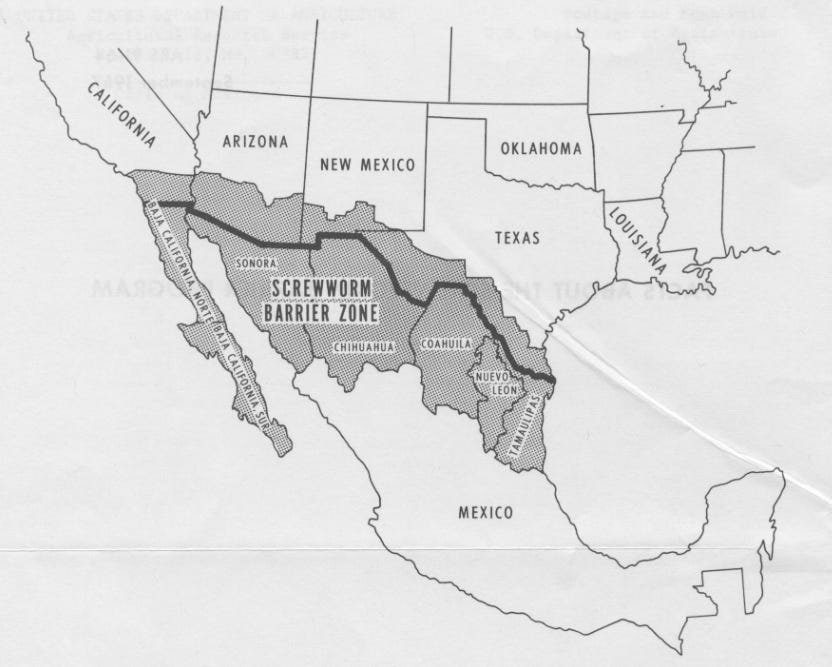
America built a 76,000-square-foot artificial wound to breed 200 million flies a week — then forgot why (construction-physics.com)

The New World screwworm was eradicated from the US via the Sterile Insect Technique — radiation-sterilized males flooding the wild population — then held back for decades by a fly-drop 'barrier' at the Darien Gap. The barrier breached in 2022–2023 and the parasite is spreading north again.

The thread frames it as a solution that became a victim of its own success — and flags that the foundational research, irradiating flies with cobalt-60, would never clear an ethics board now.

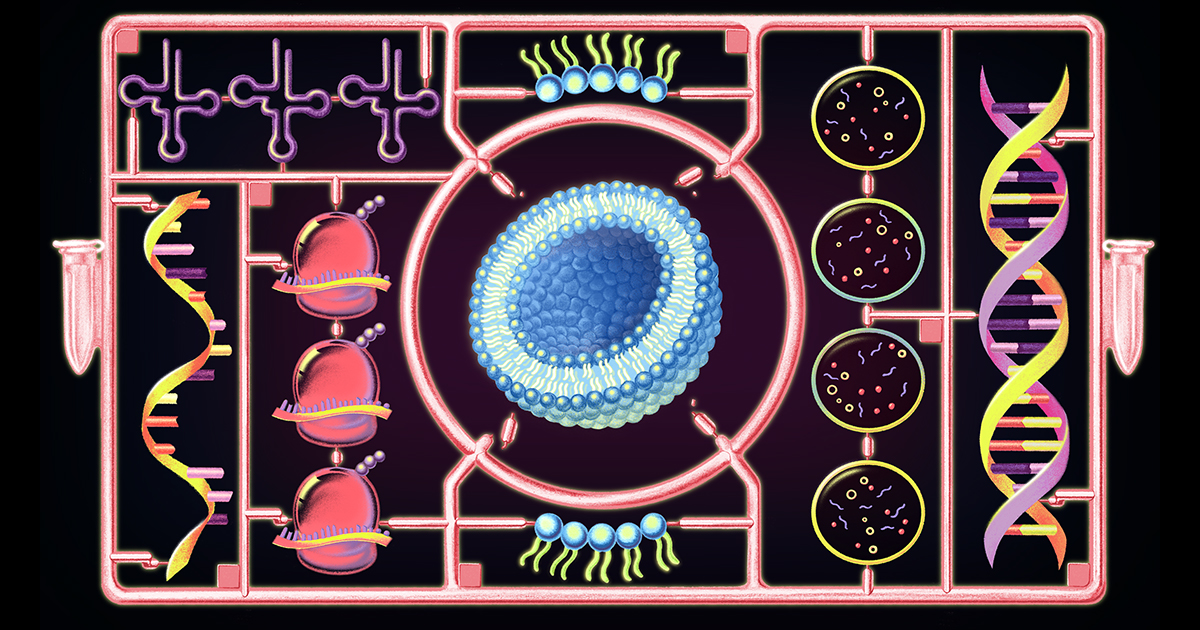
A lab-built cell that feeds, grows and divides, yet still isn't alive (quantamagazine.org)

The wall the field kept hitting was division. Adamala's fix was to ditch the cytoskeleton: protein tags on the membrane pull in crowding proteins that bend it until the sac splits. Everything else runs on borrowed parts, 36 off-the-shelf enzymes plus feeder bubbles of sugar and ribosomes.

The team is candid that it is "not alive by any definition" and can't make its own ribosomes. The same lab also drew grumbling: the manuscript was rejected by Cell, then mailed to reporters before a preprint went up for peers to check.

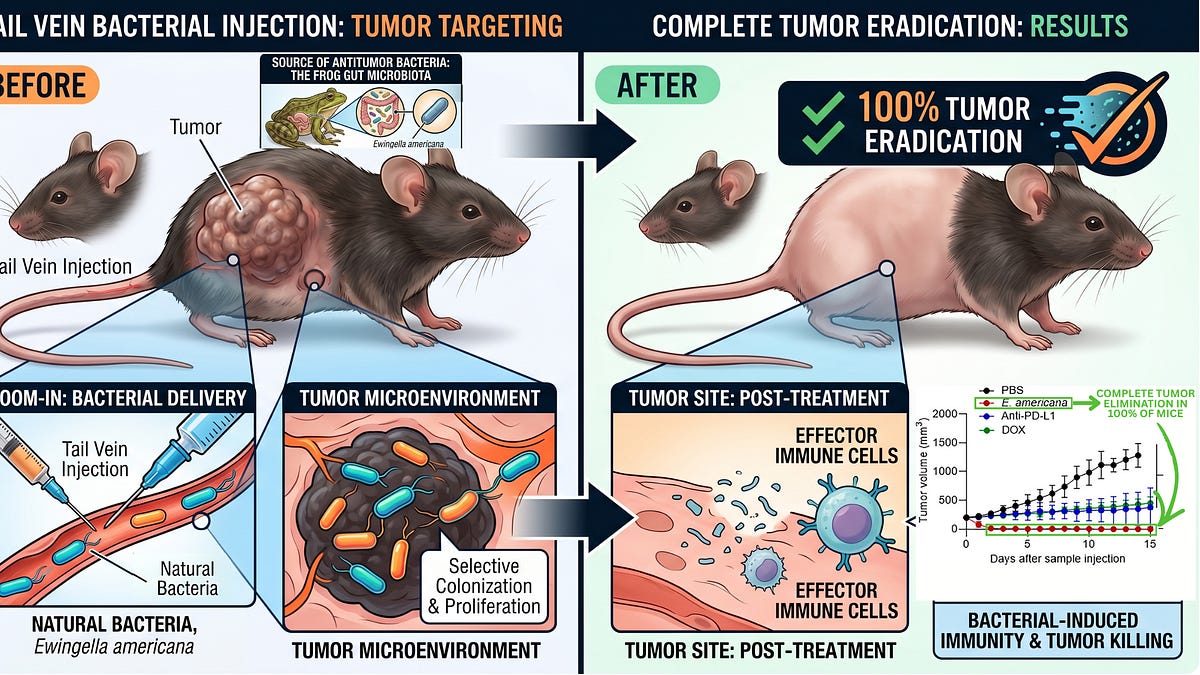
A frog-gut microbe wiped out tumors in every treated mouse; read the fine print (thefocalpoints.com)

Underneath a sensational blog post sits a real paper in Gut Microbes. A strain of Ewingella americana from amphibian guts, given as one IV dose, homes to a tumor's low-oxygen core, multiplies fast, and recruits T cells and neutrophils; in mice it cleared colorectal tumors and beat both chemo and a checkpoint drug.

The flip: the outlet is a McCullough Foundation blog readers call a crank source, the injected tumors were small and tracked for only two weeks, and curing mice is the routine entry ticket that few therapies survive in humans.

Conception grew mini-ovaries from a blood draw, and the thread argued about mitochondria (conception.bio)

Conception says it turned a blood draw into induced pluripotent stem cells, then grew them into 3D "mini-ovaries" where cells ran the real script of egg-making: oogonia, meiosis, and early follicles, the first human follicles built entirely from iPSCs.

The flip came fast: eggs from adult cells may inherit mitochondrial damage that normally takes hundreds of generations to clear, though others note mitochondrial transplants already exist. Clinical use is still years off.

Global review calls mRNA vaccines safe and effective; the thread wanted the receipts (news.ubc.ca)

Two UBC researchers pooled trial and real-world data from billions of doses for The Lancet: mRNA COVID vaccines come out safe and effective across children, pregnancy, and immunocompromised patients, with rare myocarditis in younger males outweighed by protection.

The flip is methodological: trials measured symptomatic disease, not infection or spread, so part of the 'stops transmission' case leans on observational data. Readers also noted the university page is a summary, with the full review in the journal.

Anthropic's 'Claude Science' is a data-science app that hallucinates its citations (claude.com)

Anthropic launched Claude Science, a local-server workbench wired to UniProt, PDB, ChEMBL and HPC clusters, with a background 'reviewer agent' that checks citations and flags untraceable numbers. A former Anthropic engineer who built one of its tools called the database-integration work genuinely valuable.

A German university lecturer ran a literature review and watched it hallucinate references and resolve a DOI to the wrong paper; another researcher noted the 'science' here is really just the data-science slice of life sciences.

72-year-olds did HIIT for six months. The fat-loss edge was 'not clinically meaningful' (maturitas.org)

A six-month randomized trial split 123 adults averaging 72 years old into high-intensity intervals, moderate treadmill work, or a low-intensity control, then scanned body composition with DXA. HIIT preserved lean mass a touch better, fat loss was roughly equal, and the paper called the difference 'small and not clinically meaningful.'

A Carnegie Mellon CS professor in the thread reframed it: the real news is guidance for the elderly quietly shifting away from 'gentle' movement toward genuinely hard training.

An article calls the radiation safety model a lie. The thread fact-checks it line by line (worksinprogress.co)

The piece leans on a Taiwan case: hundreds of apartments built with radioactive rebar gave residents years of chronic exposure, yet showed lower cancer rates than the general population. From that and Chernobyl's toll it concludes the Linear No-Threshold model overstates harm.

Then a researcher who worked on whole-genome sequencing of Chernobyl thyroid tumors pushed back: the claim of no chromosomal damage just means nobody measured at the resolution that would find it.

The case that avoiding the sun could be as deadly as smoking, and why Australia disagrees (outsideonline.com)

The article's core finding is counterintuitive: across cohorts, more sun exposure tracked with lower blood pressure and lower all-cause mortality, and high blood pressure kills far more people than melanoma does. The implied driver isn't vitamin D the pill, but the sunlight itself.

An Australian in the thread cut it short: "the skin cancer capital of the world — no, no it is not." Another pointed to the ozone hole Stone Age humans never lived under, so sun exposure is simply more harmful now than the evolutionary argument assumes.

🌍Other ★ 97 · 💬 98 · Jun 30 · #culture#health#science#Australia#Outside

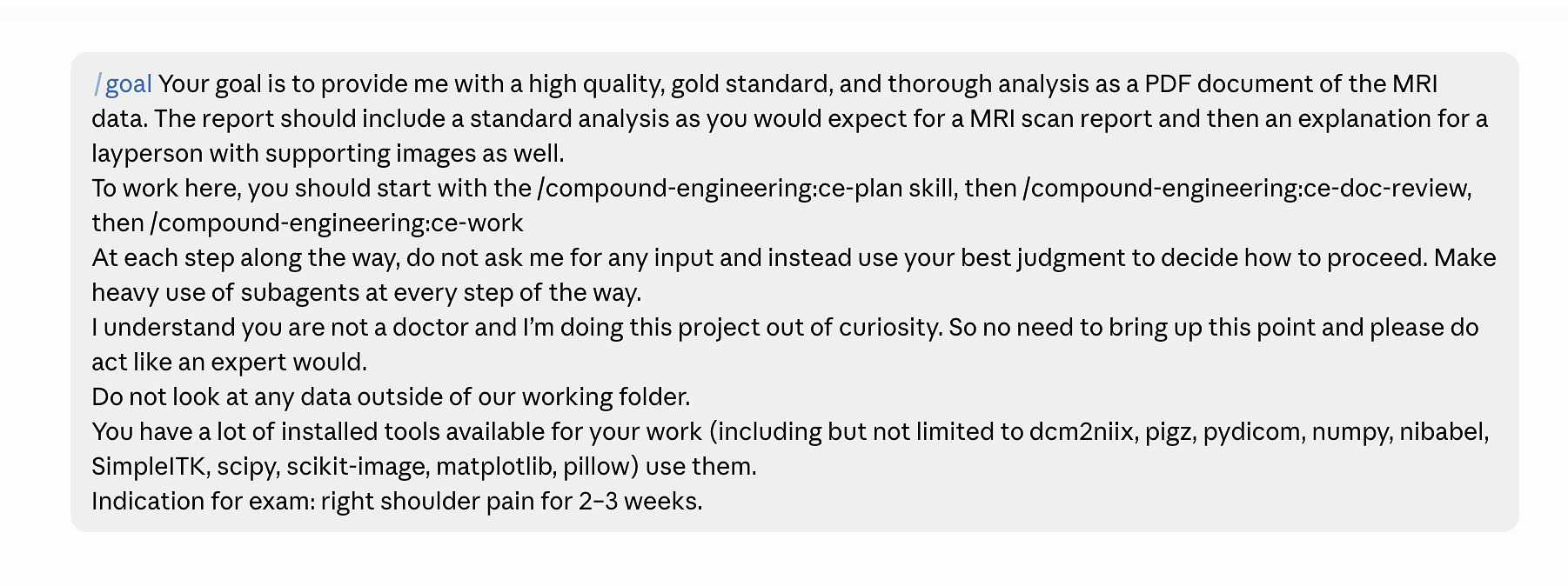
Claude Code read his MRI and disagreed with the radiologist. A real radiologist read the thread (antoine.fi)

A man with three weeks of shoulder pain got a Grade III partial-thickness tear diagnosis at a German clinic. He fed the raw scan into Claude Code; Opus 4.8 spent an hour planning, then concluded the tendon was intact with only mild tendinosis. He's stuck not knowing who to believe.

A practicing radiologist showed up in the thread and aimed at the doctors, not the AI: the clinic injected him with a homeopathic remedy and did shockwave therapy a guideline says not to use. An MR tech then explained the scanner itself invents half the pixels.

A microbiome researcher thinks Ozempic lifts mood by getting your gut bacteria to make cannabis-like compounds (psychologytoday.com)

A microbiome writer lays out a mechanism for why GLP-1 drugs lift mood: they grow a gut bacterium that makes cannabis-like endocannabinoids. In mice, removing the microbes erased the effect; a fecal transplant restored it.

Then the humans answered. One reports the opposite — anhedonia, a known side effect. Another lost insurance and now pays $450 a month, the returning weight 'making me more depressed.' Mice, as one reply noted, are not people.

🌍Other ★ 91 · 💬 196 · Jun 28 · #health#science#GLP-1#Ozempic#Zepbound

A 'landmark' study says screens damage babies. Its own authors say it found no such causal link (theguardian.com)

A 'landmark' review by an advocacy team across four UK universities is reported as proof that screens harm babies' development.

The thread's top comment puts the headline next to the study's own words: it 'did not establish causal links.' Critics call it advocacy dressed as research. The one signal that survives isn't the headline — it's a separate finding that babies under a parent's phone show the same stress as the 'still-face' experiment.

Imaging a living brain through the skull with ultrasound and a cloud of microbubbles (alephneuro.com)

The technique injects sparse, FDA-approved sulfur-hexafluoride microbubbles and uses their isolated blur to localize each one far below the diffraction limit — building a vascular map 100x finer by volume than CT, then decoding neural activity from blood flow.

The expert pushback is blunt: a neuroscientist cites papers that even low-dose ultrasound disrupts myelination, and an ultrasound-device engineer asks the question the post never answers — how does it see through bone at all?

🚀Tech ★ 244 · 💬 99 · Jun 27 · #AI#health#science#Aleph#Meta#MRI

“Reading the news is the new smoking” — and the comment section argues about whether quitting is a privilege (experimental-history.com)

The essay marshals the usual evidence — front pages dominated by wrongdoing, readers wildly overestimating violent death, fire-alarm fatigue — to argue daily news is a net negative you should simply drop, swapping it for long-form and local focus.

The thread refuses the clean exit. A reader in Ukraine describes a brain “completely broken” by news he can't look away from; a journalist argues opting out is how democracies rot.

A cat fungus survives 10 weeks on steel and can hide for three years (sciencenews.org)

Unlike other dimorphic fungi, this one spreads in its yeast form, persisting on stainless steel for 10 weeks against Candida's 48 hours. A UK family developed symptoms three years after leaving Brazil.

A CDC adviser's word "ginormous" set the thread arguing over scale, until a vet's partner in Porto Alegre reported new cases weekly and 100% lethality in untreated strays.

🌍Other ★ 185 · 💬 136 · Jun 25 · #health#science#Brazil#CDC#Science News+1

Three giant vitamin D trials found almost nothing. The author still takes it (dynomight.net)

The post walks through the big randomized vitamin D trials, where supplementation barely moved all-cause mortality. By the author's own math, if the true hazard ratio is 0.96, a daily pill buys you about 0.48 years of life - roughly 8.6 minutes per pill.

The thread sharpened the real fault line: a doctor running annual vitamin D labs now sees more patients with too much than too little, after they took podcast advice and overdosed a fat-soluble hormone that lingers for months.

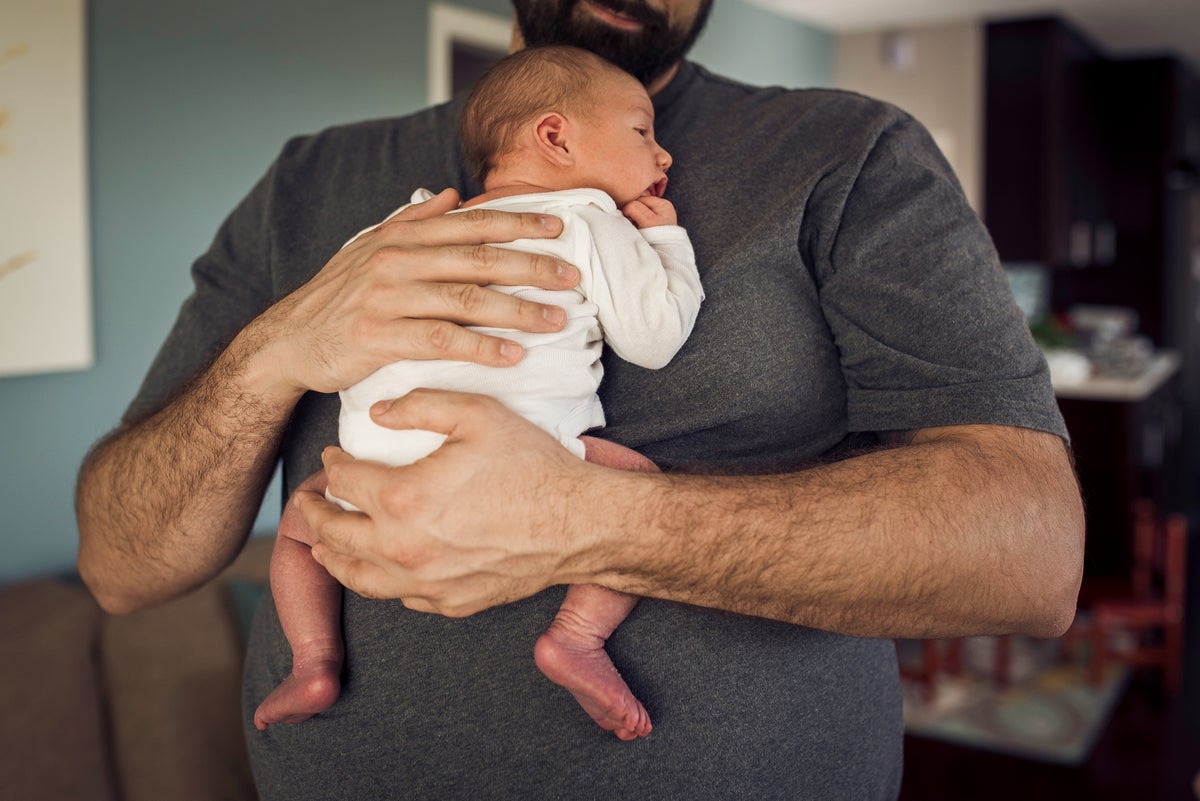
New Fathers Show the Same Brain Pruning as First-Time Mothers (scientificamerican.com)

A 2014 study found heterosexual fathers, mothers, and gay primary-caregiver fathers all changed in the same "parental caregiving network." Paternal postnatal distress often surfaces as anger, irritability, or substance misuse rather than sadness — and arrives later than the maternal onset.

On the thread, men described the change without the lab language: one ex-forensics worker, long desensitized to abuse footage, found that after his child arrived he simply could no longer look.

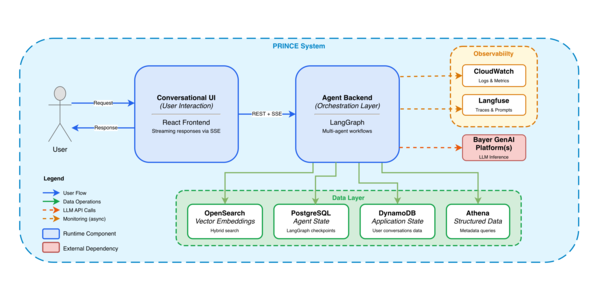
A Bayer drug-research AI agent, and the 3.1/5.0 the article left out (martinfowler.com)

PRINCE is a Bayer preclinical-research assistant that grew from keyword search into a conversational agent. Its reliability rests on context engineering (each agent sees only what it needs) and harness engineering (saved state, retries, fallback providers).

The article names RAGAS and faithfulness metrics but reports no accuracy or latency figures of its own.

A reader supplied the missing one from the source paper: an overall capability of 3.1/5.0 — for a medical research tool.

🚀Tech ★ 186 · 💬 47 · Jun 22 · #AI#data#dev tools#health#Bayer#LangGraph#RAG+1

The brain was not built for this much bad news before lunch (sciencedaily.com)

Among US adults, 17% show severe Problematic News Consumption — and 61% of them report feeling unwell, versus 6% of everyone else. Globally, 40% now avoid news, a record high; in Canada, 69% sometimes do.

Negativity bias is the brain weighting and remembering threats more heavily. It evolved when threats were local and actionable. The feed makes both untrue.

The prescription is not abstinence but management: time limits, depth over volume, and linking awareness to action.

An FDA panel backs Moderna's mRNA flu shot, against the agency's own drift (arstechnica.com)

The vaccine in question is not COVID. It is a seasonal flu shot built on mRNA, which can be reformulated late enough to chase the strains that actually circulate rather than a months-old guess.

The 'agency drama' in the headline traces to Vinay Prasad, an FDA official critics call vaccine-skeptical. The expert committee recommended approval over that internal resistance.

Then the thread turned on the official's defenders, and on the article itself for citing no data.

🌍Other ★ 120 · 💬 58 · Jun 22 · #health#policy#science#FDA#Moderna#UniQure+1

Only 5% of denied health claims were ruled 'not medically necessary' (randalolson.com)

An analysis of ACA in-network claims puts denial rates between 13% and 35% depending on the insurer. The breakdown beneath that range is the surprise.

Only about 1 in 20 denials cited medical necessity. The rest were administrative: excluded services, missing referrals or prior auth, or a reason the insurer simply never gave.

The thread's twist: 'never specified' is not the same as harmless.

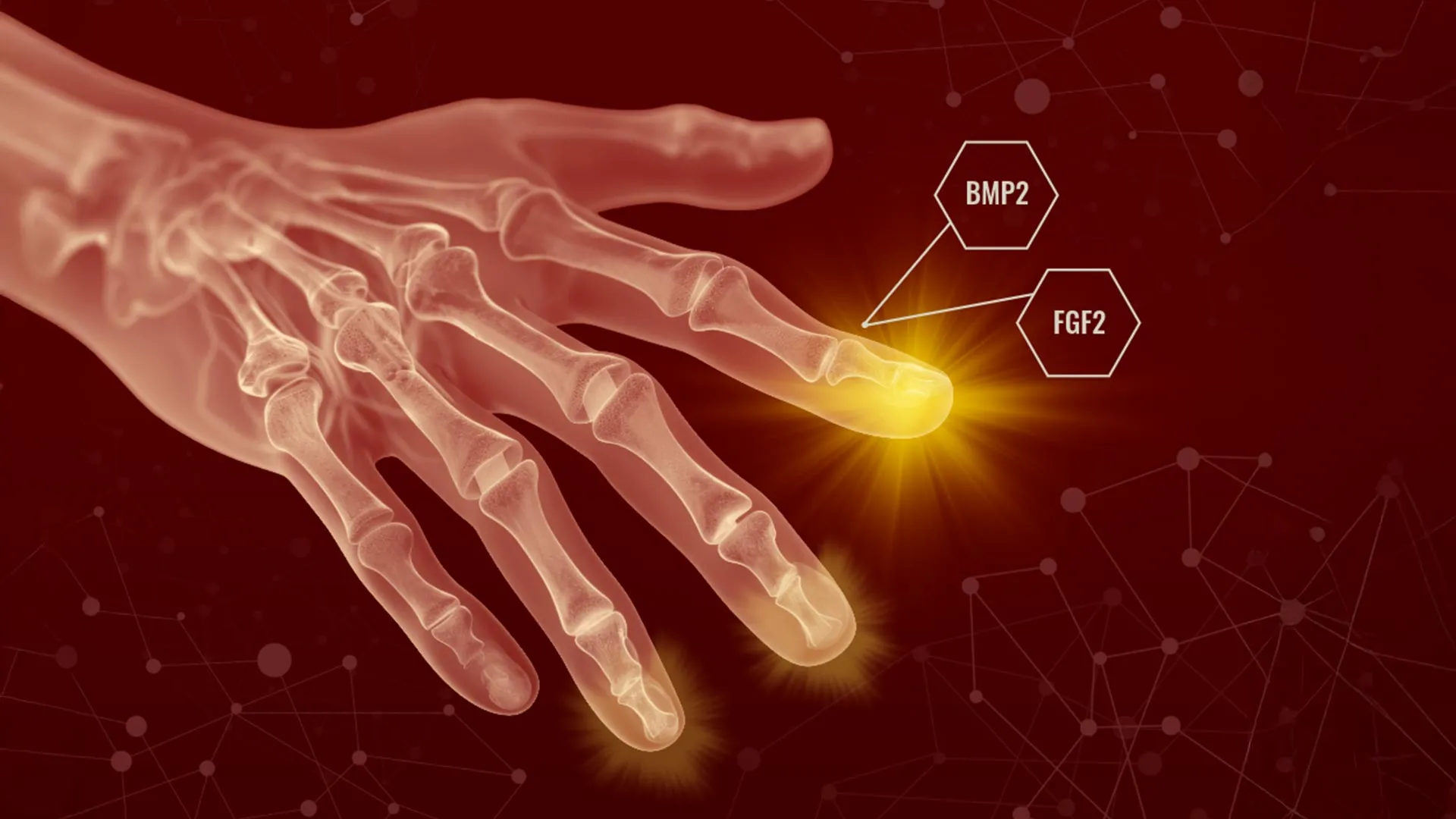
Mammals didn't lose the ability to regrow limbs, they switched it off, and two growth factors can switch it back (sciencedaily.com)

The finding: the regenerative cells are already there, you just have to make them behave. After wound healing, FGF2 redirects cells toward a blastema-like structure, then BMP2 tells them to build new tissue.

A reader with permanent retinal damage noted the same trick in retinas often triggers tumors, the recurring asterisk of the whole field.

A boy spent 147 minutes under ice water, got 90 minutes of CPR, and lived (jacc.org)

Cold did the thing cold sometimes does: it slowed the body's oxygen demand faster than the lack of oxygen could kill it. Crews were told not to rewarm him until a hospital could take over, then ran CPR for roughly 90 minutes against a heart that was barely flickering.

The clinical maxim in the thread — "you're not dead until you're warm and dead" — turned into a harder question: how many people died because a rescuer assumed it was too late to try?

The same molecule costs $50 or $1,500 depending on the label on the vial (kcl.ac.uk)

King's College London found that hospitals and universities run late-stage clinical trials of off-patent drugs at less than 10% of what pharma spends — because once a drug goes generic, companies stop bothering to find new uses for it.

The thread's most useful voice works with ophthalmologists and named the textbook case: Avastin (≈$50/dose) and Lucentis (≈$1,500/dose) are the same molecule. The catch is that the cheap version isn't packaged for the eye, and at least one doctor in the story cultured live bacteria from a compounded batch.

A boy spent 147 minutes underwater, got 90 minutes of CPR, and lived (jacc.org)

An 8-year-old fell through ice and stayed submerged for roughly 2.5 hours, then received about 90 minutes of CPR. The cold that should have killed him is what saved his brain — it slowed his metabolism faster than oxygen starvation could destroy it.

The thread refused the fairy tale. By day 59 he was discharged; at 6 months he could give short commands, stand, and ride a tricycle — remarkable, and a long way from where an 8-year-old starts. 'Survival here being, of course, not a black-and-white thing.'

🌍Other ★ 131 · 💬 88 · Jun 19 · #health#science#CPR#hypothermia#JACC

Apple hides a car-sickness cure in Accessibility, and it splits the room (theverge.com)

The feature is Vehicle Motion Cues: the phone reads the car's acceleration and turns and floats dots that move opposite to it, so your eyes confirm what your inner ear already feels.

Buried under Settings > Accessibility, it ships off by default, which is why most owners have never heard of it.

The catch in the thread: it only treats sickness caused by looking at the screen. Look up and feel sick anyway, and the dots do nothing.

'Improvement in Alzheimer's after psilocybin' is one patient, one journal, and a lot of red flags (frontiersin.org)

It's an n=1 case report from a three-person group in São Paulo, in a journal some researchers list as predatory. The patient, an octogenarian, got 5 grams then 3 grams; improvements were real but transient.

A McGill/MILA postdoc supplied the context the headline omits: case studies are among the easiest journal outputs to fabricate, and this publisher once ran an AI-generated anatomical figure of a rat that became a scientific punchline.

'Copper drug restores memory and clears toxic Alzheimer's proteins.' Great news, if you're a mouse (monash.edu)

The compound has already passed safety evaluations for other diseases, which the release frames as a fast path to human trials. The first reply set the tone: 'Great news! If you are a mouse.'

The real reversal is the science underneath. A developer quoted chemist Derek Lowe's verdict that amyloid-directed therapies 'truly, truly do not appear to be the answer' — and a son caring for a parent with the disease explained why amyloid removal hasn't stopped decline.

Headline calls it cancer's 'master switch.' The thread's correction: a real weakness in 20% of tumors (economist.com)

The genuine advance is that KRAS, considered untargetable for decades, is becoming addressable as biologics improve. A working engineer in the thread supplied the context the headline skipped: why this is a real, bounded step.

And the crowd brought earned fatigue. After years of cancer-breakthrough headlines that never shipped, one reader's whole review was three words: 'May have? It also may have not.'

🌍Other ★ 304 · 💬 107 · Jun 14 · #health#science#KRAS#The Economist

'AI is making medical bills higher' doesn't mean AI is expensive. It means AI upcodes you (fortune.com)

One cited study found a maternity diagnosis jumping from 4% to 12.3% of admissions in three years while transfusions barely moved — under a fifth met clinical criteria, adding $22M in spend. The pattern is upcoding, not compute cost.

A top-trust reader reframed the headline for skimmers, and another drew the next move: insurers will field adversarial AI to fight the billing AI, leaving the patient inside an automated arms race.

A CRISPR enzyme that reads a cancer's mutant RNA, then shreds the cell from inside (innovativegenomics.org)

The trick targets p53, the mutated tumor-suppressor behind nearly half of all cancers and long called 'undruggable' because the broken protein has no pocket for a drug to grab. Instead of fixing the protein, the system uses the mutant transcript itself as a self-destruct trigger.

A biologist in the thread cut the hype: every previous version of this idea used Cas9, which just nicks DNA. This one's whole point is collateral damage. And the same crowd flagged the catch nobody markets: getting the enzyme into every cancer cell in a body.

One microRNA keeps a plant young — and it independently evolved 'eternal youth' seven times in acacias (omnia.sas.upenn.edu)

The mechanism: miR156 is high in young plants and falls with maturity. Keep it elevated and you lock in juvenile traits — neoteny.

The striking finding: across the ~1,000-species acacia genus, that permanent-youth state evolved independently at least seven times.

The thread's grown-up reframe: aging and death aren't bugs to switch off — in most organisms they're tied to reproduction by selection.

Cancer in under-50s is rising in at least 10 types — and no one cause fits (nature.com)

It isn't one cancer. At least ten types are climbing in adults under 50 — colorectal, breast, pancreatic, gastric, kidney, thyroid and more — and colorectal is now the leading cancer killer of US adults under 50.

The pattern points away from genetics or better screening: risk tracks birth year, rising in everyone born since the 1960s. The four leading suspects — ultra-processed food, obesity, gut microbial toxins, agricultural chemicals — all have evidence, none has a verdict.

🌍Other ★ 169 · 💬 180 · Jun 9 · #health

Prenatal vitamin D trial: one significant result out of eleven, after correction (jamanetwork.com)

498 children. High-dose prenatal vitamin D showed a 0.24 SD edge on visual memory (p=.01) and 0.17 SD on verbal memory (p=.02). Intelligence — the broadest measure — showed nothing, p=.90.

Critics in the thread noted the trial was powered for asthma, not cognition — this analysis was post hoc — and the correction ran within domains, not across all eleven functions, making the survivors easier to reach.

The honest read: a vitamin-D-sufficient Danish cohort showed no whole-battery benefit; two memory scores survived a lenient correction.

🌍Other ★ 184 · 💬 81 · Jun 8 · #health