Tag

Git

6 stories

A maintainer spent 100 hours keeping AI code out of his project — and may lose modern Git to do it (joeyh.name)

He didn't reach the rule on principle first. Auditing dependencies, he found large LLM-generated changes reverted with no explanation, incoherent commit messages, and questionable code-copying — then spent ~100 hours drawing a clean line around his supply chain.

The thread split hard. Some users said the practical price — abandoning the world's dominant version-control tool over a disclosure tag — is one they won't pay. A ZeroTier founder went after the premise itself: reliable AI-code detection, he argued, is 'today's polygraph test pseudoscience.'

Not just a headline — the discussion unpacked

The top HN threads: facts from the discussions, both sides, insider voices. Email, Telegram, or RSS.

A Rust dev bets agents will retire Git, ships Oak, offers an e-ink display (oak.space)

Its trick is content-addressed lazy mounts: instead of describing each commit, you describe a whole session, and agents skip the clone entirely. The author has been building non-Git VCS since before the agent hype made it fashionable. But the launch shipped a reward gadget and zero benchmarks against Git, and at least one Git lover quietly agrees the incumbent is vulnerable anyway.

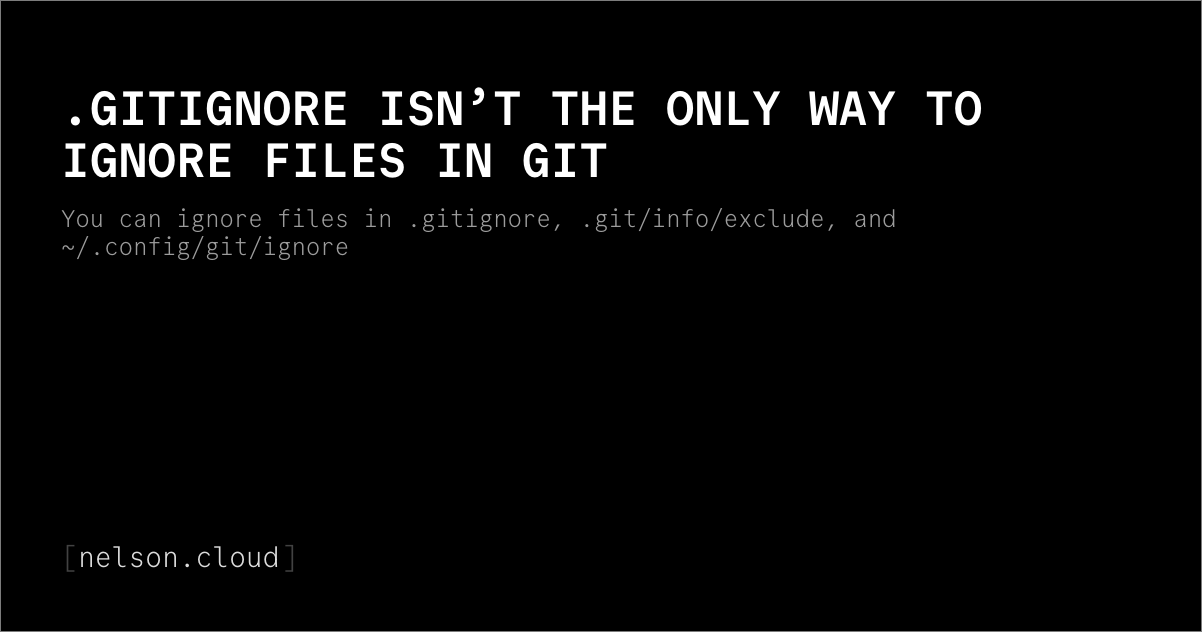
Stop committing .DS_Store: the per-user Git ignore that maintainers keep rejecting PRs over (nelson.cloud)

A short post listing Git's lesser-known ignore mechanisms, .git/info/exclude (per-repo, uncommitted) and ~/.config/git/ignore (per-user, everywhere), hit the HN front page. Some called it a rehash of the man page.

But the thread turned into a swap meet of tricks the article skipped: .gitattributes to hide noisy diffs like package-lock.json, and update-index --skip-worktree for files already tracked. A maintainer's takeaway: stop putting your editor's clutter in everyone's .gitignore.

Epic Games released an open-source version control system — and it's not really aimed at Git (lore.org)

Lore uses Merkle trees and immutable revision chains like Git, but it hydrates files on demand from a central server instead of cloning everything — the architecture games need when an artist has to lock a 3D model nobody can sanely merge.

Skepticism arrived fast. The docs read as LLM-written, the site pegs a CPU core trying to render, and one recurring objection: tying your entire version history to Epic, a for-profit company with a track record people don't fully trust.

🚀Tech ★ 983 · 💬 537 · Jun 18 · #dev tools#gaming#open source#Epic Games#Git#Lore+2

Zed says software is made between commits, and built a version control system to prove it (zed.dev)

DeltaDB stores fine-grained "deltas" with stable IDs instead of snapshots, so references survive edits, and pairs every agent message with its code change. Nathan Sobo: "the conversation with the agent becomes the only conversation you need."

The loudest engineers weren't sold on the philosophy — they liked Zed precisely because it let them switch the AI off. There's already an anti-AI fork, and a real technical gap: no multi-repo story.

🚀Tech ★ 200 · 💬 155 · Jun 12 · #AI#dev tools#programming#DeltaDB#Git#Nathan Sobo+1

A GitHub co-founder had agents rewrite Git in Rust — then relicensed it from GPL to MIT (blog.gitbutler.com)

Grit is 360,000+ lines built across multiple agent setups, burning ~45B tokens, passing 99.3% of Git's tests — though the author admits nobody has used it for anything real.

The flashpoint: Git is GPL, but Chacon released Grit under MIT, arguing the LLM-generated code is a new work. A GitHub co-founder, of all people, relicensing a copyleft project.

Others reject the premise outright: Git has never failed on a memory overflow, so why burn $10k to rewrite it?

🚀Tech ★ 71 · 💬 88 · Jun 10 · #AI#open source#programming#Git#GitButler#Rust+1