Earth may have manufactured its own oceans, not imported them from comets
For decades the answer was 'comets and asteroids brought the water.' A new idea: a young Earth, covered in magma, made its own — hydrogen from the early atmosphere reacting with oxygen in molten rock, under crushing pressure.
The catch with the delivery story is isotopes. Comets like Halley carry deuterium ratios that don't match Earth's oceans. So researchers ran the alternative in a lab: diamond anvils and lasers recreating a magma-ocean world, where hydrogen and molten rock fuse into water.
The result was startling — up to 1,000 times more water than predicted. The open question is whether an Earth-sized planet ever held enough atmospheric hydrogen to drive the reaction. As one researcher put it: it's unclear you can do this for an Earth-mass planet.
The case that Earth's water never arrived, but was cooked up here
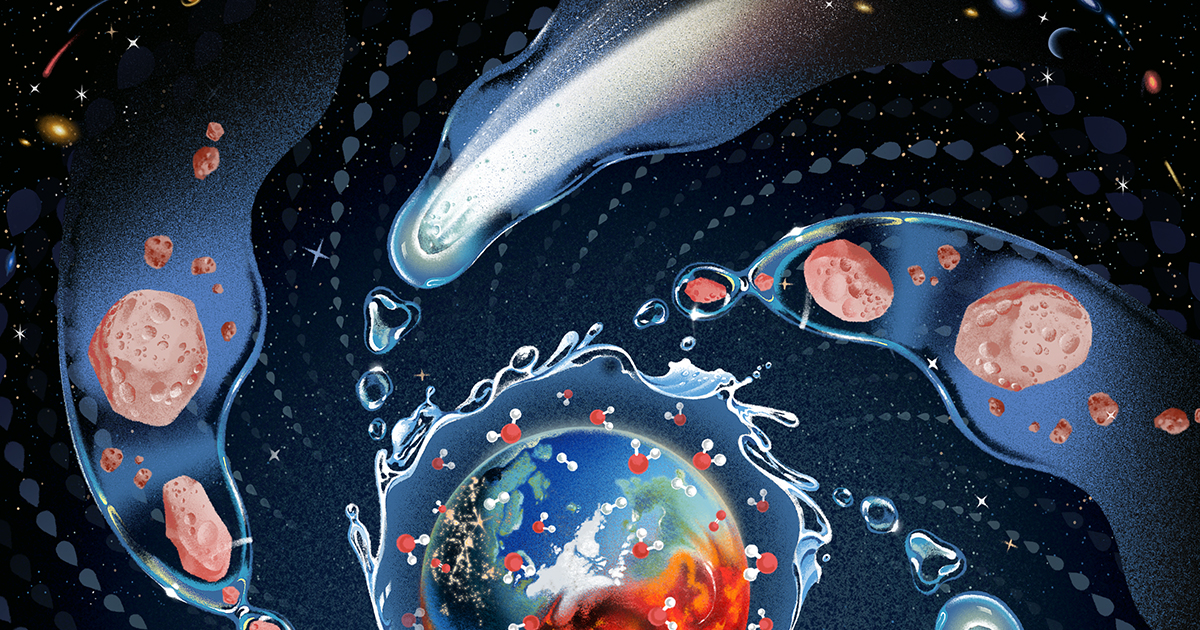
Quanta's feature, discussed in the thread, lays out a genuine open mystery in planetary science and a new contender for the answer.
The self-made hypothesis: hydrogen plus magma equals ocean
The new idea is that early Earth manufactured most of its water internally, during the period when its surface was a molten magma ocean. The mechanism: hydrogen from the planet's early, thick atmosphere reacted with oxygen locked in the molten rock to form water. Pressure is the engine. "That higher pressure is a big part of what facilitates the water production," researcher Harrison Horn explained.
Horn, S.-H. Dan Shim and collaborators at Lawrence Livermore National Laboratory and Arizona State University tested this by recreating the extreme conditions of young sub-Neptune worlds with diamond anvils and lasers. The reaction produced up to 1,000 times more water than expected, suggesting a planet could generate oceans' worth of water through chemistry alone, and fast.
Why the comet story fell out of favor
The long-standing alternative is delivery: water arrived bolted to comets and asteroids during the early bombardment. The trouble is the fingerprint. Water carries a ratio of deuterium (heavy hydrogen) to ordinary hydrogen, and that ratio should match its source.
- The Giotto mission found Halley's comet had a deuterium ratio about twice that of most of Earth's water.
- ESA's Rosetta probe at comet 67P measured "the highest concentration of deuterium of any comet we've measured."
- Asteroids fit better: the 2021 Winchcombe meteorite's ratio "almost perfectly matched" Earth's oceans, though its noble gases don't line up with Earth's atmosphere.
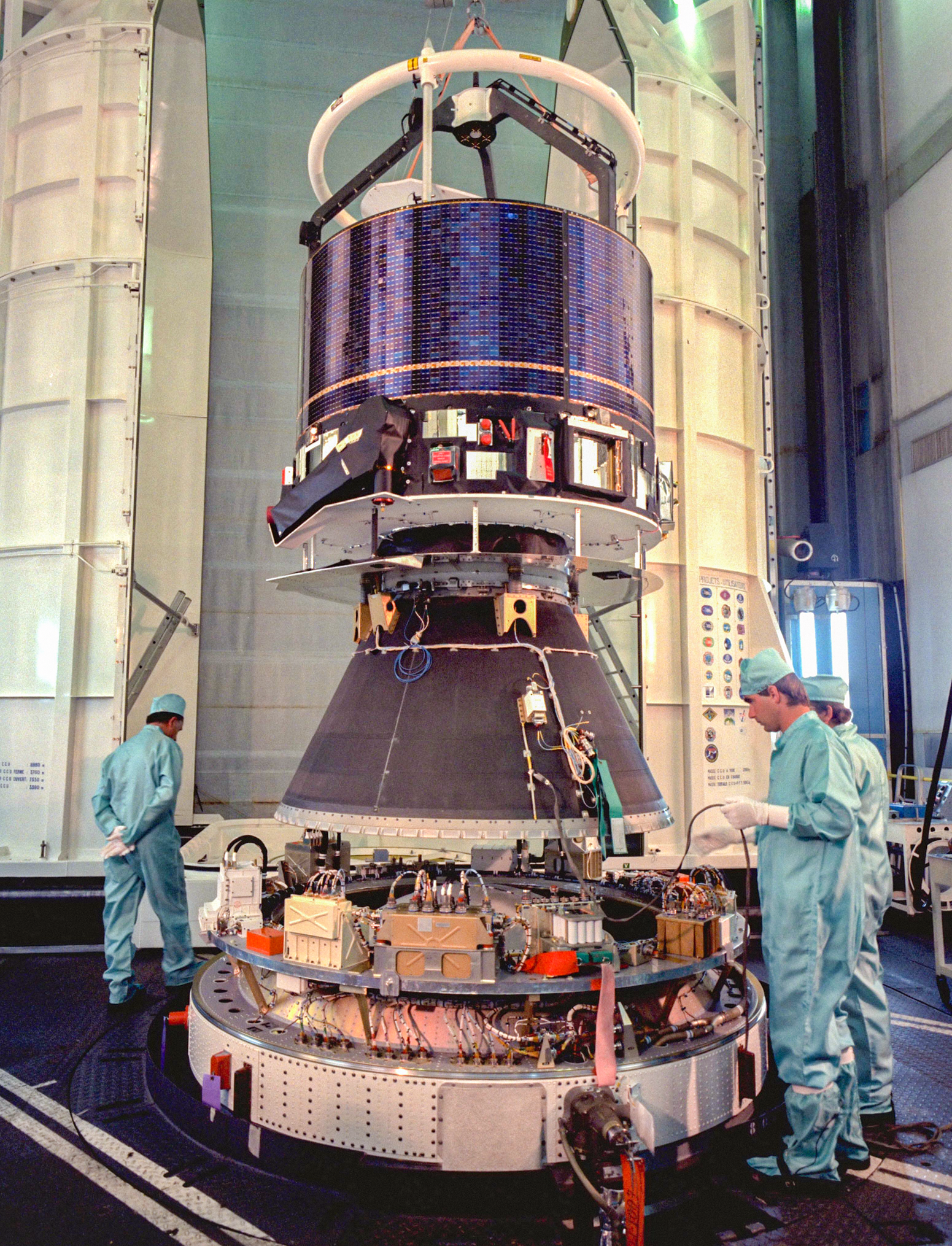
The field hasn't fully converged. As planetary scientist Karen Meech put it, "I suspect it was a combination of all of them."
The caveat the scientists state themselves
The self-made theory has a load-bearing assumption: you need a big enough early atmosphere of hydrogen to generate the pressure. That's plausible for a sub-Neptune. For a rock the size of Earth, less obvious. Quanta quotes Anders Johansen's skepticism about whether "you can have this for an Earth-mass planet." The honest framing in the piece: Earth "might have been a water factory for only a moment, but that moment may have been enough to forge oceans."
The thread checked the chemistry, then pushed it further
A reader restated the mechanism in plain terms to confirm he'd understood it, and linked the underlying paper:
"Hydrogen mixed with the Oxygen in the melted rock (magma) of earth, under extremely high pressure to create our earth specific flavor of H2O… Am I reading that correctly?" — a commenter who tracked down the Nature paper
Another offered a separate retention mechanism the article doesn't lean on, the magnetosphere as a hydrogen trap over deep time:
"the magnetosphere… also prevents the loss of Hydrogen that managed to get captured on Earth by not letting it be blown away from the upper layers of atmosphere… Two and a half billion years, that's a lot of time to accrue water." — another reader
And one reader named the epistemic honesty most of us land on with deep-time science:
"I don't know enough to oppose the scientists that are experts in this domain, and so I know I should accept the general consensus... but there's still a niggling doubt in my mind because it just doesn't feel right." — a commenter weighing Europa's larger water budget
What changes here isn't a settled answer. It's the menu. "Where did the water come from" used to be a question about what hit the planet. It's now also a question about what the planet did to itself while it was still molten.
Get breakdowns like this every day
The top Hacker News stories, unpacked — by email, Telegram, or RSS.
WASI 0.3 lands native async — and one runtime, no browser, breaks the old WASI again
After two near-silent years, WASI 0.3 shipped on June 11, 2026 with first-class async baked into the Component Model. The host now owns one shared event loop. The Wasmer CEO showed up to note it runs in exactly one server-side runtime and still breaks the original WASI.