Topic

Space

19 stories

After Musk's Starshield limits on Ukraine, Europe asks which American vendor holds the switch (steveblank.com)

Citing the Wall Street Journal, Blank says Elon Musk personally ordered limits on Starshield for Ukraine. Europeans now ask whether Microsoft, Oracle or Palantir could do the same.

The thread argued about treason, then about whether Europe has any rockets.

🌍Other ★ 421 · 💬 451 · 3 days ago · #big tech#policy#space#Elon Musk#Eutelsat#Starlink+2

Not just a headline — the discussion unpacked

The top HN threads: facts from the discussions, both sides, insider voices. Email, Telegram, or RSS.

Heart’s electric aircraft flies, but range remains the story (heartaerospace.com)

Heart Aerospace says its aircraft uses electric motors for short hops up to 124 miles, with reserve generators for a longer hybrid range.

HN readers welcomed the test flight but focused on the operational constraint: routes short enough for battery power can still compete with a drive door to door.

🚀Tech ★ 120 · 💬 121 · Aug 14 · #energy#hardware#space#Heart Aerospace

An ESO astronomer sets the sky's limit at 100,000 faint satellites (eso.org)

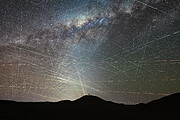
Operators have filed for 1.7 million satellites; an ESO study finds ground astronomy breaks past 100,000, calling the rest 'devastating.'

The proposed fix is a brightness floor of magnitude 7. SpaceX's mooted million would streak dozens of trails across each VLT frame; Reflect Orbital's 50,000 mirrors would outshine Venus.

The thread pitted progress against dark skies and flagged the launcher missing from the doom list: China.

Webb keeps finding black holes too big, too early to exist (quantamagazine.org)

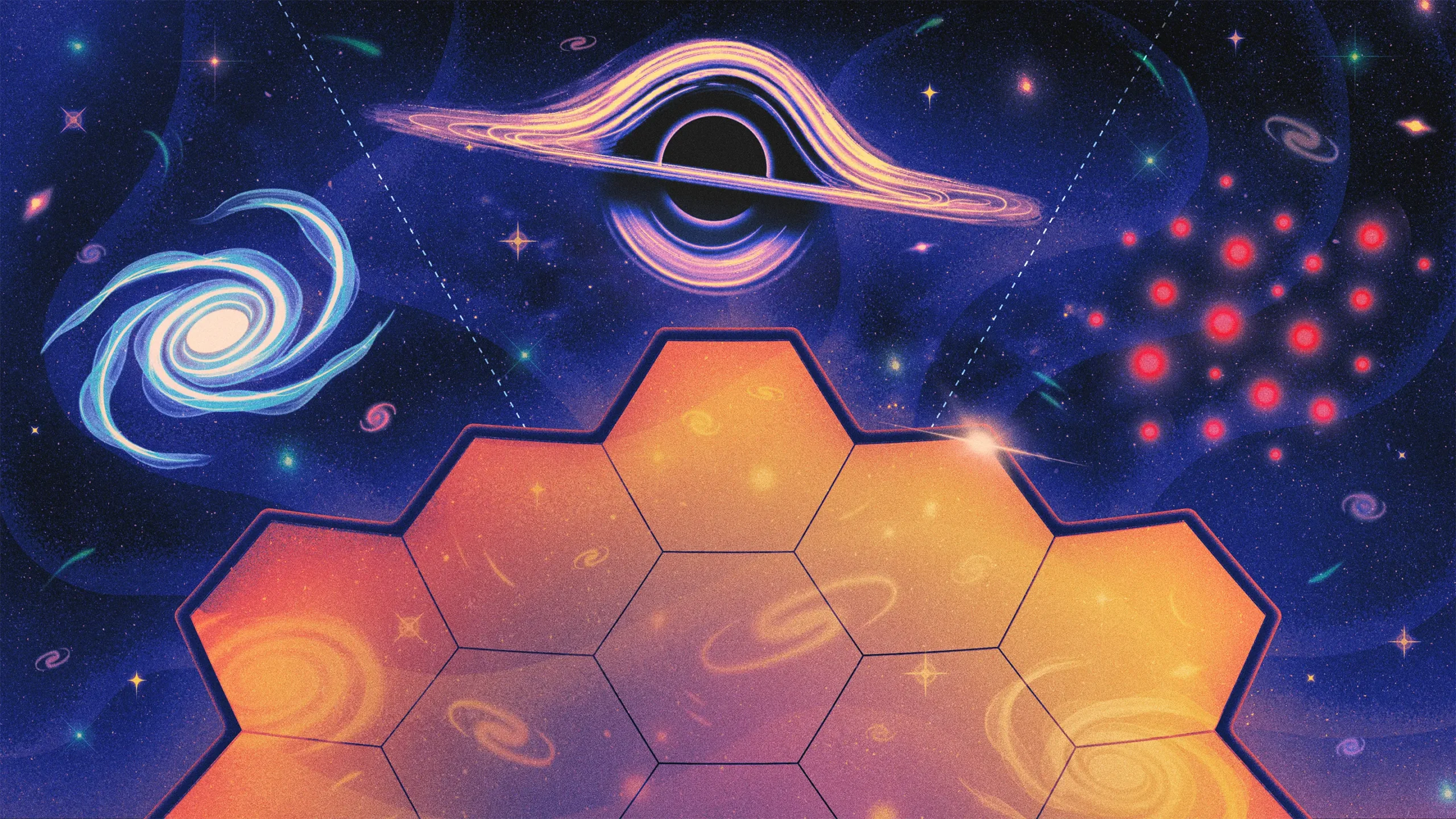
Webb has photographed a billion-solar-mass black hole just 650 million years after the Big Bang, feeding at 40 times the limit physics allows, plus hundreds of enigmatic 'little red dots.'

The problem isn't too little data but too many theories. ZeroTier's founder is betting on primordial black holes; another reader dug up the paper testing whether the red dots are just brown dwarfs.

'Africa is leapfrogging to Starlink' — except it's pricier than fibre, froze signups for 7 months, and cuts out in the rain (economist.com)

The article's real argument: Africa built cheap mobile-first internet in the 2000s, and that infrastructure hasn't kept pace with streaming and AI-era data demand, so Starlink fills a reliability gap — but at a premium, often above fibre, with a 7-month signup freeze to protect quality and rain-driven outages.

The thread's other fight is about why South Africa — Musk's birthplace — bans it: not 'national security' or 'hand 30% to the state,' but a licensing rule requiring 30% ownership by historically disadvantaged locals.

A rocket startup is buying a 30-year-old satellite network for $8 billion (investors.rocketlabcorp.com)

Iridium throws off $871.7M in revenue and a 57% margin on a constellation born from 1990s Motorola. Rocket Lab gets its globally-coordinated L-band spectrum, 2.55 million subscribers, and a guaranteed launch backlog as it scales its Neutron rocket.

The skeptics in the thread aren't sold: a 30-year-old network won't out-speed Starlink, and a much smaller company swallowing one twenty times its size only has to make sense to Wall Street.

Mars rock has "leopard spots" only microbes make on Earth, and a wet microscope could settle it (cbc.ca)

Perseverance found the spots in 2024 in the Bright Angel mudstone at Jezero Crater: vivianite rims around greigite cores, the chemical leftovers of a redox reaction that living cells drive on Earth. The sample sits cached, waiting for a Mars Sample Return mission that lands no earlier than the 2030s.

On HN, the loudest objection wasn't that the find is weak but that the test is dodged: NASA, one commenter argued, will never fly the cheap school-grade wet microscope that could prove life outright, because a yes ends the funding for ever-pricier probes.

A satellite found 'immense' GPS jamming, sold by the company whose new product happens to fix it (space.com)

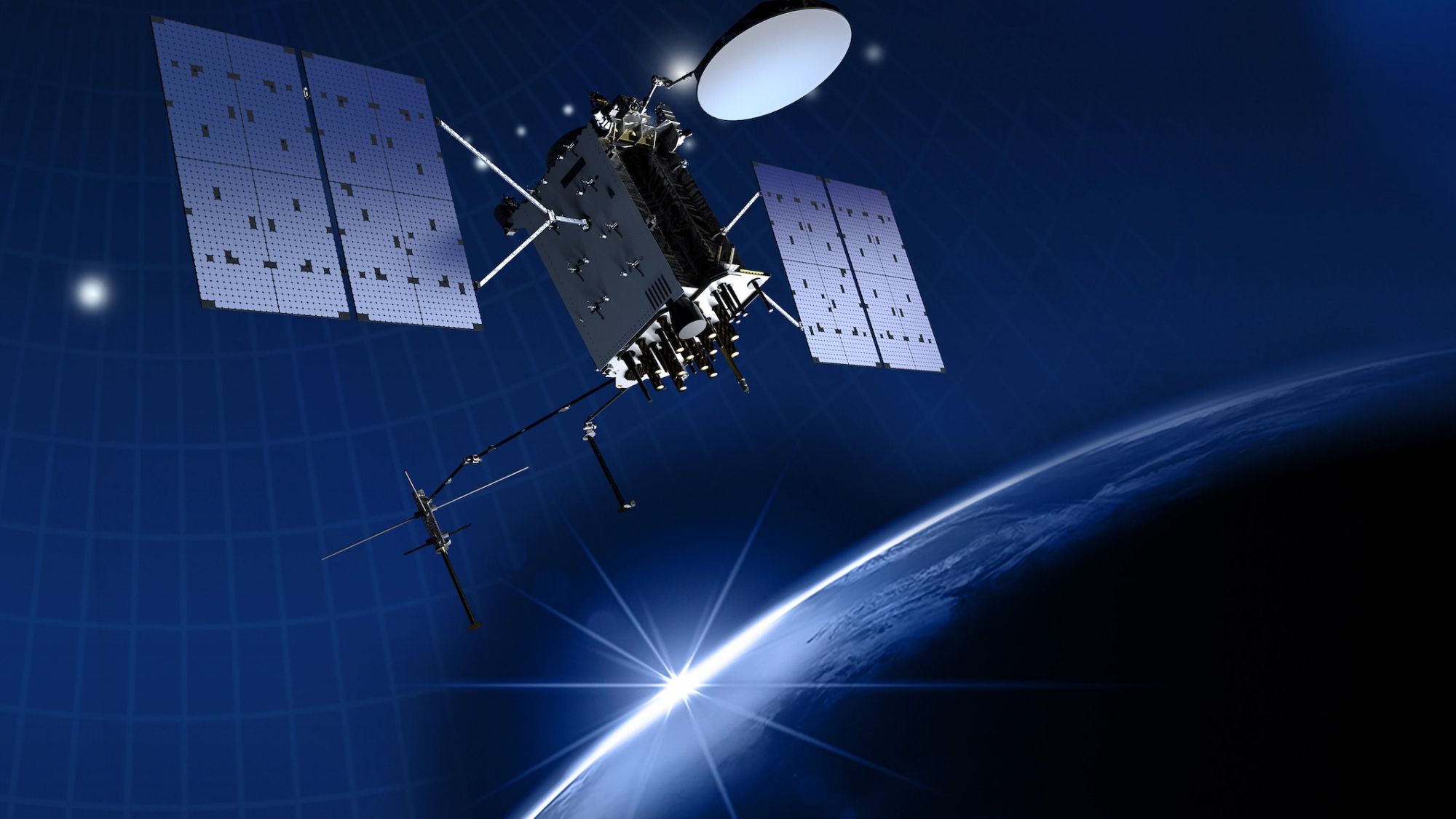
From 500 km up, Xona says jamming was so widespread that 'as soon as we started doing any operations above Europe, we noticed something going on'. It pitches a stronger LEO signal that would shrink a jammer's reach to about 5% of today's.

A networking engineer's rebuttal was physics: whatever transmitter you bolt to a satellite, a ground jammer has no power or size budget and can simply out-shout it.

Your 401(k) may soon ride on SpaceX's valuation, whether you want it or not (theguardian.com)

"What exactly can an individual do?" asked the thread. Many 401(k)s offer only a handful of funds; once the indexes add SpaceX, you're exposed unless you flee to value or international funds — or short the stock, which most people won't.

One sharp correction undercut the panic: SpaceX hasn't been added to the S&P 500. It asked for the rules to be waived; S&P said no. The exposure is coming, but it isn't here yet.

📈Biz ★ 195 · 💬 112 · Jun 20 · #economy#markets#space#Elon Musk#S&P 500#SpaceX+1

A decade of work, killed by a keyword search: scientists describe US research in freefall (scientificamerican.com)

AXIS lost twenty team members to DOGE buyouts, missed a budget deadline after the shutdown, and quietly died after a decade of work. One Harvard researcher in the thread watched a study get flagged because it "engendered a robust hemodynamic response" — a keyword match.

Then a computational-biology PhD who left the field for software said something the room didn't expect: US science actually does need some cuts. The argument over how it was done, versus whether it should have been, runs through 800 comments.

🔥Hot Discussion ★ 673 · 💬 807 · Jun 18 · #policy#science#space#DOGE#NASA#NIH+1

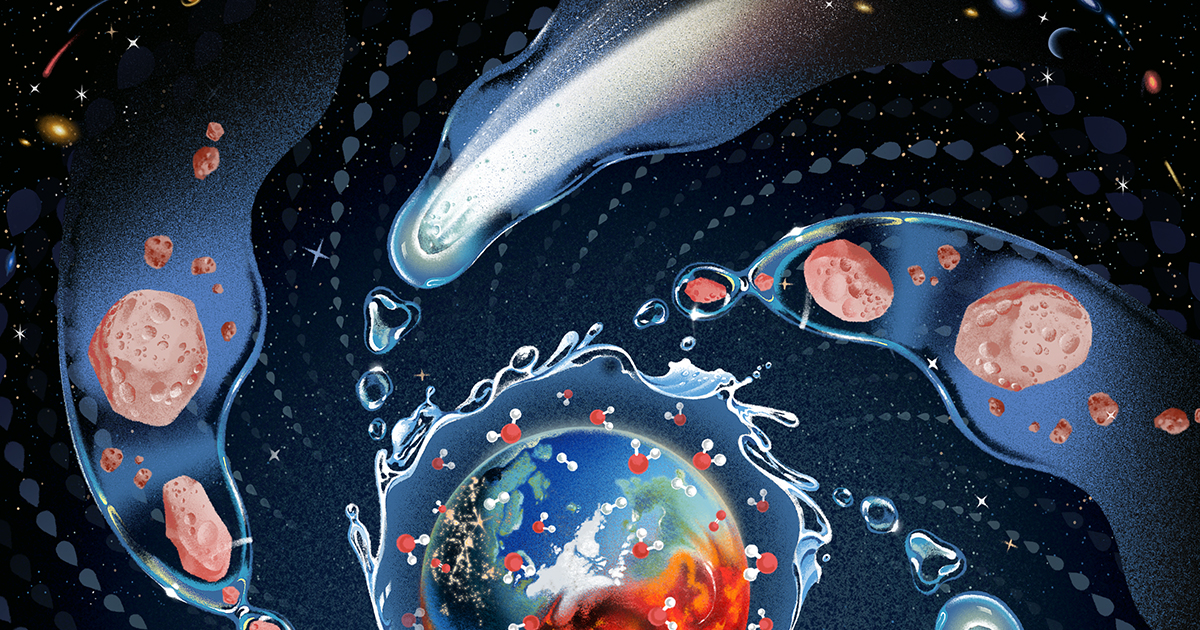
Earth may have manufactured its own oceans, not imported them from comets (quantamagazine.org)

The catch with the delivery story is isotopes. Comets like Halley carry deuterium ratios that don't match Earth's oceans. So researchers ran the alternative in a lab: diamond anvils and lasers recreating a magma-ocean world, where hydrogen and molten rock fuse into water.

The result was startling — up to 1,000 times more water than predicted. The open question is whether an Earth-sized planet ever held enough atmospheric hydrogen to drive the reaction. As one researcher put it: it's unclear you can do this for an Earth-mass planet.

Morgan Stanley says SpaceX hits $3.4T by 2040. That's 182x last year's sales (matteast.io)

The forecast needs a 79% EBITDA margin at $3.4T — versus Aramco's 55% and software's 45% — which would make SpaceX roughly 6% of US GDP.

The thread split: one camp said the same 'highly unlikely' was said of early Tesla; the other replied that the most extreme Tesla predictions never came true either.

Morningstar pegs SpaceX at $63 a share, with a 7% shot at the rosy case (morningstar.com)

SpaceX's own S-1 bases its valuation on a $26.5 trillion AI total addressable market — versus $370B for space operations and $1.6T for connectivity. So a rocket company is being priced mostly as an AI play.

Morningstar's downside case has the orbital data center project quietly abandoned around 2028, the way Tesla walked away from small-car factories. And a reader pulled the governance line from the prospectus: Musk keeps ~85% voting power through 10-vote Class B shares; public investors share 15%.

📈Biz ★ 175 · 💬 173 · Jun 9 · #space#SpaceX

ISS crew sheltered over an air leak NASA has been chasing since January (bbc.com)

Astronauts were told to take cover during repair work on a leaking Russian segment, then — within the same news cycle — told to return to normal operations. The leak isn't new: NASA reported in January that pressure had stabilized, while admitting it couldn't be sure the air wasn't just escaping somewhere else.

🌍Other ★ 372 · 💬 241 · Jun 6 · #space