A designer says any screenshot of your app should make sense. The thread says that's impossible
Nikita Prokopov froze macOS and iOS animations mid-frame and showed intermediate states that make no sense — a crop border sliding while the image snaps, a cursor animating in from the wrong place. His rule: every frame must be coherent.
His verdict on recent Apple software is blunt: sloppy transitional frames that read as an uncanny wrongness users feel before they can name it. One high-karma reader agreed Steve Jobs would have fired people over it.
The pushback was sharper. One engineer wants the imperfect frame now over the perfect frame later, calling latency the real priority — and another points out the author's own blog animates after you click.
The rule, and the broken frames behind it
Nikita Prokopov's Every Frame Perfect proposes one test for interface quality: "If I take a screenshot of your app at any moment, it must make sense." Then he spends the piece showing where recent Apple software fails it. In the Photos crop tool the border animates smoothly while the image inside snaps instantly to the new aspect ratio. A Safari placeholder and text cursor animate in from positions they were never at. Each example is a single mid-animation frame that, frozen, depicts a state the app is not actually in.
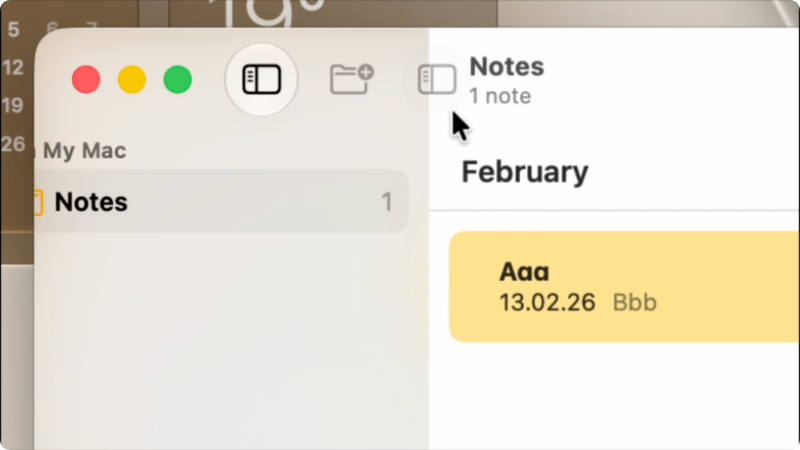
His argument is that these glitches aren't cosmetic. A frame that lies about the app's state produces a subtle wrongness the user registers as low quality, even when they can't articulate it. One of the thread's highest-karma readers endorsed the craftsmanship complaint without reservation:
"The examples from Mac OS Tahoe show how sloppy the work is. Just lazy shit done without attention and care. Steve Jobs would have fired a bunch of people." — a reader on the iOS 26 and Tahoe "uncanny valley"
"An imperfect frame now beats a perfect frame later"
The strongest counter reframed the whole priority. Coherent frames cost time, and time is the thing a responsive interface can least afford:
"I'd rather have an imperfect frame now than a perfect frame later. Latency should be the top priority for any UI… animations add hundreds of milliseconds of latency." — an engineer arguing low latency feels like an extension of your body
Another reader found the maxim self-defeating, and pointed the camera back at the author's own site:
"Every frame must make sense? I would posit this is impossible… Tap the header links on their blog and see the animations play after the click is complete." — a graphics engineer who calls the argument weakly presented
The maxim may be a misremembered one
There was also a question of provenance. The phrase "every frame is perfect" has a known origin in graphics, and one reader argued it has been bent into a claim it never made:
"The entire premise of this article is wrong and derived from a misquote. Kristian Høgsberg, in Wayland stated his goal was a system in which 'every frame is perfect, by which I mean… we'll never see tearing, lag, redrawing or flicker.'" — a commenter tracing the line back to Wayland
A real complaint wearing an absolute rule
Strip the slogan and something true is left: Apple's recent animation work has visible seams, and people who notice them aren't imagining it. But "every frame must make sense" buckles the moment you load it — resize a window, click a link, drop a frame to stay responsive, and you've already broken it. The useful version isn't a law about screenshots. It's a narrower one: don't animate a state the app was never in. That bug is real, fixable, and exactly the kind of detail a frozen frame exposes.
Get breakdowns like this every day
The top Hacker News stories, unpacked — by email, Telegram, or RSS.
A 12-year Mozilla insider leaves, and names the feedback trap that flatters every org
JR Conlin's farewell isn't a scorched-earth rant. It's a quieter, more damaging claim: organizations get artificially high approval for controversial features because the people who hate them leave silently instead of complaining.