Auto-download daily
Issue · June 14, 2026

Top of Hacker News

21 stories of the day: AI, technology, business and simply interesting discussions — recapped and unpacked.

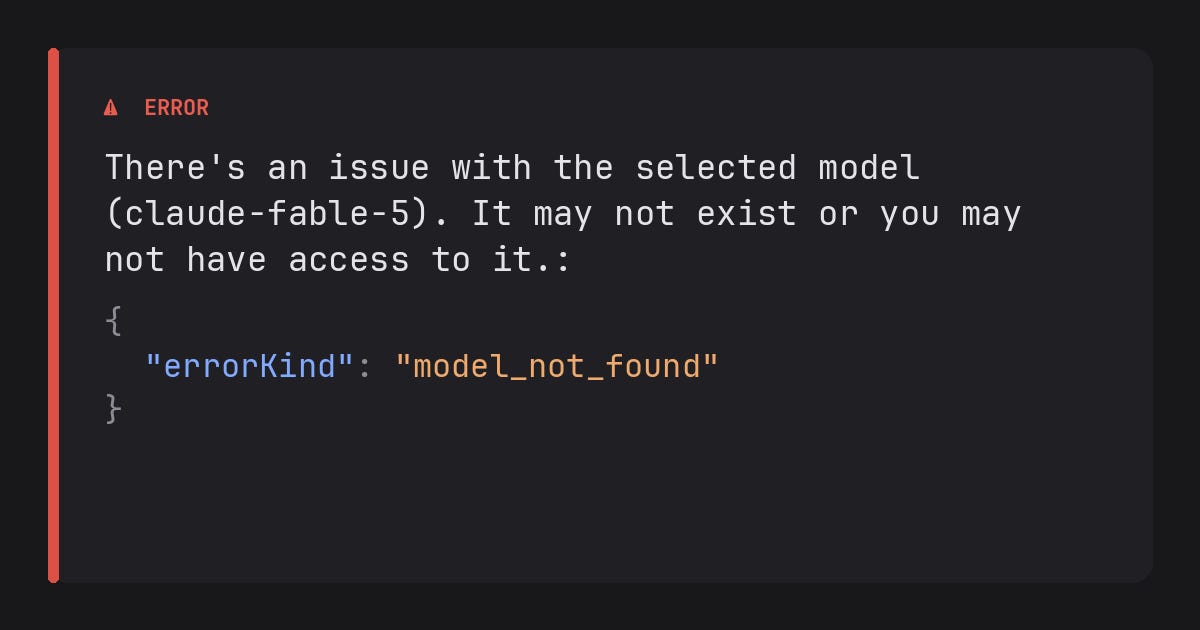
Amazon owns a slice of Anthropic. The WSJ says its CEO helped get Fable 5 switched off (wsj.com)

Amazon researchers, per the Wall Street Journal, strung prompts together until Fable 5 produced material useful for cyberattacks, then carried that to Washington rather than to Anthropic's security inbox.

The detail the thread keeps circling: Amazon is one of Anthropic's largest shareholders and its cloud partner. A security favor and a competitive shove are hard to tell apart when one company does both.

Not just a headline — the discussion unpacked

The top HN threads: facts from the discussions, both sides, insider voices. Email, Telegram, or RSS.

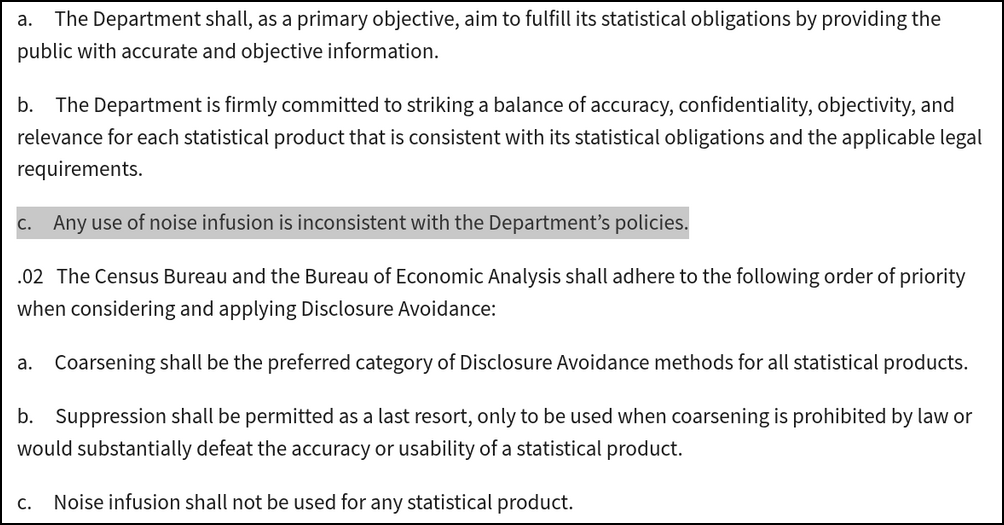
Commerce banned 'noise infusion' from Census data. A privacy researcher says only attackers win (desfontain.es)

Damien Desfontaines walks through a trade with no good side: strip the noise and the only privacy tools left are coarsening and suppression, which gut accuracy for small and minority populations while still leaving the data attackable.

Reconstruction attacks, he notes, are just solving a system of equations, and removing the noise makes that trivial. A privacy-company founder complicates the villain story: the 2020 rollout, he says, was a genuine internal disaster.

An open-source LLM tool archived itself overnight. The founder says most of the $7.3M is unspent (github.com)

The $7.3M seed closed in 2024 and was only announced in 2025, and the team spent less than half of it before deciding to wind down. This is a deliberate stop, not a money fire.

The repo's selling line, that it fueled '~1% of global LLM API spend,' is the claim engineers prodded hardest, alongside a colder verdict: an LLM gateway has no moat when anyone can rebuild it in a weekend.

📈Biz ★ 243 · 💬 159 · Jun 14 · #AI#open source#startups#TensorZero

Arch's malware wave hit 1,500 AUR packages by climbing through orphans anyone can adopt (phoronix.com)

The official repos were never touched; this lived entirely in the AUR, Arch's explicitly unvetted, build-it-yourself user repository. An infosec consultant posted the exact pacman incantation to find foreign packages on your own box.

The fastest containment wasn't a patch. It was volunteers racing to adopt rarely-updated orphan packages so attackers couldn't, while others argued the AUR needs minimum package ages and adoption limits, like npm.

China's GLM 5.2 shipped open-weight the same hour Washington froze Fable, benchmarks not even ready (twitter.com)

The founder's launch note reads like a manifesto: 'Frontier Intelligence Belongs to Everyone… The path to AGI must never be enclosed by high walls.' The timing was precise, posted as Anthropic got the government letter.

Three Chinese labs shipped open models in days while a U.S. model went dark, a contrast one builder called fiction. A day-one user pegged GLM 5.2 between Sonnet and Opus, with Z.ai's usual caveat: reliability.

A designer says any screenshot of your app should make sense. The thread says that's impossible (tonsky.me)

His verdict on recent Apple software is blunt: sloppy transitional frames that read as an uncanny wrongness users feel before they can name it. One high-karma reader agreed Steve Jobs would have fired people over it.

The pushback was sharper. One engineer wants the imperfect frame now over the perfect frame later, calling latency the real priority — and another points out the author's own blog animates after you click.

🚀Tech ★ 565 · 💬 185 · Jun 14 · #culture#programming#web#Apple#iOS 26#macOS Tahoe+1

A 12-year Mozilla insider leaves, and names the feedback trap that flatters every org (blog.unitedheroes.net)

Ship DRM, AI, or push notifications, he argues, and your survey numbers look great — because the dissatisfied already left, so only the satisfied remain to be counted. The feedback that's left is survivorship bias wearing a dashboard.

The thread split on the diagnosis. One reader refused to pin it on leadership: would the best browser on earth have changed Firefox's fate when it survives on Google's money? Others called that money the whole strategy.

📈Biz ★ 468 · 💬 281 · Jun 14 · #big tech#culture#web#Firefox#Google#Mozilla

Headline calls it cancer's 'master switch.' The thread's correction: a real weakness in 20% of tumors (economist.com)

The genuine advance is that KRAS, considered untargetable for decades, is becoming addressable as biologics improve. A working engineer in the thread supplied the context the headline skipped: why this is a real, bounded step.

And the crowd brought earned fatigue. After years of cancer-breakthrough headlines that never shipped, one reader's whole review was three words: 'May have? It also may have not.'

🌍Other ★ 304 · 💬 107 · Jun 14 · #health#science#KRAS#The Economist

A one-page manifesto says open AI must win. The thread asks: win what, paid by whom? (opensourceaimustwin.com)

The pitch landed on raw nerves the weekend a government switched off a frontier model: keep AI usable, auditable, locally deployable, community-governed, or live inside a subscription economy for cognition.

Readers who share the sentiment took apart the words. If a model runs on hardware you don't control, one developer asked, in what sense is it open — and who funds the next training run when 'open' means nobody charges?

A billion-speaker script still can't be justified correctly in any 2026 browser. Here's why (lr0.org)

The specs to do it right have existed for decades. OpenType's justification table dates to 1997 and goes unread by shaping engines, so foundries don't ship it; for one strange quarter in 2000, IE 5.5 was the only software on earth that justified Arabic correctly.

The fix sits in nobody's commercial interest, so it falls to volunteers. A developer who just wrote an Arabic-capable text shaper from scratch confirmed the gap, and where it really lives.

Google wants to build a datacenter from 2,000 retired Pixels. The thread lists what kills phones (research.google)

A 20-phone cluster already grades a 75-student class; a 2,000-Pixel datacenter is planned for this fall. The pitch is reuse over recycling: keep the silicon working instead of smelting it.

The thread aimed at the company, not the idea. Why preach open Linux on phones, one reader asked, when Google built the platform specifically to stop you installing your own OS — and others flagged eMMC chips that simply die.

'AI is making medical bills higher' doesn't mean AI is expensive. It means AI upcodes you (fortune.com)

One cited study found a maternity diagnosis jumping from 4% to 12.3% of admissions in three years while transfusions barely moved — under a fifth met clinical criteria, adding $22M in spend. The pattern is upcoding, not compute cost.

A top-trust reader reframed the headline for skimmers, and another drew the next move: insurers will field adversarial AI to fight the billing AI, leaving the patient inside an automated arms race.

A UK officer is investigated for using AI to 'create evidence.' The mundane version is scarier (news.sky.com)

The phrase conjures a fabricated video of a suspect. A more likely scenario, one commenter argues: an officer 'enhanced' a blurry photo, letting AI invent the missing detail and convincing themselves it was harmless.

The deeper worry runs past one officer. Once anyone can generate images and video on demand, readers ask whether whole categories of police evidence quietly become unreliable — and how many convictions already lean on them.

🌍Other ★ 233 · 💬 105 · Jun 14 · #AI#policy#privacy#Derbyshire Police

A guide to 'AI coding without going broke' gets schooled by people who go broke far slower (stephen.bochinski.dev)

One reader running a local Gemma and Qwen setup on a GPU-less box says he does plenty of AI coding for almost nothing; another shipped three client apps this month on 15 cents of DeepSeek API.

The real economics the thread surfaces is blunter: there's no point running local models while VCs subsidize frontier subscriptions to absurd token ceilings. 'Going broke' is mostly self-inflicted by long, unmanaged sessions.

80 tokens/sec on two mismatched GPUs — and a thread asking if self-hosting still makes sense (imil.net)

The trick is llama.cpp with speculative decoding and a tuned tensor split across two architectures Nvidia never meant to pair. The catch a reader measured: about 700W under load, enough to heat the room.

The thread turned into a referendum. One reader pays roughly $3 per million tokens in the cloud, unquantized, for the same model; another mourns that the run-your-own-hardware ethos is 'basically dead.'

An AI one-shotted a herding game in 45 minutes. The thread found it on the Game Boy Advance (koenvangilst.nl)

He frames it as an 'idea I've had for years' finally built in one go. Readers were unconvinced on both counts: the genre is decades old and surely in the training data, and someone reproduced it free in a DeepSeek chat.

One reader actually played it and itemized the bugs — broken pathfinding, forced landscape, controls that bark when you mean to move. The clickbait title, not the game, is what put it on the front page.

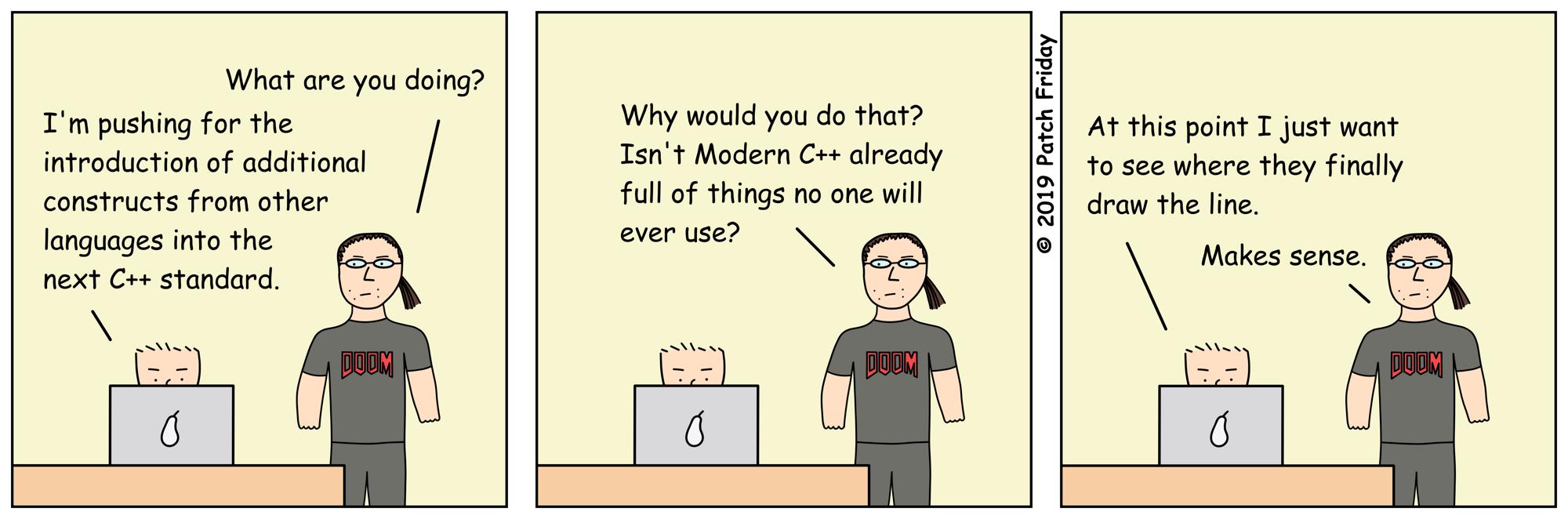
A decade-old 'use less C++' manifesto reignites the same fight: which subset, exactly? (bkaradzic.github.io)

Embedded veterans call it a great list of what to avoid. Application programmers call it arbitrary hobbling — and one flags the manifesto's printf-over-streams advice as a memory-safety footgun, not a simplification.

The thread's truest line cuts past both camps: everyone agrees a clean subset of C++ exists, and no two engineers agree on which one. In 2026, the unspoken third option, Rust or Zig, hangs over the whole argument.

🚀Tech ★ 84 · 💬 143 · Jun 14 · #open source#programming#C++#Rust#Zig

Ken Shirriff dissolved a 1980 Intel chip in acid to read its adder. The author took questions (righto.com)

The design is a hybrid: a Manchester carry chain with carry-skip in 4-bit blocks, chosen because faster adders existed but cost too many transistors in 1980 NMOS. Addition takes two clock cycles.

Ken Shirriff answered questions in the thread — including a sharp one on how power reached circuits in the layer he'd just etched away. One reader noted nobody has ever rebuilt the 8087 in HDL, unlike the 8086.

'Too hot to work' isn't a forecast in the Gulf and South Asia. It's the current labor model (bloomberg.com)

An Oxford study cited in the thread projects nearly half the world living with extreme heat by 2050 at 2°C of warming. The lived answer is already here — disposable labor that works until health breaks, then gets replaced.

Wealthier economies adapt structurally: siesta, night shifts, air conditioning. One reader adds the cruel detail — heat sickness isn't one-and-done; once it hits, tolerance can take a month to rebuild.

🌍Other ★ 90 · 💬 49 · Jun 14 · #economy#energy#science#Dubai#India

ReactOS ran Half-Life with real GPU acceleration — the hard part Linux sidesteps with translation (phoronix.com)

Steam on Linux runs newer games fine — but by translating DirectX onto Vulkan. ReactOS did the harder thing: load the native Nvidia driver for an old GeForce 8 card directly, the way Windows itself would.

Whether that's triumph or indictment is the open question. As one reader noted, ReactOS has been in development almost exactly as long as Half-Life itself has existed.

The op-ed says a shadow hangs over the Fable shutdown. A reader names who held the GPT-2 card (12gramsofcarbon.com)

The piece notes OpenAI's old 'too dangerous to release' GPT-2 framing as a marketing precedent. A reader points out Anthropic's Dario Amodei co-authored that GPT-2 paper — the same playbook, the same person, two companies.

Another voice, ex-Google and Meta, delivers the line that outlasts the news cycle: when you call for government power over models, it won't always be the government you wanted.