Jira pencils out at 4 hours a month; Salesforce demands 1.5 engineers
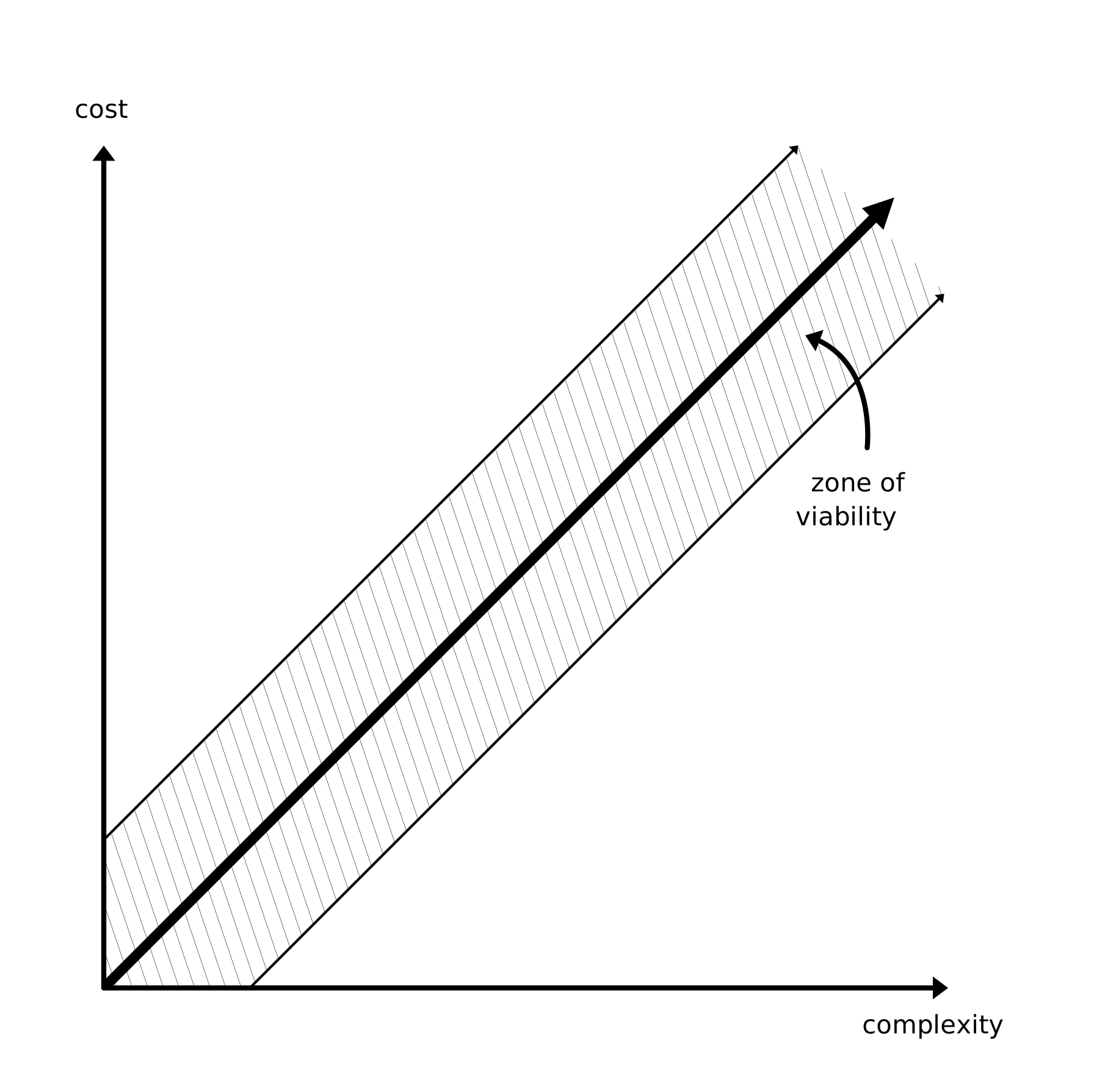
LLMs made software cheaper to clone, not free. Brandur draws a narrow band where buying still wins — and puts a price on exactly where building back becomes folly.
Price a $200k engineer at roughly $96 an hour and the math gets blunt. A $400/month tool needs only about four maintenance hours a month to justify rebuilding; a $25k/month Salesforce contract implies about 1.5 engineers to stand still.
So the cheap tools fail build-vs-buy and the expensive ones pass it, the opposite of intuition. The post doubles as a launch for River, Brandur's open-source queue.
The thread's counter: the real cost was never the features. It's SSO, audit logs, and the integration web — the moat an LLM won't clone.
A "zone of viability" survives the LLM

Brandur starts from a concession bears will hate: LLMs really did collapse the cost of building software. But cheaper is not free, and that gap leaves what he calls a "zone of viability" — the band where buying a product still beats rebuilding it in-house. You're inside the zone when a product is novel enough that an LLM rebuild plus ongoing maintenance is non-trivial, and yet priced low enough that the rebuild isn't worth your time.
The arithmetic does the persuading. Price a $200k engineer at roughly $96 per hour, then ask how many maintenance hours a tool's monthly fee buys.
| Product | Monthly price | Maintenance the price covers | Verdict |
|---|---|---|---|
| Jira | $400/mo | ~4.2 hours/month | Cheap enough to rebuild: often doesn't pencil out to buy |
| Salesforce (50 seats) | ~$25,000/mo | ~260 hours/month (~1.5 FTE engineers) | Too costly to rebuild: buy |
The inversion is the whole point: the cheap product is the one you might justify cloning, while the expensive suite quietly buys you a third of an engineering team's salary every month. The essay is also a go-to-market move: Brandur is commercializing River, his open-source Go and Postgres job queue, with a Pro tier at $125/month for up to 20 developers, a price chosen to sit inside his own zone.
The thread relocates the moat
The sharpest pushback is that Brandur priced the wrong thing. Features were never the expensive part.
"what cost me most of the development time wasn't the features but all the FUD around them e.g. SSO, multitenancy, audit logs, corporate design support … I'd wager tons of SaaS is just simple open-source software and libraries behind a management layer." — founder of KIProtect
A second voice extends the model past two parties. If building is easy for you, it's easy for a competitor too.
"'Build vs buy' assumes that there are only two parties. If it's easier to build internally, then it's easier for a 3rd party competitor to enter the market and bid the price down … the 'zone of viability' is real, it just narrows and shifts downward." — a commenter adding a third entrant to the model
Then the empirical test nobody expected to be so decisive — a product that resists being torn into pieces.
"I recently asked Claude to duplicate Google Docs. It practically threw up. … With Google docs, the entirety of the tool is almost one screen. It resists decomposition." — a developer who ran the Claude clone experiment
And a direct hit on the 1.5-engineer figure for Salesforce.
"Almost everything integrates with SF today and … understanding, replicating and maintaining these integration pathways may need more than 1.5 engineers." — a commenter contesting the Salesforce estimate
Where the math actually points
Stack the rebuttals and Brandur's curve doesn't break — it bends. The cost that keeps buyers buying isn't the visible feature set an LLM can spit out in a weekend; it's the compliance shell, the integration web, and the rare single-surface product that won't decompose. The honest version of the zone is narrower than the headline math and concentrated in unglamorous places: the closer a product's value sits to its API and architecture rather than its screens, the longer it stays worth paying for — which is, conveniently, exactly the bet River is making.
Get breakdowns like this every day
The top Hacker News stories, unpacked — by email, Telegram, or RSS.
George Hotz: AI doom narratives exist to contextualize the valuations
Why can't the labs just publish technical blog posts like everyone else? Because, Hotz argues, the technology doesn't justify the price — so apocalypse fills the gap.