A 1973 road-survey film became San Diego's accidental Street View
A city department drove a film-rigged van down every road in 1973 to document pavement. Fifty years later the footage reads as a portrait: pastel cars, spinning hand-painted signs, and a burlesque marquee that is somehow still open today.
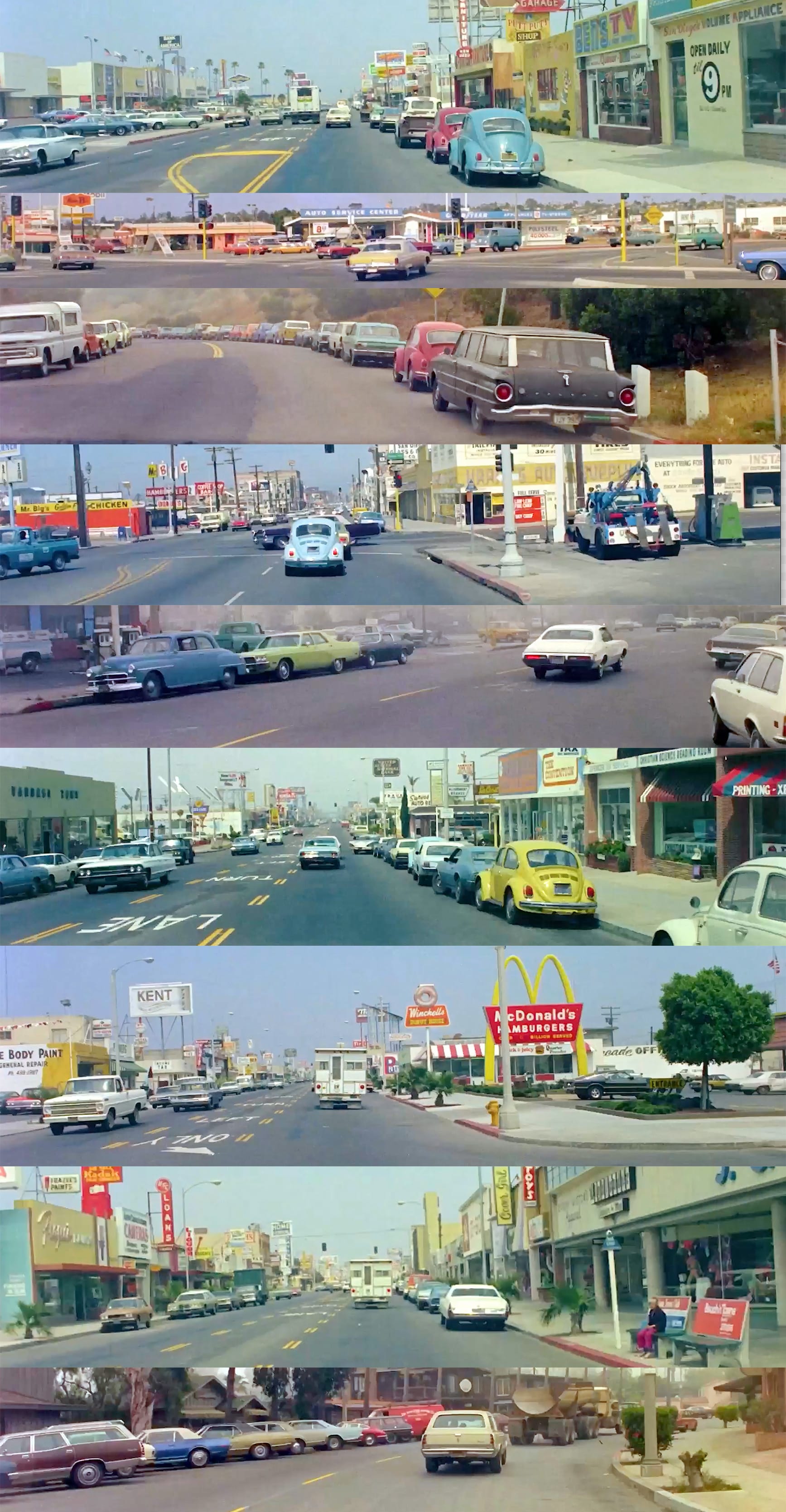
Jon Keegan pulled 35mm road-survey film of 1973 San Diego off the Internet Archive, color-corrected away the 'grey veil,' and stitched the frames into panoramas of a city its government never meant to make beautiful.
A reader who lives there confirmed the strangest detail: the Les Girls burlesque marquee in the footage is still standing, sign newly replaced this year — and now the subject of a podcast.
A pavement-inspection program that accidentally filmed a city
The footage in Jon Keegan's piece was never meant to be looked at this way. San Diego's Transportation and Storm Water department — like road agencies in many states going back to 1961 — ran a photolog program: a van rigged with a 35mm film camera that recorded every mile of roadway for infrastructure assessment. The reels Keegan found on the Internet Archive date to 1973.
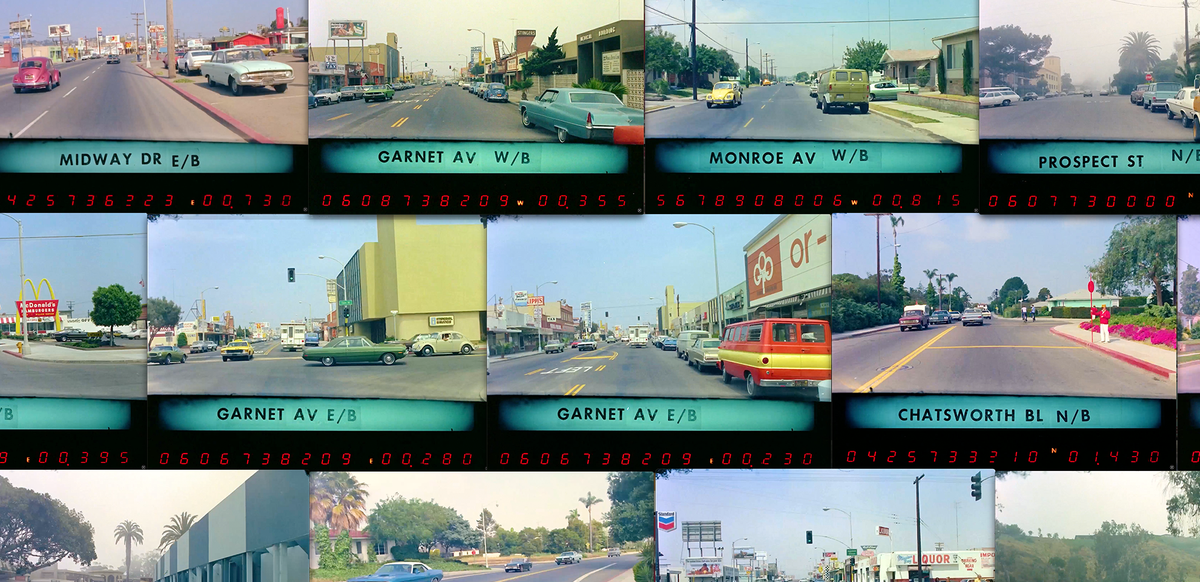
Keegan, who writes the Beautiful Public Data newsletter, did the restoration work: color correction and contrast to lift what he calls "the grey veil" off the film, then stitching individual frames into street-level panoramas. What emerges is effectively a 1973 Street View — pastel-painted cars, motorized and hand-lettered commercial signage, themed restaurants, pedestrians and cyclists caught mid-stride.
'Les Girls is still there' — a local checks the footage against today
The thread filled with San Diegans cross-referencing frames against the present, and the recurring landmark was a burlesque club.
"You'll be happy to know that Les Girls is still there today, advertising burlesque, go go dancers and 'full nude'. They finally replaced the sign earlier this year, but it still looks very much the same." — a local who passes it regularly
The same reader pointed to a KPBS podcast built around the club. Another local added a correction to the archive itself: Keegan only references a subset of the originals, and far more reels covering rural San Diego sit on the city's own digital archive.
The thread's real argument: where did all the color go?
What the comments kept circling back to wasn't San Diego at all, but a sense of loss.
"I can't believe we've lost so much joy on our relentless march to hyper-optimized profit … I was struck by the colors of the pants! Bright! Stripes! Fun!" — a commenter who sews and reads about color trends
The complaint kept landing on cars — "soulless, so similar," reduced to white, grey, silver, black — and on signage, where one reader noted the eerie parallel between mid-century anxiety about computers flattening hand-made design and today's anxiety about AI doing the same. The data point that grounded the nostalgia came from the gas prices: the post's $0.34-a-gallon detail works out to about $3.23 in today's money, and a reader did the math — cheaper than now, but that AMC Gremlin got the same ~20 mpg as a modern SUV.
Get breakdowns like this every day
The top Hacker News stories, unpacked — by email, Telegram, or RSS.
The man who invented the red squiggle under misspelled words has died
Almost everyone has seen his work and almost no one knows his name. Tony Krueger turned spell-check from a blocking wait into the red zigzag that appears live under a typo — and the zigzag was deliberate, so it wouldn't be mistaken for an underline.