The man who invented the red squiggle under misspelled words has died
Almost everyone has seen his work and almost no one knows his name. Tony Krueger turned spell-check from a blocking wait into the red zigzag that appears live under a typo — and the zigzag was deliberate, so it wouldn't be mistaken for an underline.
Microsoft's Raymond Chen wrote a belated obituary for Tony Krueger, who made spell-check run quietly in the background and drew the red squiggle that flags a typo as you type, with green later added for grammar.
A reader spotted the catch: Chen cites Wikipedia as proof of who did the work, and Wikipedia's current source for that claim is a link straight back to Chen's article.
The zigzag was a design decision, not an accident
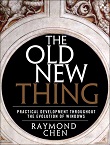
Raymond Chen's The Old New Thing marks the death of Tony Krueger, the Microsoft Word engineer behind one of the most-seen and least-credited features in software. Before him, spell-check was a blocking operation: you ran it, you waited. Krueger turned it into an unobtrusive background process that flagged probable misspellings as you typed, with the now-universal red squiggle underneath — green squiggles for grammar came later.
Chen makes a point of the shape. A straight underline would have been read as intentional formatting, so the line had to zigzag to signal error, not emphasis. The feature has since spread to nearly every word processor and text field on earth — recognizable enough to be referenced by Penn & Teller and "Weird Al" Yankovic — while the man who shipped it stayed anonymous.
A citation that quietly eats its own tail
The sharpest catch in the thread is about evidence, not nostalgia. Chen's article leans on Wikipedia to establish who actually did the port of the feature — and a reader checked where Wikipedia got it.
"Chen's article refers to the Wikipedia page as evidence that Tony Krueger did the port. The article's evidence for that in its latest version? A link back to Chen's article…!" — tom_, on the circular sourcing
It's a small, perfect example of citogenesis: two sources each pointing at the other as the authority. Another reader's regret was simpler — that tributes like this tend to arrive only after the person has left the stage.
What an AI keyboard would do with that squiggle now
The rest of the thread turned the squiggle into a thought experiment about what comes next.
"I wish there was a button … when there's a red squiggle in the last N words, which would cause my computer to fix the underlined word to its best guess. It should wait until a few words later, to get more context." — a commenter proposing an AI-assisted fix key
One engineer wanted the idea pushed further still — yellow squiggles under logic errors, "to keep the programmers busy." The throughline is that a 30-year-old interface convention is still the obvious surface for the next layer of automation. Whatever an AI keyboard does, it will almost certainly start by drawing a colored squiggle under the word it doubts.
Get breakdowns like this every day
The top Hacker News stories, unpacked — by email, Telegram, or RSS.
This is the last story in the June 24, 2026 issue.
Go to the issue archive