A scroll carbonized by Vesuvius in 79 AD was read without unrolling it
PHerc. 1667 has been a lump of carbonized ash for almost two thousand years. Now 22 columns of Greek ethics run across its surface, and its final column names Aristocreon, a disciple of the Stoic Chrysippus.
The Vesuvius Challenge team took a scroll that turns to powder if you touch it, scanned it at a synchrotron, digitally unwound 1.4 metres of papyrus, and trained ML to spot ink on carbonized fibre. The result: a 2nd-century-BC Stoic treatise on human nature, readable for the first time.
One catch a contributor pulled from the preprint: columns 1 to 4 are simply gone. "Entire" is generous.
A roll of ash, scanned without ever being touched

When Mount Vesuvius buried Herculaneum in 79 AD, it cooked a villa's library into lumps of carbon. The scrolls survived as fragile cylinders of ash that crumble at a touch. For centuries the only way to read one was to destroy it. On June 25, 2026 the Vesuvius Challenge announced that a scroll cataloged PHerc. 1667 ("Scroll 4" in the project's numbering) has been read from beginning to end while remaining physically sealed.
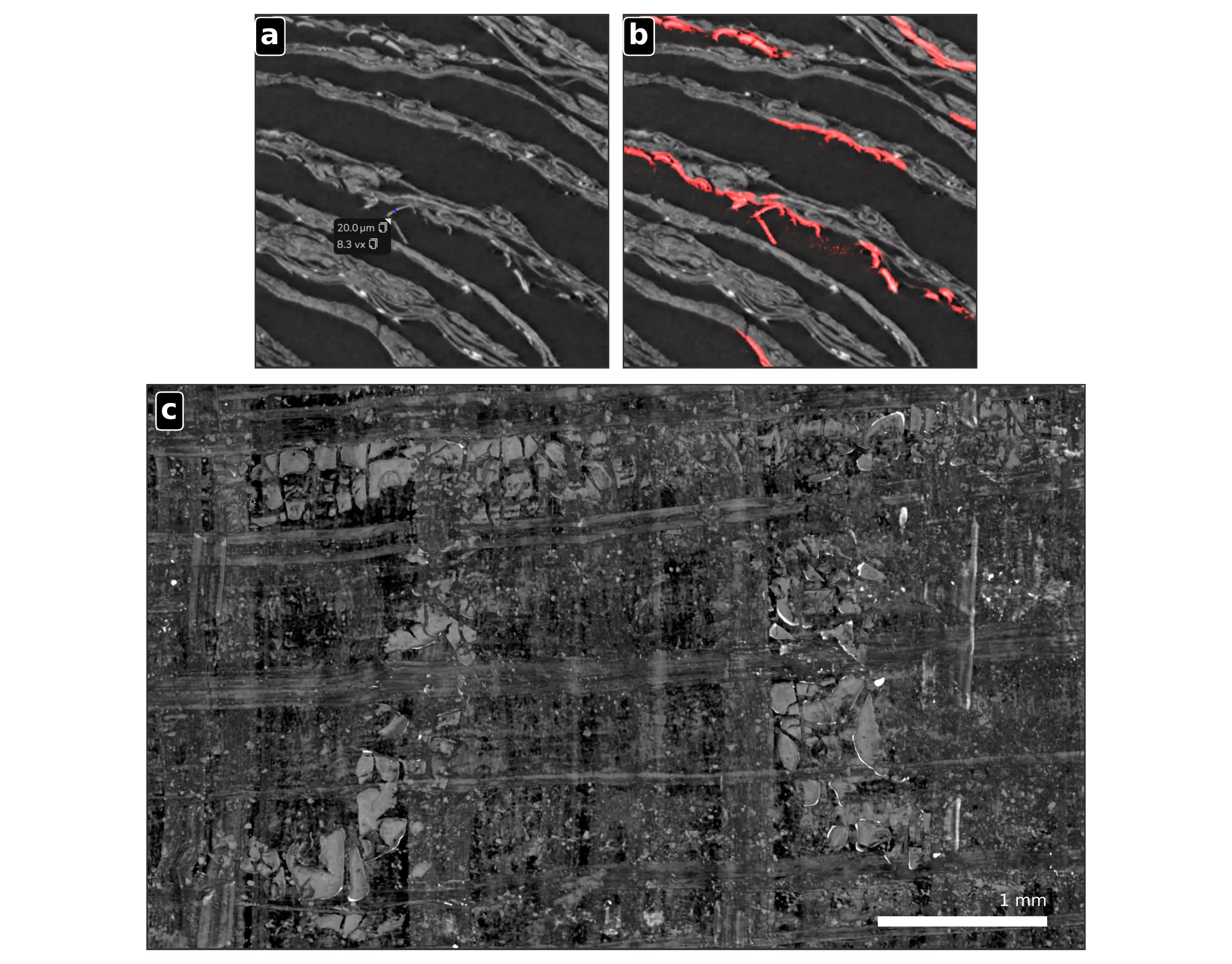
The pipeline runs entirely in software. The roll was imaged with phase-contrast X-ray microtomography at the European Synchrotron Radiation Facility in Grenoble, producing a 3D scan of the wound sheet inside. Software then segmented the spiraled papyrus, unwound roughly 1.4 metres of it, and flattened the surface into a readable page. Finally, machine-learning models hunted for the faint ink (carbon ink on carbonized papyrus, nearly invisible) and projected it back onto the unwrapped sheet for papyrologists to transcribe.
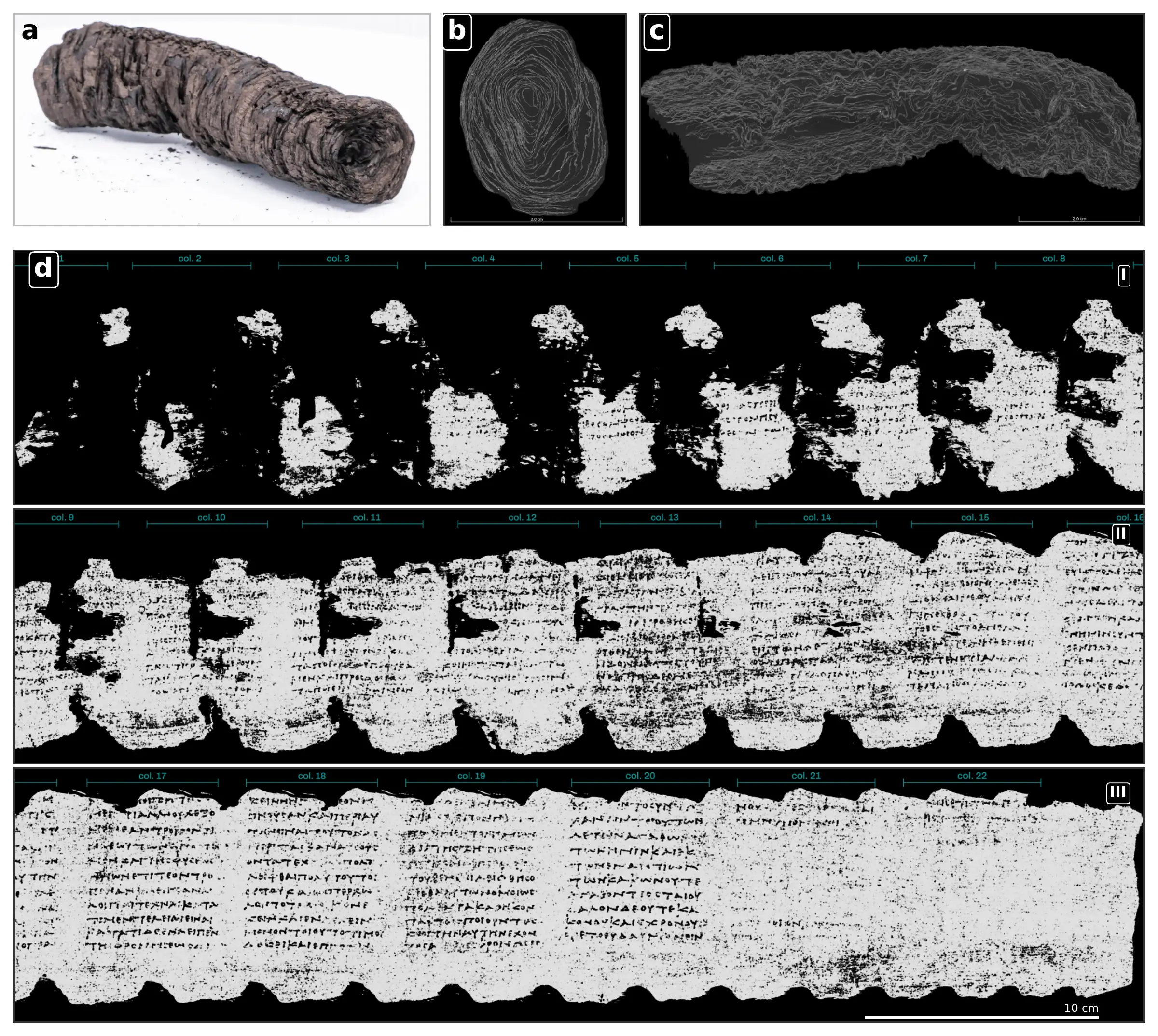
What surfaced was 22 columns of ancient Greek: a philosophical treatise on ethics, human impulse, and moral progress, dated to the 2nd century BC and Stoic in character. The author is unknown, but the last surviving column names Aristocreon, nephew and disciple of the Stoic Chrysippus, and that reference is part of what anchors the dating. One recovered line, fittingly, reads:
"…we will inquire into something, but we will not grasp it, if in some way we depart from ourselves and from our own nature…"
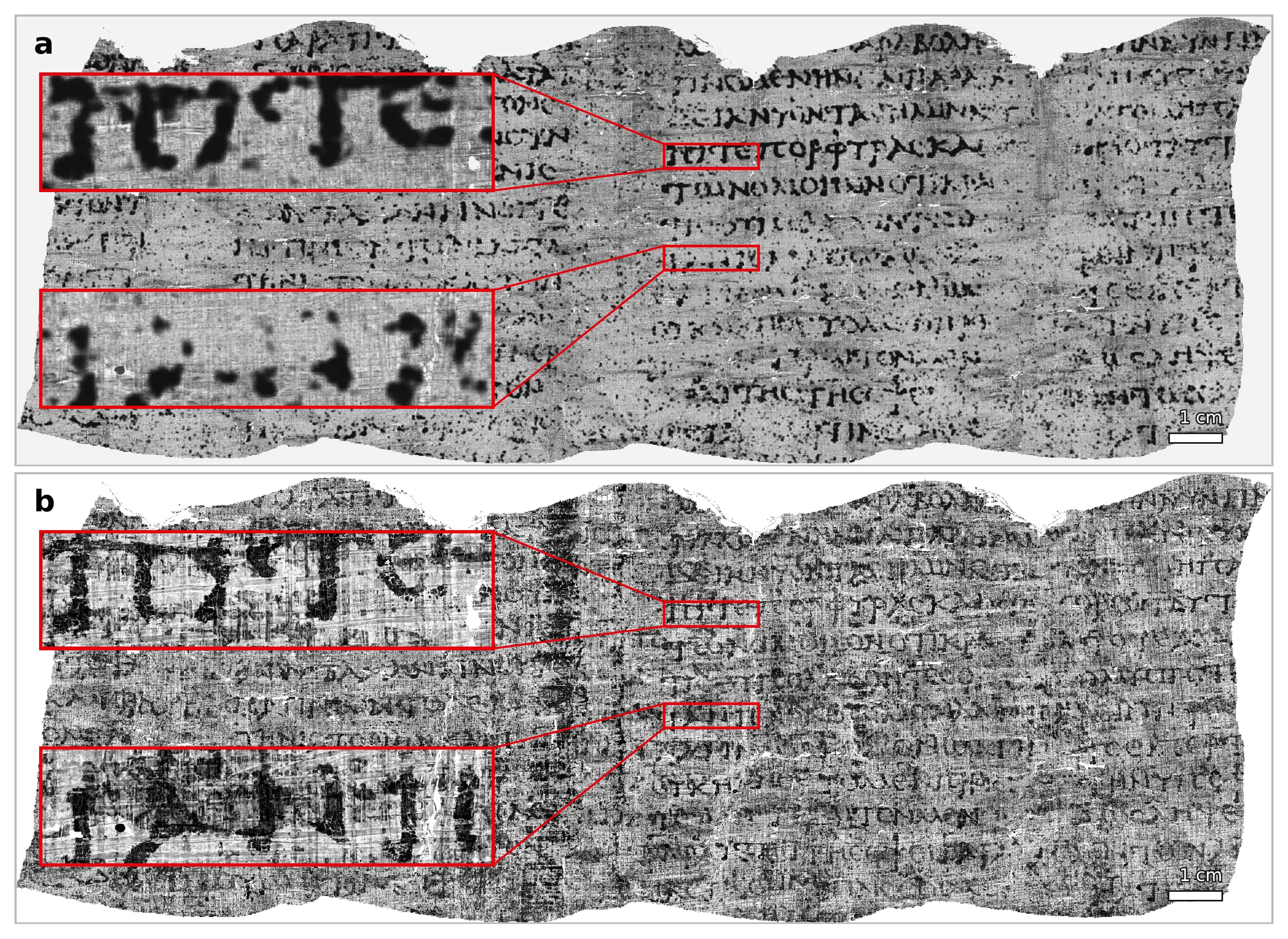
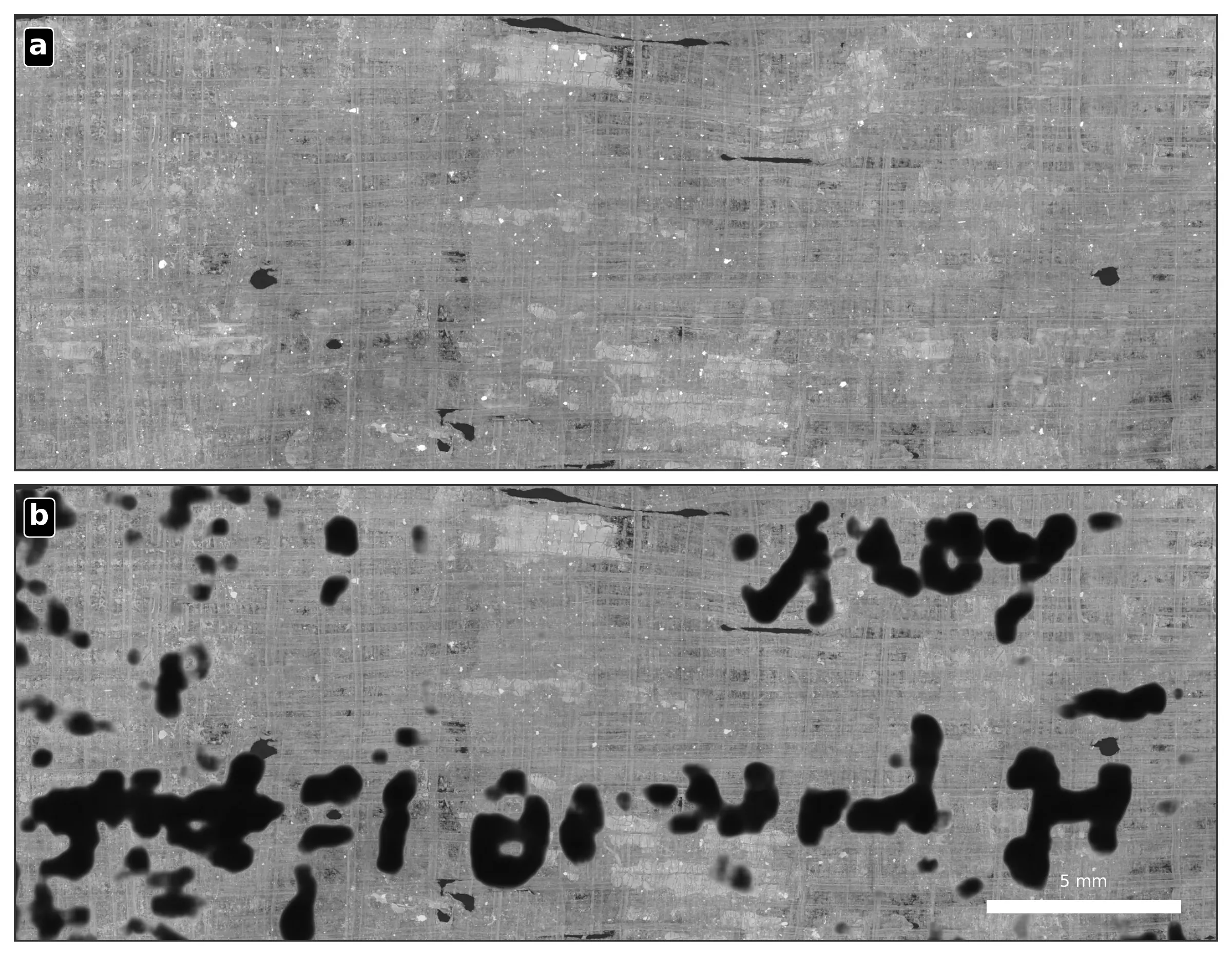
The announcement bundles two more results. For PHerc. Paris 4, higher-resolution synchrotron imaging made ink directly visible in the raw 3D data with no ML inference needed, independently confirming the 2023 Grand Prize reading one-to-one.
The gain in image quality is visible side by side: the 2023 reading and the new synchrotron result recover identical text, but the letters in the updated version are markedly sharper.
For a third scroll, PHerc. 139, the title region was recovered, identifying it as Philodemus's On Gods, Book 8.
The Vesuvius Challenge is a donation-funded open-science effort co-founded by computer scientist Brent Seales, whose EduceLab pioneered the virtual-unwrapping technique, alongside Nat Friedman and Daniel Gross. Every scan, model, and transcription ships under Creative Commons.
The team in the thread, and the asterisk on "entire"
A member of the group that did the actual unwrapping showed up to take questions:
"I am on the vesuvius challenge team that did the segmentation, unwrapping, and ink detection, so feel free to ask any questions." — a Vesuvius Challenge team member who worked on the ink detection
A former lead on the project pointed past the press release to where the real news was buried:
"The most incredible part is buried in a 7 hour long video. Last night they also unwrapped 140 columns of new text in the PHerc. Paris. 4 scroll" — a former project lead on the challenge
Then came the correction to the headline itself. Reading the preprint, one contributor laid out exactly how much of the "entire" scroll is actually missing, with columns 1 through 4 lost outright and ragged gaps through the rest:
"It's false that the 'entire Herculaneum scroll has been read'. Much of the scroll has been lost. From the preprint, columns 1-4 lost, and then margins on other columns are also lost." — a reader who transcribed the surviving columns from the preprint
The surviving text reads in fragments to match: "Col. 9: … so far as … this or to have … that …", "Col. 22: … still … Aristocreon … to possessed things …" The breakthrough is the method, not a clean manuscript.
A scholar of the period added the other footnote: the Herculaneum library is not new to readers. "Scrolls from Herculaneum have been read for a very long time… the scrolls from the library have been studied since the 18th century" said a commenter correcting the 18th-century record. The leap is reading them without slicing them open.
There is a tidy mix-up worth flagging for anyone skimming the thread. One quoted line, "Philodemus, On Gods, Book 8", gets attached to the freshly-read scroll, but that title belongs to PHerc. 139, the third result in the announcement, not to PHerc. 1667. The fully-unwrapped scroll's author is still anonymous.
The note that landed hardest was about distance in time. As one commenter put it, the person who wrote this scroll "was closer in time to the technology that was able to unwind and read burned fragments of their text, than the technology that built the pyramids" wrote a commenter measuring the gap to the pyramids. An ethics treatise about not departing from one's own nature spent two thousand years as a cinder, and the first eyes to read it again belonged to a neural network trained to see ink that human eyes can't.
Get breakdowns like this every day
The top Hacker News stories, unpacked — by email, Telegram, or RSS.
This is the last story in the June 26, 2026 issue.
Go to the issue archive