Krugman blames the AI backlash on the doomers selling AI
Anthropic's CEO said AI could push unemployment to 20% within five years. Krugman's claim: the executives manufactured that dread on purpose to dazzle Wall Street, and the public backlash is the bill coming due.
Paul Krugman argues the public didn't sour on AI by accident. The same executives now soothing customers spent two years warning their product could erase half of entry-level white-collar work. Krugman calls it deliberate: scare Wall Street into financing, scare companies into adopting, then act surprised when voters revolt.
The thread's loudest counter says he has the motive backwards. The doom wasn't a marketing trick, a few argued: the executives meant it, and only hired PR to walk it back once the hatred set in.
The economist's verdict: the AI industry talked itself into being hated
Most technologies arrive to applause. A 1999 survey, Paul Krugman notes in his Substack essay, found Americans wildly optimistic about computers. A 2026 Pew survey finds them convinced, by a wide margin, that AI will be bad for society. Krugman asks why this one technology broke the pattern, and his answer points back at the people who built it.
The core charge is self-sabotage. Anthropic CEO Dario Amodei publicly warned that AI "could wipe out half of entry-level white-collar jobs and drive overall unemployment as high as 20 percent within 1 to 5 years." Krugman reads such forecasts as theater with a purpose:
They pushed the idea that they had a technology that would quickly and utterly transform the economy partly to dazzle Wall Street and secure financing, and partly to scare businesses into rushing into AI adoption for fear of being left behind.
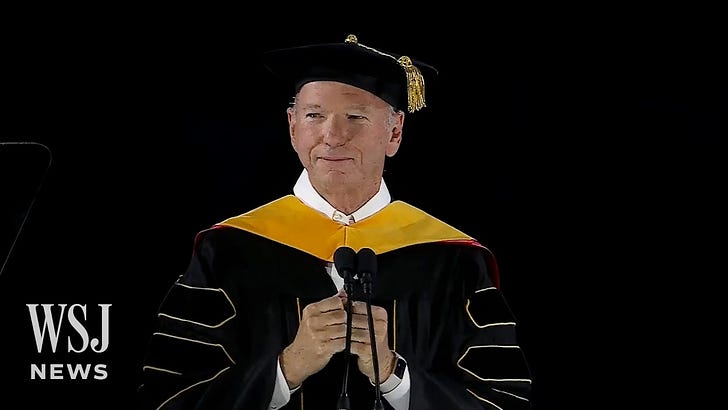
Then, he argues, came the poetic justice: declaring your product will devastate the workforce turns out to provoke a backlash, and that backlash is now a political problem money can't fully buy off. He stacks the supporting numbers. Public approval of tech firms ran 71% positive to 17% negative in 2015, then evaporated by 2022 under enshittification and social-media harm. On the physical footprint, Reuters/Ipsos found 57% of Americans would oppose a datacenter in their neighborhood and only 14% would support one; one proposed Utah site, he notes, would be twice the size of Manhattan. He cites forced adoption (Google replacing search with AI and no opt-out), and a perception, "for good reason," that AI concentrates wealth at the top. Even ex-Google CEO Eric Schmidt, he adds, got loudly booed at a commencement.
"They meant it" — the thread flips Krugman's motive
Krugman's sharpest claim is about intent: the doom was cynical marketing. The thread's most-credentialed pushback says the opposite — the executives were simply telling the truth as they saw it, and only later hired PR to soften it.
They were actually candid and were saying what they were really thinking at the time. Then later when AI hate emerged and solidified, they were told by their PR advisers to cool it down on doomer perspective and lean more into an optimistic vision.
That read came from a commenter writing from a deliberately anonymous account. A reader who'd watched the datacenter revolt build pushed the same way, against the marketing theory:
It was always terrible marketing and they knew it, but to them it isn't marketing. They feel compelled to say it again and again because they actually believe it.
That voice noted the datacenter backlash had been growing since 2024, visible to anyone, and still they kept talking. One reader caught Krugman leaning on Satya Nadella as the reasonable exception and turned it inside out. Krugman quotes Nadella objecting to "all white-collar jobs are gone… and we will use all the power to build data centers."
"You can't say..." Is that being unwilling to engage, or just being unwilling to say the quiet part loud?
That parse came from an engineer skeptical of Nadella's framing.
The root cause Krugman underweights: art, slop, and effort
Where Krugman builds his case on macro polls, several voices relocated the anger somewhere more visceral. The most-upvoted alternative theory put art at the center, not Wall Street:
people care deeply about art, and the people who make it… here come all these huge, horrible companies that literally steal all the artist's work, by pirating it… and these huge companies have suddenly automated all this artistic creation.
That came from a long-tenured reader with nearly 9,000 karma, who argued people never raged at spreadsheets because spreadsheets didn't eat the things that give life meaning. The founder of ZeroTier, who started out doubting AI could touch real art, landed on a more precise economic point that sharpens rather than echoes Krugman:
what it is replacing is what a lot of artists make their money doing: commercial art, making "content," ghostwriting, first-pass editing, graphic design, web design… That's not pour-your-soul-into-it capital-A Art, but it's what pays the bills.
A simpler theory came from a reader who reduced it to one word, effort: "AI is low effort, which signals you really don't care… It's insulting. It makes people feel irrelevant." And the highest-karma voice in the thread, with 92k karma, simply rejected the premise that the hatred needs explaining at all:
Because it's hate worthy… It removes jobs… It serves for spam, public manipulation, and mass surveillance… It's added to products despite that users say they don't want it there.
That enumeration came from coldtea.
The asterisk on "everyone"
The title's word did the most work to undercut it. As an HN reader pointed out, the site is full of people happily using LLMs all day, so "everyone" is a stretch. Another reader, citing the very survey HN had passed around, noted that even at peak hostility 60% dislike still leaves 40% who want it or don't care, and that in a week of watching a high school, teachers and students alike used it constantly. Krugman's macro story holds: AI is, uniquely, the technology people learned to distrust. The thread's correction is about where the distrust lives. It is less an opinion about model accuracy than about who captures the gains — and the suspicion that, whatever the executives now say, the honest version was the scary one they said first.
Get breakdowns like this every day
The top Hacker News stories, unpacked — by email, Telegram, or RSS.
A Discord breach leaked 68,000 Australian IDs weeks before the age-verification law hit
FIRE's Sarah McLaughlin opens with a small scene: you post about a game, a box asks your age, and you hand over a passport photo hoping it never haunts you. Her point is that age verification is identity verification — and the receipts are already leaking.