An ESO astronomer sets the sky's limit at 100,000 faint satellites
Operators have filed paperwork for 1.7 million satellites. An ESO astronomer put a number on the breaking point: 100,000, and only if none of them outshines magnitude 7.
Operators have filed for 1.7 million satellites; an ESO study finds ground astronomy breaks past 100,000, calling the rest 'devastating.'
The proposed fix is a brightness floor of magnitude 7. SpaceX's mooted million would streak dozens of trails across each VLT frame; Reflect Orbital's 50,000 mirrors would outshine Venus.
The thread pitted progress against dark skies and flagged the launcher missing from the doom list: China.
The night sky gets a hard ceiling: 100,000 satellites
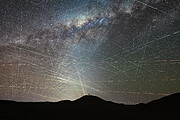
Operators have already filed for 1.7 million satellites. ESO astronomer Olivier Hainaut's study in Astronomy & Astrophysics argues that past 100,000 faint objects, ground-based astronomy suffers "devastating consequences," and it draws a bright line: no satellite above visual magnitude 7, the point where trails start saturating the Vera Rubin Observatory's camera.
The worst cases are concrete. SpaceX's proposed million satellites would drag dozens of bright trails across every VLT frame shot two hours after dark, costing up to 28% of a traditional camera's field of view and leaving some Rubin exposures unusable for hours. Reflect Orbital's 50,000 planned mirror satellites would shine as bright as Venus; stand inside one of their reflected beams and it reads four times brighter than the full Moon.
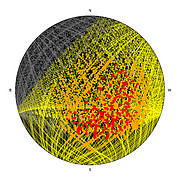
From light-polluted Munich, Hainaut notes, those mirrors would become the only "stars" still visible, and diffuse scattering would brighten the whole sky three to four times.
The thread hunts for the name missing from the doom list
The top comment named the USA, Israel and Russia as the launchers unlikely to care. A space-visualization builder caught the omission:
"Interesting that your list omits China considering they have firm plans to launch ~41k satellites for government/commercial constellations plus ITU filings for >200k proposed satellites." — co-founder of Kolena and creator of the Atlas of Space
Optimists argued the satellites will simply fall back to Earth within a few years. One reply drew the orbital distinction that undercuts it:
"China's constellations are going to orbits that will take hundreds of years to return to earth… only SpaceX has satellites in low orbits that frequently need propulsion to push back up, and fall back within 5 years." — a commenter tracking the constellations' altitudes
On why the things glow at all, the thread supplied the thermal reason: you cannot just paint them black.
"in space, reflective items don't heat up as much from sunlight as would a dark, energy absorbing, material. Shedding heat in space is a difficult enough endeavor already without also painting your satellite black." — a commenter on spacecraft heat
The sharpest exchange rejected a framing that the cap denies Africans internet access:
"100k is more than enough satellites to provide high-speed satellite internet globally… The ability to do Earth based astronomy is something that is of value to all the peoples of Earth." — a reply rebutting the 'satellites versus the poor' framing
The fight is already leaving orbit. The same builder noted that Chile scrapped a gigawatt hydrogen plant near ESO's Atacama site after European astronomers complained about its light, a preview of how far the claim to protect the dark can reach on the ground.
"earlier this year Chile cancelled plans for a gigawatt-scale solar/wind powered hydrogen production plant nearby the ESO facility in the Atacama desert after light pollution complaints from European scientists." — the same commenter, on the Atacama dispute
Get breakdowns like this every day
The top Hacker News stories, unpacked — by email, Telegram, or RSS.
Junior coders are down 19% while total dev jobs grew 10%
Laurie Voss zoomed his employment chart down to a single age band and found the fire: US developers aged 22-25 have lost nearly a fifth of their jobs since late 2022, while every older cohort kept growing.