Auto-download daily
Issue · July 5, 2026

Top of Hacker News

22 stories of the day: AI, technology, business and simply interesting discussions — recapped and unpacked.

An ESO astronomer sets the sky's limit at 100,000 faint satellites (eso.org)

Operators have filed for 1.7 million satellites; an ESO study finds ground astronomy breaks past 100,000, calling the rest 'devastating.'

The proposed fix is a brightness floor of magnitude 7. SpaceX's mooted million would streak dozens of trails across each VLT frame; Reflect Orbital's 50,000 mirrors would outshine Venus.

The thread pitted progress against dark skies and flagged the launcher missing from the doom list: China.

Not just a headline — the discussion unpacked

The top HN threads: facts from the discussions, both sides, insider voices. Email, Telegram, or RSS.

Junior coders are down 19% while total dev jobs grew 10% (seldo.com)

Developers aged 22-25 have lost 19% of their jobs since late 2022, even as total US developer headcount grew 10% to 1.69 million. Laurie Voss argues the collapse is hiding inside a boom.

His flip: 36 million people joined GitHub last year, and most never call themselves programmers. The job title is dissolving into a skill.

The thread splits on whether the charts even carry AI's fingerprints.

A YouTube comment can make Ask Studio's AI leak a private title (javoriuski.com)

Ask Studio, the AI that summarizes a YouTube channel's comments, reads those comments as commands. A crafted comment plus one click on YouTube's own suggested prompt makes the assistant echo attacker text as its own analysis.

Pushed further, the payload coaxes the AI into a fake verification link that leaks a private video's title. The researcher reported it twice; Google called it social engineering and declined both times.

The thread doubts the mechanism: one engineer notes the model never actually fetches the URL it writes.

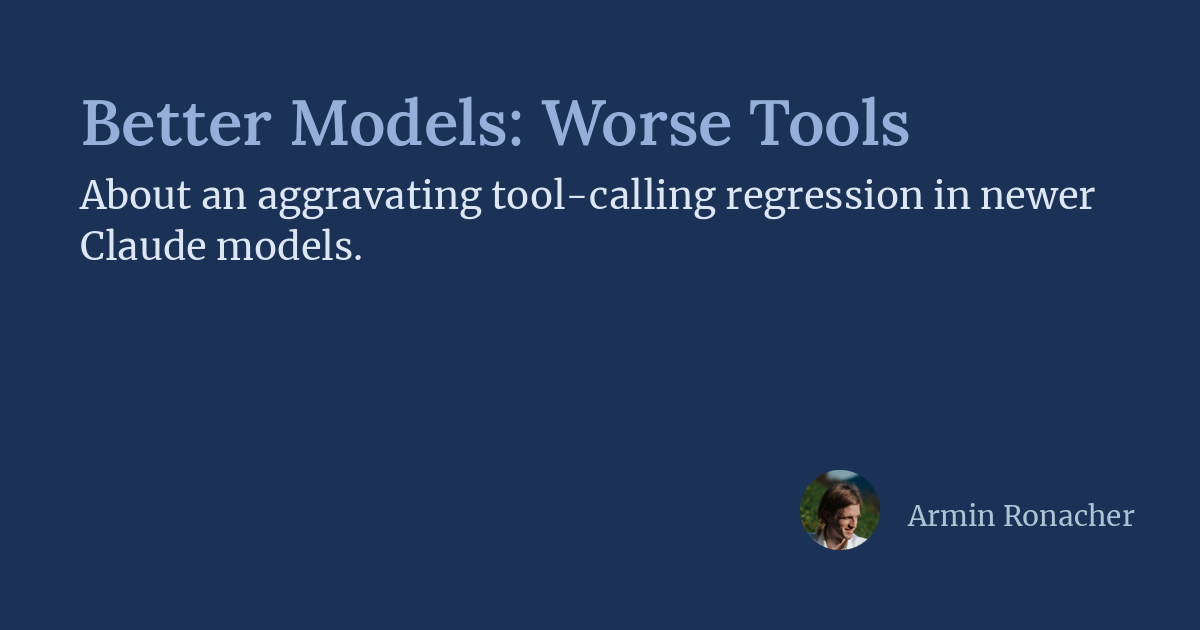
Newer Claude models keep inventing tool fields that break Pi's editor (lucumr.pocoo.org)

Armin Ronacher, creator of Flask, found that Opus 4.8 and Sonnet 5 keep adding invented keys like requireUnique and oldText2 to Pi's edit tool. The oldText and newText payloads are byte-correct; the extra fields alone cause repeated failures.

His hypothesis: reinforcement learning inside Claude Code's forgiving harness rewarded malformed calls, so the model now fights any schema that isn't Anthropic's.

The thread debates whether that's a fixable bug or a walled garden.

Webb keeps finding black holes too big, too early to exist (quantamagazine.org)

Webb has photographed a billion-solar-mass black hole just 650 million years after the Big Bang, feeding at 40 times the limit physics allows, plus hundreds of enigmatic 'little red dots.'

The problem isn't too little data but too many theories. ZeroTier's founder is betting on primordial black holes; another reader dug up the paper testing whether the red dots are just brown dwarfs.

GPT-5.5 Codex keeps stopping at exactly 516 reasoning tokens and getting it wrong (github.com)

Across 390,195 logged responses, GPT-5.5 Codex terminates reasoning at exactly 516 tokens far more than any sibling: 82% of exact-516 events are GPT-5.5, though it's only 19% of traffic. The stops cluster at 516, 1034, and 1552, each about 518 apart.

One HN user reproduced it live: 4 of 10 identical prompts short-circuited at 516 tokens, and every one returned the wrong answer.

The suspected cause: a throughput optimization batching reasoning in multiples of 512.

🚀Tech ★ 166 · 💬 52 · Jul 5 · #AI#dev tools#open source#Claude#Codex#GPT-5.5+1

Anna's Archive offers $200k to exfiltrate every Google Books scan (software.annas-archive.gl)

Anna's Archive, the shadow library, has posted a $200,000 bounty for a complete copy of Google Books' scans, or a comparable trove, to fold into its permanent open collection.

It sits among smaller asks: $20k for a text version of AA's own library, $5k per million Internet Archive lending PDFs, $3k for Library of Congress MARC data.

The thread argued less about the scans than about who funds six-figure payouts, whether this turns criminal, and a warning that the bounty page links to a shady .li domain.

A rare bacterium in Cheyenne's water halted Meta's data-center discharges (tomshardware.com)

A rare metal-resistant bacterium, Cupriavidus gilardii, turned up in Cheyenne's reclaimed water. The city traced it to Goat Systems LLC, the contractor building Meta's data-center campus, and suspended the plant's fill-and-flush and closed-loop discharges.

Officials say it isn't a drinking-water emergency. A former microbiologist in the thread calls the find routine; others map how even 'closed-loop' cooling still breeds bacteria that force these purges.

Seattle's office towers sit a third empty, and rents won't budge (seattletimes.com)

Amazon's retreat to Bellevue and the Eastside hollowed out downtown blocks it once filled, and the Seattle Times frames it as a city in decline.

In the thread, a real-estate investor and a former Indeed insider split on the cause: hostile city government, or the mortgage covenants that keep rents frozen and floors dark.

Converting the towers to housing sounds obvious. Zoning and the loan math both say otherwise.

Verizon's app shutdown is about to brick two-year-old kids' watches (jefftk.com)

On July 6, Verizon retires GizmoHub, the app behind Jeff Kaufman's kids' Gizmo watches. Its replacement, Verizon Family, can't yet handle watch-only accounts, so texting, location and adding contacts all break.

Kaufman tried to migrate and hit a wall: his line reads 'ineligible,' and 2FA codes route to a Google Fi number that never delivers. Three support tickets in, nothing has moved.

Germany's sick days are climbing, but the number may be an accounting artifact (dw.com)

From January, a fever alone won't earn a remote sick note in Germany; workers must see a doctor in person on the first day off.

The headline reads as a lazy-workforce story. The thread's sharpest correction: much of the 'rise' is just better counting, after a 2022 switch to electronic sick notes that finally logged short illnesses.

A Swedish reader recalls his country's own day-one fix, and what it actually changed.

California outlaws 'sell by,' betting clearer labels will shrink food waste (nytimes.com)

The phrase 'sell by' was never meant for shoppers; it tells a store when to rotate stock, yet shoppers read it as an expiration date and toss good food.

California's fix standardizes the wording. The thread's asterisk: stores can keep 'sell by' dates if they're coded for staff, so a shopper may lose the one clue that stock is old.

Several call it a near-nothing law. A small clarity gain, at best.

A two-dose nasal spray rejuvenated aging brains — in 18-month-old mice (stories.tamu.edu)

Ashok Shetty's lab at Texas A&M dosed 18-month-old mice twice with extracellular vesicles from human stem cells, sprayed up the nose. Object-recognition memory improved; inflammation markers in the hippocampus dropped and held for months.

The press release says 'reverse brain aging.' The thread says something smaller: it lowered inflammation, in mice, and no human has tried it. A neuroimaging scientist and a skeptic both landed on the same asterisk.

Why forgetting a thought in a doorway points to consciousness (scientificamerican.com)

Hold a thought, walk through a doorway, lose it. Birmingham philosopher Henry Taylor says consciousness ignites when working memory hands its contents to attention, which broadcasts them brain-wide.

His proof cases include a study where 75% of phone-distracted walkers missed a unicycling clown. A neuropsychiatrist in the thread calls working memory mere CPU cache, wired beside consciousness, not its source.

You already have time to learn — it's between Netflix and your phone (marginalia.nu)

Viktor Löfgren, who runs the independent search engine Marginalia, says the time is already there: swap some phone-scrolling for 30 to 45 minutes of practice. Sessions feel bad at first; sleep, not the session, is when you actually improve.

Readers pushed back. If you're not producing errors, you're not practicing yet. And the essay never names age, which one older commenter said makes the whole thing harder every year.

🌍Other ★ 425 · 💬 193 · Jul 5 · #AI#culture#Marginalia#Viktor Löfgren

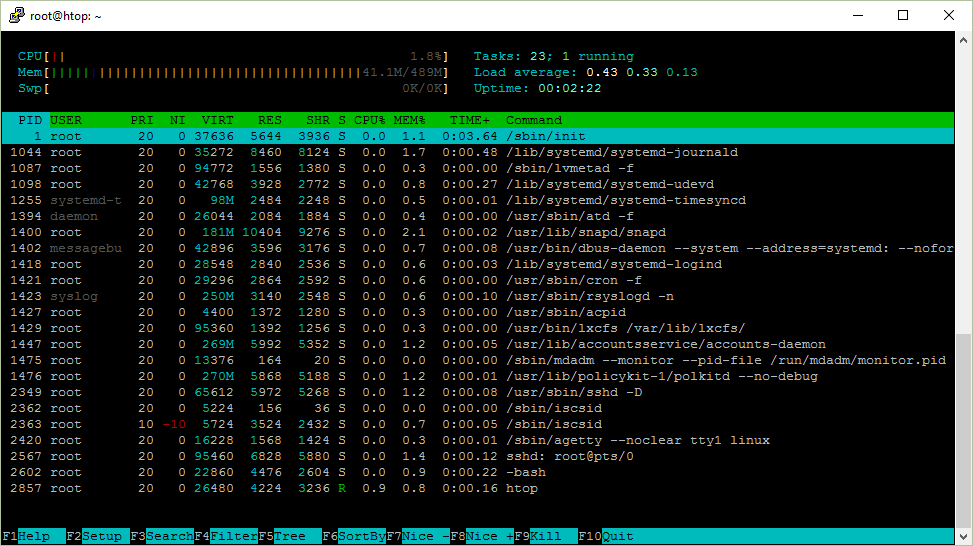
A field guide to every number in htop, from load average to zombies (peteris.rocks)

The 2019 explainer decodes every field in htop and top: load average as a damped average of runnable plus uninterruptible tasks, not CPU percent, and the S-state column from R to the unkillable D and the harmless Z zombie.

Its sharpest point: VIRT is an illusion. RES is the real resident memory; virtual size counts mmap'd regions a process never touches.

The comments turned it into a tools thread: btop, nmon, process-tree tweaks.

🚀Tech ★ 408 · 💬 53 · Jul 5 · #dev tools#programming#btop#htop#Linux+2

Command and Conquer Generals ported natively to iPhone, iPad and Apple Silicon (github.com)

Ammaar Reshi took EA's GPL v3 Generals source, built on the GeneralsX macOS/Linux port, and shipped native ARM64 iOS and iPadOS builds of Zero Hour with RTS touch controls.

The engine is unmodified; rendering runs DirectX 8 to DXVK to Vulkan to MoltenVK to Metal, five layers deep. No assets ship; you supply your own Steam copy.

The 'using Fable' credit drew fire: one game dev counted just 19 of 2000 commits from the model and called the headline clickbait.

A 512-byte boot sector that dumps your RAM to a USB stick (github.com)

BareMetal-RAM-Dumper boots without an OS from a 512-byte sector, flips the x86 CPU into unreal mode to reach memory above 1MB, then writes physical RAM to a USB drive in 32KB chunks. The pitch: cold-boot forensics and crypto-key recovery.

It runs only on legacy BIOS, and the thread pokes holes fast. One asks what was actually tested; another notes UEFI firmware would clobber the RAM before the dumper ever runs.

An AI-only fiction contest, and the strange confession hidden in every entry (hyperstitionai.com)

A contest asked writers to generate a short story entirely by AI, no human edits, and to submit the full prompt harness. The winner, 'The June,' drew groans in the thread over its metaphors.

Then judge gwern spotted the twist: a large share of entries secretly read as allegories about AI powerlessness. Critics counter that the contest really measured prompt harnesses, not writing.

🚀Tech ★ 61 · 💬 139 · Jul 5 · #AI#culture#Clarkesworld#D. Bohdan#Granta+2

Claude Code asked about a Minecraft temple no one had mentioned (github.com)

Working in a locked-down Enterprise ZDR workspace, a Claude Code user watched the agent start asking about brick types for a Minecraft temple it claimed to be building. Nobody had mentioned Minecraft.

They filed issue #74066 asking whether cache isolation had failed between workspaces or leaked from a consumer account. Anthropic's team replied they are confident it is a hallucination but are investigating.

Engineers in the thread split three ways: harmless confabulation, local file confusion, or a scarier infra routing bug.

Dan Luu ships AI code with no review, trusting fuzzing over unit tests (danluu.com)

Dan Luu describes a workflow where a support ticket becomes a PR automatically, and he'll ship without human review if the fuzzing coverage is deep enough. He borrows it from Centaur, a chip company that ran 1,000 test machines for 40 engineers and shipped under one serious bug a year, with no unit tests.

After 50 runs he also found the viral 'caveman mode' token trick gave no consistent edge.

The thread argues over whether property-based testing can really replace unit tests.

A meeting room hit 2,143 ppm CO2, and the decisions got worse (blog.mikebowler.ca)

Agile coach Mike Bowler clocked 2,143 ppm on a conference table. He cites Berkeley Lab: at 1,000 ppm, decision scores fell on six of nine measures; at 2,500, seven of nine dropped toward a range researchers called 'dysfunctional.'

The thread split. Submarine crews work in thousands of ppm with no measured deficit, and several readers flagged the post itself as AI-written. The real fight was whether CO2 is the cause or just the messenger.