A Doctor's Cousin Declined Chemo and Died at Home for $20
Ken Murray, a retired family doctor, once switched off a dying patient's life-support machines after honoring the man's own written wishes — and a nurse reported him to the authorities for possible homicide. Doctors, Murray argued in a viral essay, get far less aggressive treatment at the end of their own lives than everyone else, because they've spent careers watching what the aggressive version actually looks like.
Ken Murray, a retired family doctor, watched a colleague named Charlie turn down surgery that could have tripled his pancreatic-cancer survival odds. Charlie died months later without chemo or radiation.
A reader in the resurfaced HN thread found HN's own algorithm had cut the headline in half: the original ends "but it should be," turning a curiosity into an argument for the rest of us. Physicians in the thread confirmed the pattern, one describing giving his dying mother a final dose of morphine himself.
Ken Murray's cousin Torch chose $20 of medicine over chemo

Ken Murray is a retired family doctor and clinical professor of family medicine who spent years watching what happens when medicine runs out of good options. His essay, "How Doctors Die", reprinted by Cancerworld in 2016, argues doctors don't get more aggressive care at the end of life than the rest of us. They get less — because they've seen the aggressive version up close, on other people.
The clearest example is Charlie, an orthopedist diagnosed with pancreatic cancer. Surgeons offered him a new procedure that could triple his five-year odds, from 5% to 15%, at the cost of a much harder few months. Charlie closed his practice, went home, and spent his remaining months with his family. He never had the surgery, the chemo, or the radiation — and by Murray's account he got more good time out of it than most patients get from the aggressive version.
Murray backs the choice with a number of his own:
"I've had hundreds of people brought to me in the emergency room after getting CPR. Exactly one, a healthy man who'd had no heart troubles… walked out of the hospital."
Then there's Torch, Murray's cousin, whose lung cancer had already spread to his brain by the time he was diagnosed. Oncologists offered aggressive chemotherapy requiring three to five hospital visits a week, for odds that were poor even so. Torch declined everything except medication to control the brain swelling. He lived eight more months, entirely at home, and by Murray's account the total medical bill came to about $20.
Not every patient's wishes survive contact with the system, even when the patient is a doctor's own family. Murray describes a patient named Jack who had explicitly, repeatedly said he never wanted to go back on life support. When Jack arrived unconscious after a massive stroke, the hospital resuscitated him anyway. Murray eventually discontinued the machines himself, honoring paperwork Jack had filed years earlier — and a nurse reported the act to the authorities as a possible homicide. Nothing came of it; Jack's directive was on file.
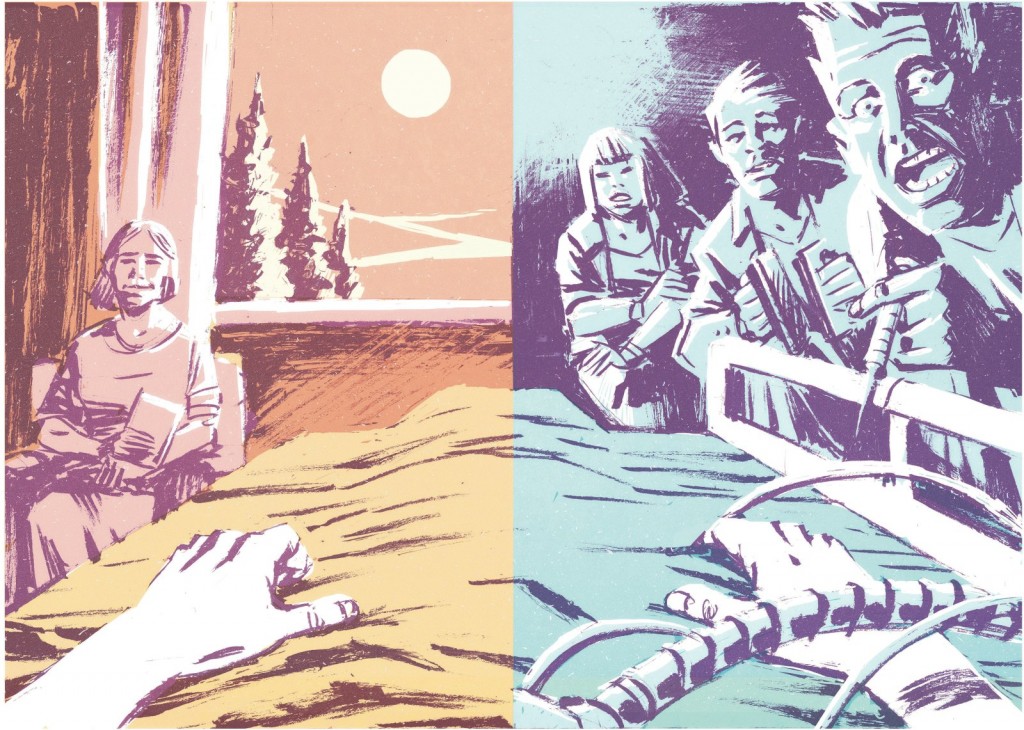
The headline HN cut in half
The HN thread put 214 points and 123 comments behind an essay that first went viral roughly a decade earlier. Murray's piece had already run once before on HN in 2021, drawing 291 comments of its own. This time, Michael Geary, a longtime HN contributor, caught something the submission had gotten wrong about its own headline:
"Title should be corrected to the original: How doctors die. It's not like the rest of us, but it should be."
HN's title-parsing had quietly dropped the essay's actual argument. "It's not like the rest of us" reads as a curiosity about a strange medical subculture. "…but it should be" turns it into a claim: ordinary patients deserve the same permission to refuse.
Physicians in the thread, in their own words
Several doctors showed up to confirm the pattern from the inside. One, a physician specializing in neuropsychiatry, described making, for a parent, the same choice Murray says doctors make for patients other than themselves:
"I personally administered to my mother opioid to accelerate death due to terminal cancer a couple of days before the expected end that would be tortuous."
Another, a physician in the thread who described himself as "an old one", pointed at the gap between what doctors know and what patients actually do about it:
"Every time I see a doctor someone asks if I have a signed, notarized directive… I have asked aged patients the same question. More than not the answer is 'no'."
Not everyone bought the "wise doctor" narrative
The sharpest pushback came from a skeptical reader in the thread, who argued Murray's framing quietly assumes doctors decline treatment because they understand medicine best, and never seriously considers the alternative:
"For all we know, the more likely scenario is that Charlie… was burnt out, tired, and depressed… Doctors… rank among the highest in occupational risk of mental health disease, especially for things like addiction, alcoholism, generalised anxiety, ptsd, depression and suicide."
It's not a claim about Charlie specifically, since nobody in the thread knew him, but a real caveat about a genre of essay that turns one profession's coping mechanism into a universal lesson.
A firefighter's tally, and a skeptic from Tokyo
Murray's CPR statistic got independent confirmation from a former volunteer firefighter who performed CPR on multiple patients:
"I was a volunteer firefighter and did CPR multiple times, none of those people survived."
A C++ programmer writing from Japan raised a different question — whether the whole pattern is an artifact of how American healthcare bills, rather than something universal about medicine:
"isn't it US specific local trend where medical bill is ridiculous? There is no way ICU cost 10K USD/day… except in US."
Nobody in the thread answered that one directly. What the thread agrees on, across the doctors and the skeptics alike, is narrower than Murray's original essay: not that doctors know some secret about dying well, but that they're the ones who actually fill out the paperwork before it's too late for it to matter.
Get breakdowns like this every day
The top Hacker News stories, unpacked — by email, Telegram, or RSS.
For Fifty Years, a GM-Funded Doctor Set the 'Safe' Dose of Lead
In December 1921, a General Motors engineer named Thomas Midgley Jr. found that adding lead to gasoline cured his engine's knock. He was bedridden with lead poisoning before the first tank reached a pump, and for the next fifty years the only person studying whether the dose was safe was a doctor GM itself was paying.