For Fifty Years, a GM-Funded Doctor Set the 'Safe' Dose of Lead
In December 1921, a General Motors engineer named Thomas Midgley Jr. found that adding lead to gasoline cured his engine's knock. He was bedridden with lead poisoning before the first tank reached a pump, and for the next fifty years the only person studying whether the dose was safe was a doctor GM itself was paying.
Thomas Midgley Jr. discovered tetraethyl lead in December 1921, silencing his engine's knock, and was bedridden with lead poisoning before the first tank of it sold in 1923. A year later, five refinery workers making the stuff for Standard Oil were dead.
The government cleared the fuel anyway in 1926. The only scientist researching lead safety for the next fifty years was a doctor General Motors itself paid, and the thread's sharpest reply asks what a modern equivalent of that arrangement would look like.
A General Motors engineer chose lead because ethanol couldn't be patented
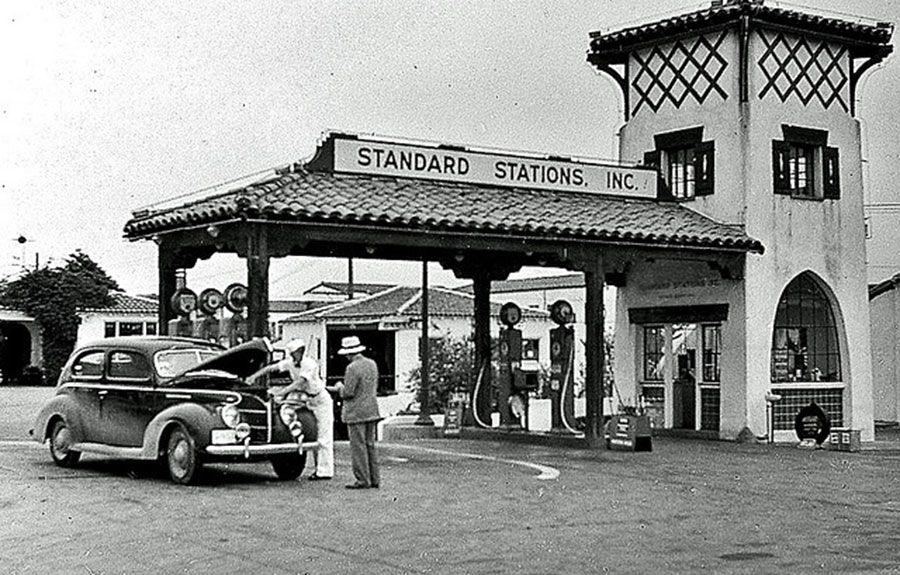
As the Smithsonian recounted in a 2016 piece that keeps resurfacing on HN, the fix for engine "knock" was never a mystery. On December 9, 1921, Thomas Midgley Jr., an engineer working under self-starter inventor Charles Kettering at General Motors, found that tetraethyl lead (TEL) smoothed out the knock that made early cars sluggish and unreliable. Ethanol did the same job, was already cheap, and was already known to be safe. GM picked the poison instead, because grain alcohol couldn't be patented and threatened the oil industry's grip on what went into a fuel tank.
GM's own supplier wasn't confused about what it was selling. A Du Pont executive described tetraethyl lead internally, in 1922, as "a colorless liquid of sweetish odor, very poisonous if" absorbed through skin, warning that it caused "lead poisoning almost immediately." The first tank of leaded gasoline went on sale in February 1923. Midgley spent that stretch bedridden, recovering from his own lead poisoning. A year later, five workers died making TEL at a Standard Oil refinery in New Jersey.
A 1926 report called the dose 'tolerable,' and that held for fifty years
None of it stopped the sale. A 1926 U.S. Public Health Service report concluded there was "no reason to prohibit the sale of leaded gasoline," provided refineries protected their workers. The same testing had already found measurable lead in the blood of every driver studied; the report simply declared that baseline "tolerable." It stayed federal policy for decades: the EPA didn't start phasing leaded gasoline out of American cars until the mid-1970s, and only after years of litigation with manufacturers. The exposure it left behind is now tied to lower IQ, hyperactivity, learning disabilities and violent crime in children who grew up breathing it.
The thread's real reversal: GM funded the only lead research there was
The headline fact, a poison sold knowingly, is the easy part of this story. The thread's sharpest turn came from a commenter who resurfaced a five-year-old comment from the article's previous HN discussion, naming the mechanism that let the "tolerable" dose stand unchallenged for half a century: Robert Kehoe, a physician on General Motors' payroll, was for decades effectively the only person on Earth running lead research, until geochemist Clair Patterson stumbled onto the fraud while using ice cores to date the planet. The commenter's payoff line drew the modern parallel out explicitly:
"A modern equivalent might be if Facebook was the only organization researching social media's impact on society, while being able to set the paradigm/assumptions about said safety for half a century." — leoc, resurfacing a 2021 HN comment on the same article
Switzerland didn't wait for GM's verdict
One reply undercut the idea that the whole world simply didn't know better: Switzerland banned leaded gasoline outright in 1926, the same year the U.S. report cleared it, and the Soviet Union followed in its major cities by the 1950s. The fifty-year delay wasn't universal ignorance; it was a choice some governments didn't make.
Banned on the road since 2021, still burning over the runway
A growth-equity investor in the thread pointed out that leaded gasoline is now banned for road vehicles in every country, Algeria, the last holdout, dropped it in 2021. But a separate reply pushed back on the idea that the story is over:
"Still sprayed all around the surrounding land at almost every airport in the USA and worldwide from prop aircraft exhaust despite knowing ANY amount is toxic and irreversible for 30+ years." — a longtime commenter with 30,000+ karma
Piston aircraft avgas is still leaded almost everywhere, a hundred years after Midgley's first patent.
The bill: about 2.6 IQ points a person, still being paid
A commenter who went and tracked down the peer-reviewed lead-IQ literature came back with a number that turns the history into arithmetic:
"The average lead-linked loss in cognitive ability was 2.6 IQ points per person as of 2015." — a commenter citing the 2022 PNAS lead-exposure study
That figure comes from a 2022 PNAS study modeling cumulative U.S. childhood lead exposure; a 2025 Nature Communications Earth & Environment paper extends the same accounting globally, mapping estimated lifetime-earnings losses from childhood lead exposure country by country. The dose GM called tolerable in 1926 is still showing up in the data a century later.
The same engineer's second disaster
Midgley didn't stop at gasoline. He went on to invent the chlorofluorocarbons that later tore a hole in the ozone layer, then built a motorized pulley rig to help himself out of bed after contracting polio, and was strangled by his own invention in 1944. One reply closed the thread's history lesson with the full arc:
"Leaded gas, CFCs, and accidentally created a machine that ended his own existence." — a commenter who linked Midgley's Wikipedia entry and a longer profile piece
The knock in his engine went away in 1921. The rest of the bill is still being tallied.
Get breakdowns like this every day
The top Hacker News stories, unpacked — by email, Telegram, or RSS.
Mice that squatted for food beat runners on blood sugar control
To reach their food, mice in a Virginia Tech study had to lift a weighted, hinged lid while wearing a tiny shoulder collar — a squat under a load that grew heavier each day. Researchers found those mice ended up with less visceral fat and tighter blood sugar control than mice that ran freely on a wheel, even though they hadn't packed on more muscle to show for it.