Xiaomi's laundry-folding robot is trained like an LLM, but its code isn't public yet
A video of a two-armed Xiaomi robot folding shirts, zipping a suitcase, and loading a washing machine went viral on Hacker News this week. The company says XR-1 was trained the same way large language models are: a giant pretraining phase followed by fine-tuning, this time on 100,000 hours of hand-camera footage and 7,200 hours of real-robot demonstrations.
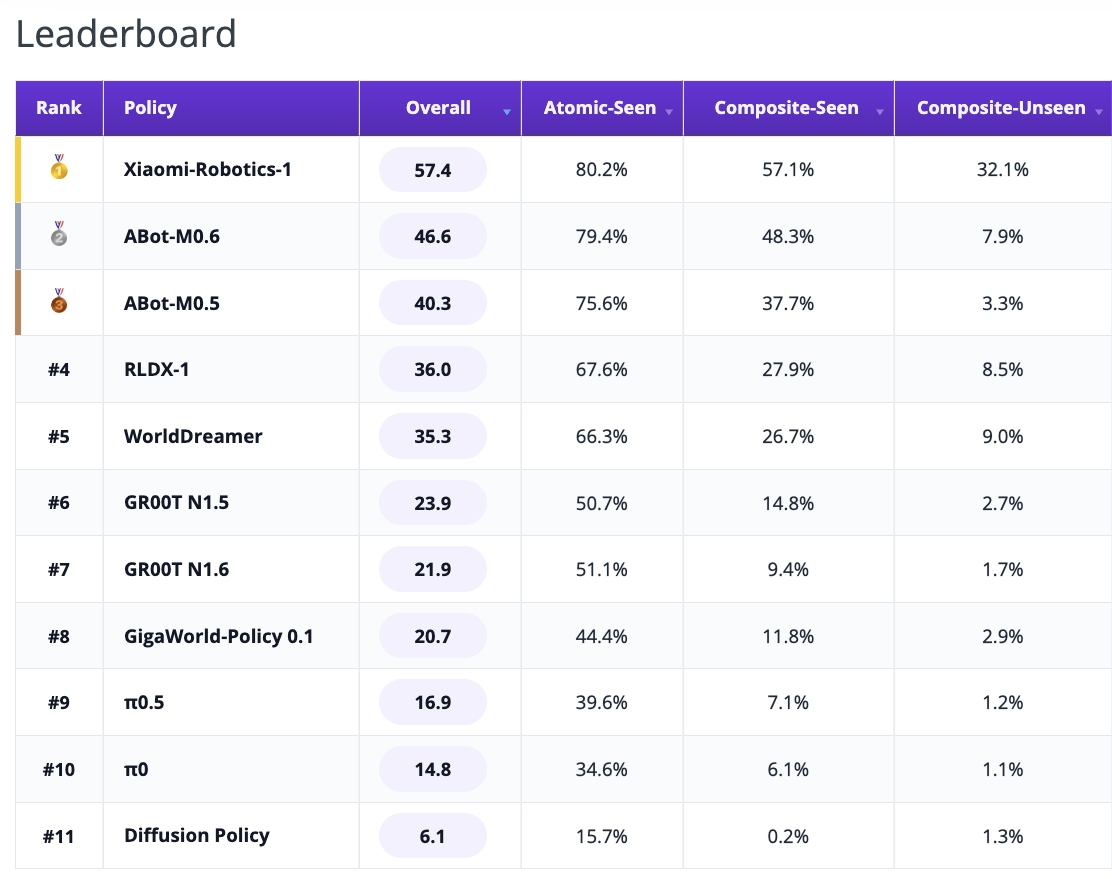
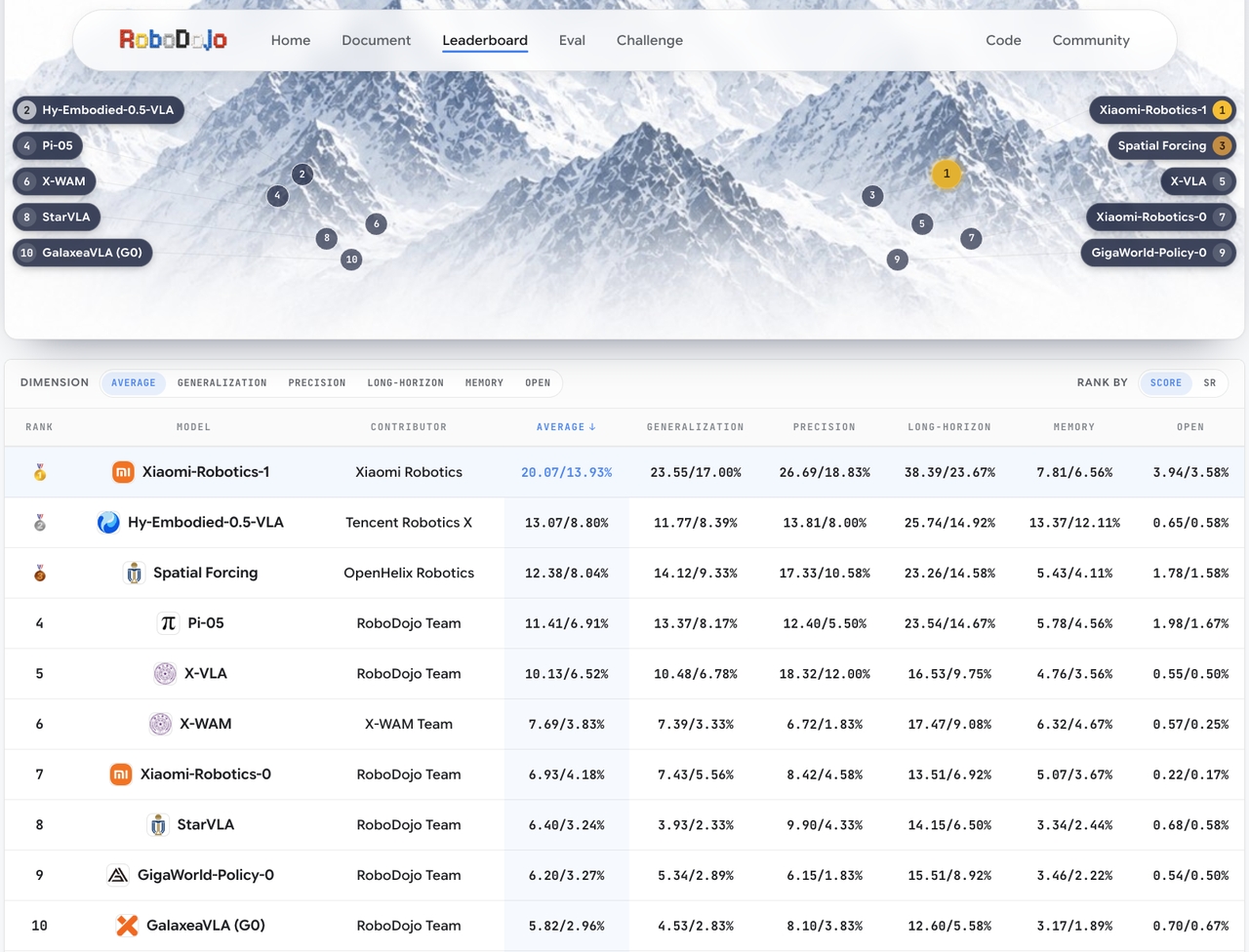
XR-1 tops every rival model Xiaomi tested it against on four manipulation benchmarks, RoboCasa, RoboCasa365, VLABench, and RoboDojo, and the company says its accuracy scales as predictably with more data as a language model's does.
Developers who went looking for the promised open code found only leftovers from Xiaomi's previous robot model: the GitHub and Hugging Face repos for XR-1 itself were empty.
Xiaomi trains robots the way everyone else trains language models
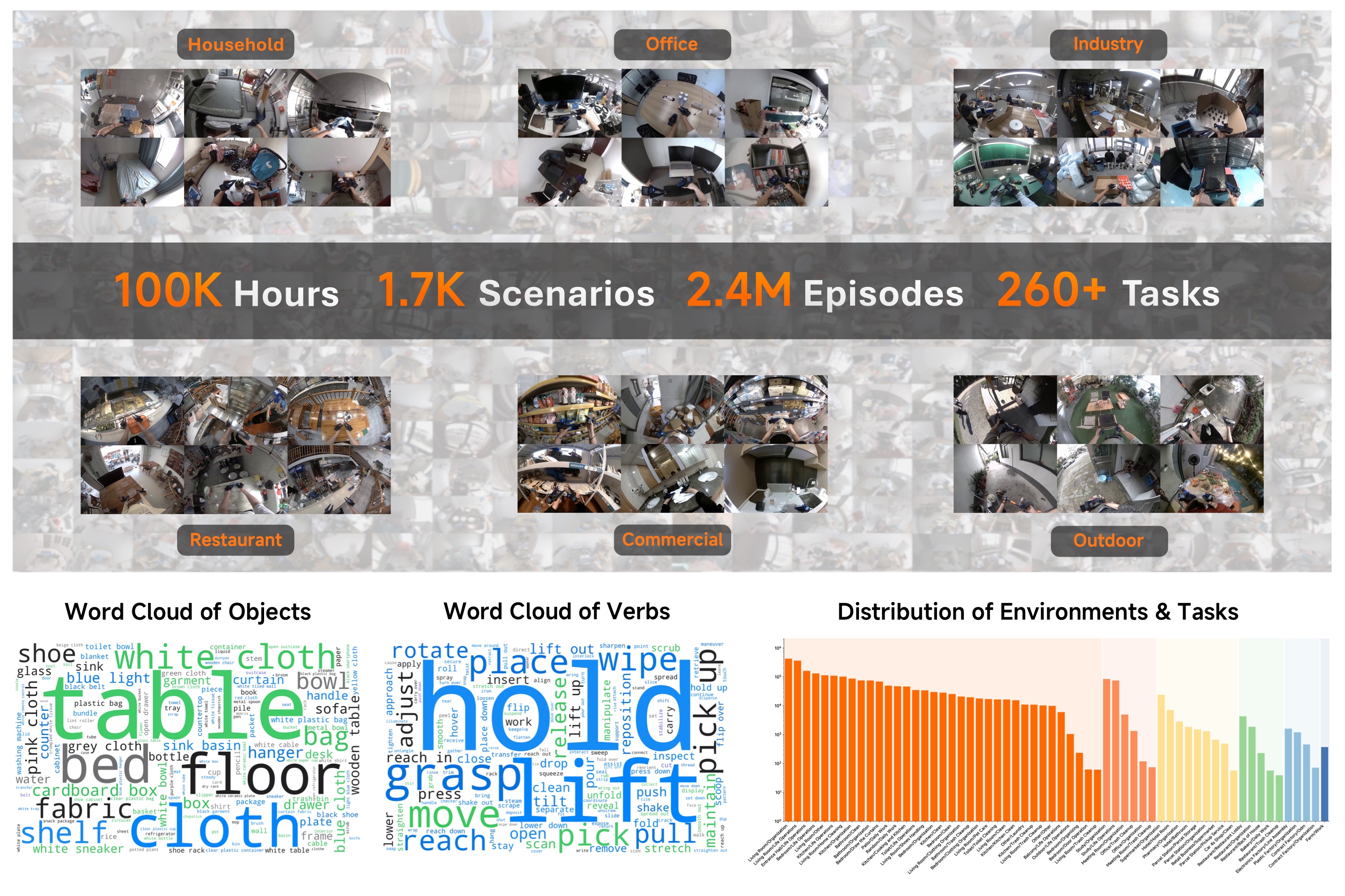
Xiaomi's robotics division published XR-1 on July 16, describing a training pipeline lifted almost directly from LLM development. The pretraining stage runs on 100,000 hours of "embodiment-free" trajectories, video captured with a handheld gripper rig (UMI) rather than an actual robot arm, spanning more than 1,700 scenarios across homes, warehouses, shops, and outdoor spaces. A vision-language model automatically labels the state transitions in that footage, the same way LLM pipelines auto-label web text. Only after that does the model see a real robot: post-training adds 7,200-plus hours of teleoperated demonstrations recorded in actual homes, filtered and blended with open-source robotics datasets, to teach the model to follow instructions on Xiaomi's specific hardware.
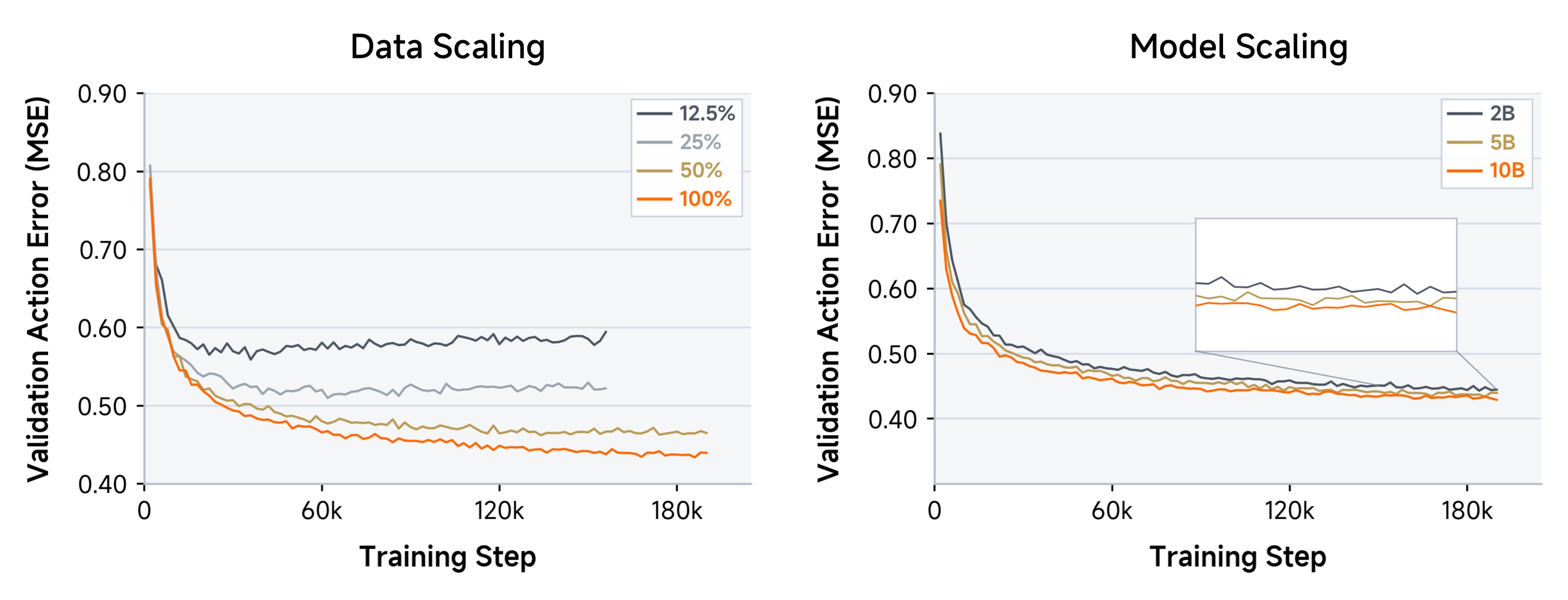
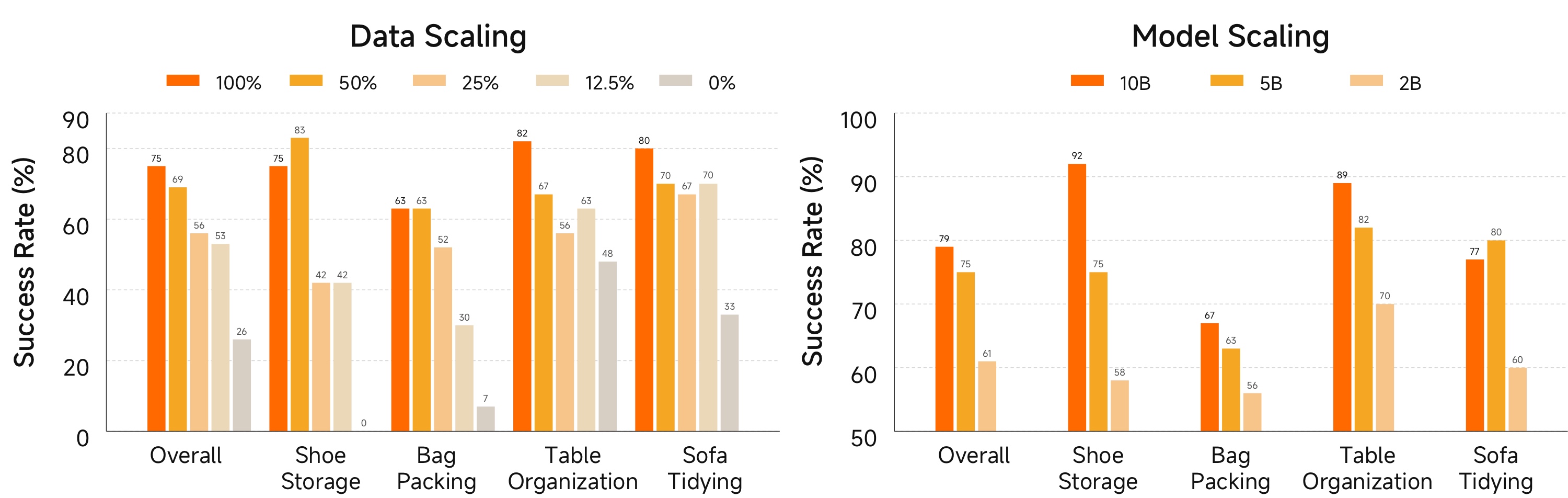
Xiaomi's headline claim is that this scales the way language model training scales: validation error drops steadily and predictably as data and model size grow during pretraining, and those gains transfer into real-world manipulation after post-training.
Four benchmarks, and XR-1 leads all of them
| Benchmark | XR-1 | Gap to 2nd place |
|---|---|---|
| RoboCasa | 74.5% | +2.6 pp |
| RoboCasa365 | 57.4% | +23.2 pp |
| VLABench | 59.1% | +11.1 pp |
| RoboDojo | 13.93% | +58.3% (relative) |
The thread's actual robotics researcher: this is genuinely hard, not a parlor trick
The discussion split almost immediately between people impressed by the demo video and people convinced it was cherry-picked footage. The co-founder of an LLM-evaluation startup was in the second camp:
"The video cuts to a new shot every couple of second instead of one continuous shot like all robotics research. This makes it hard to trust it. The robot probably failed a million team and they stitched the video from 100 experiments" — resiros, co-founder of agenta.ai
A commenter whose bio lists machine learning, robotics, and neuroscience work pushed back with a list of what the footage actually requires, whatever the editing:
"Coordinating two hands, mobile body, deformable objects, thin affordances (bag zip in particular), multi-object single grasp ... a host of things that had individually been tackled as either perception or manipulation problems and probably led to more than one person's PhD here on HN" — a commenter whose bio spans robotics, reinforcement learning, and neuroscience research
The open-source claim that isn't open yet
Xiaomi's page points to GitHub and Hugging Face for code and weights. One developer actually went and looked:
"Neither the Github nor the HF repos have anything on the XiaomiRobotics-1 model or datasets :-( They have a bunch of assets ... for XiaomiRobotics-0 however" — a commenter who checked Xiaomi's GitHub and Hugging Face repos directly
That gap between the announcement and the actual repo contents is the difference between "here is our model" and "here is our model, eventually." For a company whose credibility on this claim rests entirely on reproducibility, an empty repo undercuts the pitch more than no promise at all would have.
Get breakdowns like this every day
The top Hacker News stories, unpacked — by email, Telegram, or RSS.
Your fingerprints already cross the Atlantic every time you fly to the US
Digital rights group EDRi warns that a new EU-US pact, the Enhanced Border Security Partnership, will hand Washington direct access to Europeans' biometric profiles in exchange for keeping visa-free travel. What the warning leaves out: anyone who has ever landed at a US airport already had their fingerprints and photo taken and checked against a federal database, deal or no deal.