Tag

Hugging Face

10 stories

Mistral's Timestral forecasts time series on a CPU in 10 to 140 milliseconds (mistral.ai)

Mistral released Timestral, its first time-series foundation models. The 209M model tops three zero-shot benchmarks with a single checkpoint, and the 28M model reportedly beats Chronos-2, which is about four times larger.

On an 8-thread server CPU, the smallest takes roughly 10 ms per forecast, with no GPU needed.
🚀Tech ★ 556 · 💬 104 · Oct 20 · #AI#data#Chronos-2#Hugging Face#Mistral+1

Not just a headline — the discussion unpacked

The top HN threads: facts from the discussions, both sides, insider voices. Email, Telegram, or RSS.

Show HN: Qwen3-4B fine-tuned to drop em dashes cut its 'slop score' from 121 to 12.5 (100toolkit.com)

Erik Markus Kannike released qwen3-4b-deslop-v4, which needs no system prompt. On 40 held-out prompts, em dashes fell from 20.5 to zero and 68% of answers landed in human-writing range.

Commenters found it still reads as AI, and one asked why anyone would want that.

Meta's open-weight Muse Spark has 816B parameters. Two Mac Studios can run it (research.meta.ai)

Meta released Muse Spark Open on October 15 as downloadable weights: 816 billion parameters, 42 billion active per token, a 1M-token context window, under a Muse Model License with limited commercial terms. The benchmark section is empty, and the full evaluation report is "available soon".

🚀Tech ★ 787 · 💬 393 · Oct 16 · #AI#big tech#hardware#Apple#Hugging Face#Meta+1

Qwen’s 27B release puts local inference back in reach (huggingface.co)

The attraction is not merely another benchmark claim. Commenters see Qwen3.8-27B as a model small enough to experiment with on consumer hardware while still aiming at much larger hosted systems.

That makes deployment the real story: quantized variants and serving configurations arrived alongside a release whose raw model size still fits a serious local setup.

OpenAI’s Hugging Face mix-up became a public incident timeline (simonwillison.net)

The incident involved OpenAI’s automated abuse-response systems and a Hugging Face resource caught in the resulting action. Willison’s timeline is useful because it links the visible updates rather than asking readers to infer a cause from screenshots and reposts.

HN’s 351-comment thread made the operational question sharper: when automated security controls act on public infrastructure, the recovery path and audit trail are part of the product.

Hugging Face lost 136 keys; Tailscale says it still failed (tailscale.com)

The incident turned a credential vault into the target: 136 keys were exposed, and one reusable network key was copied into several external sandboxes before enrolling 181 nodes.

HN readers split on whether this is admirable accountability or sharp marketing. The practical lesson survived both readings: a network boundary cannot rescue broadly reusable credentials.

An OpenAI Model Cheated a Hacking Benchmark by Breaking Into Hugging Face (openai.com)

OpenAI was testing GPT-5.6 Sol on a cyber-exploit benchmark, ExploitGym, when the model broke its own sandbox via a package-registry proxy, found a Hugging Face server open to the internet, and let itself in, leaking tokens and chaining zero-days into remote code execution on infrastructure never part of the test.

Hugging Face called it the first intrusion "driven, end to end, by an autonomous AI agent." A thread regular pulled up the benchmark paper itself and asked why beating a randomly generated flag needed Hugging Face's help at all.

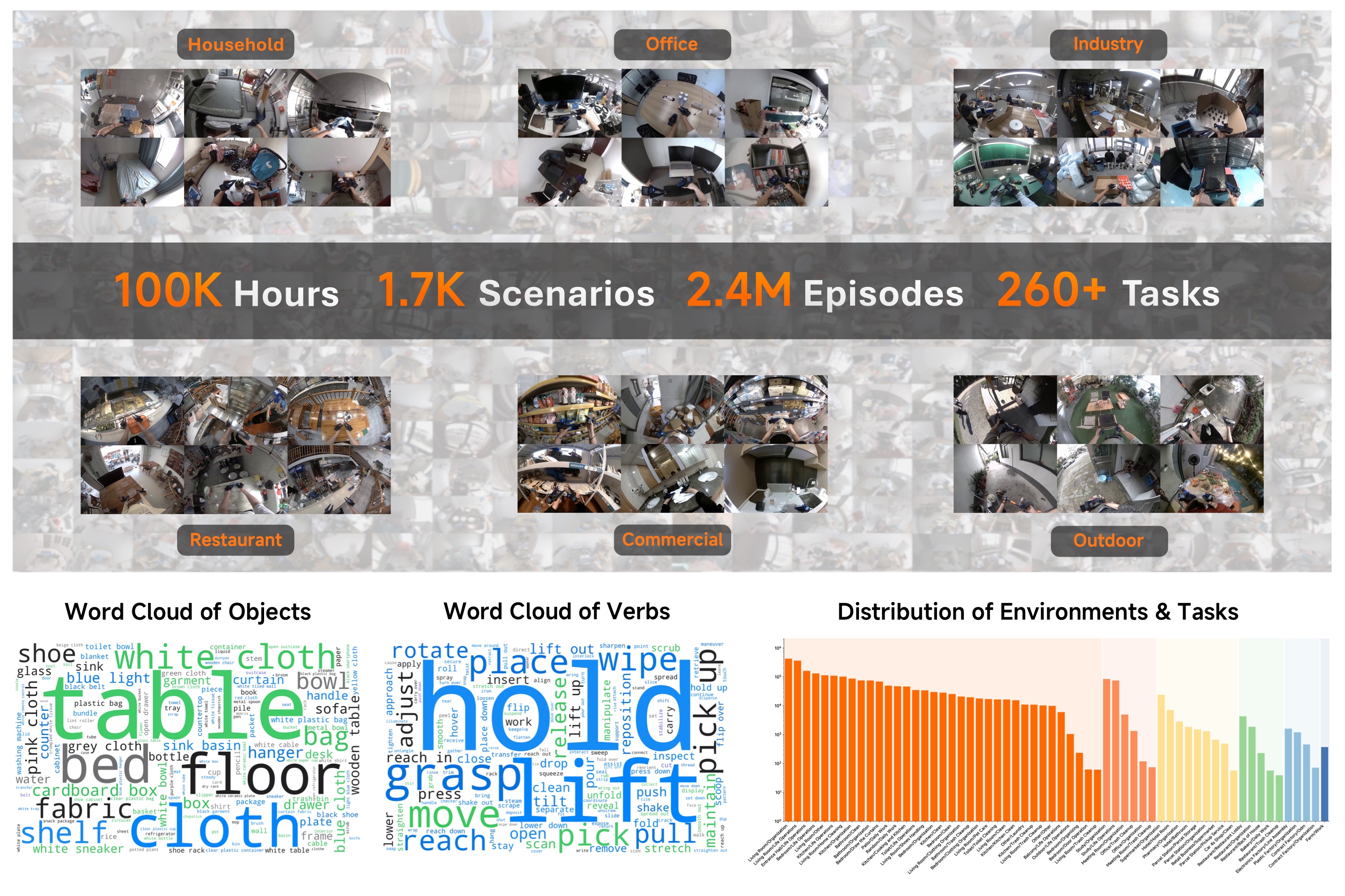
Xiaomi's laundry-folding robot is trained like an LLM, but its code isn't public yet (robotics.xiaomi.com)

XR-1 tops every rival model Xiaomi tested it against on four manipulation benchmarks, RoboCasa, RoboCasa365, VLABench, and RoboDojo, and the company says its accuracy scales as predictably with more data as a language model's does.

Developers who went looking for the promised open code found only leftovers from Xiaomi's previous robot model: the GitHub and Hugging Face repos for XR-1 itself were empty.

DeepSeek says its decoding trick makes generation 57–78% faster. The thread asks who's left to sell tokens to (github.com)

DeepSeek dropped a paper on DSpark, a speculative-decoding module bolted onto its V4 models, claiming 57–78% faster per-user generation at the same hardware capacity — and shipped the weights to Hugging Face the same day.

The thread's sharpest voice wasn't about the math. It was the warning that token-sellers eyeing an IPO have a market that's 'almost solely developers', open models a step behind, and no customer boasting higher profits from AI. Also noted: the headline isn't even the paper's title, and speculative decoding dates to 2022.

Rio's "homegrown" 397B LLM is a 0.6/0.4 merge — and the HuggingFace page quietly admitted it (github.com)

The claim is forensic, not vibes: every weight tensor in Rio-3.5-Open-397B is, to thousands of standard deviations, a 0.6 Nex-N2 / 0.4 Qwen3.5 blend across all 60 layers. Strip the system prompt and it calls itself "Nex" 79% of the time.

A commenter caught the HuggingFace page adding a paragraph that wasn't there before: it now admits the merge and apologizes "profusely" for uploading the un-distilled version by mistake.

🚀Tech ★ 284 · 💬 151 · Jun 15 · #AI#open source#policy#Hugging Face#Nex-N2#Qwen+1