The US added 20.2 GWh of batteries in a quarter, about 96 seconds of peak demand
A record for storage installations looks different once the grid's size is attached, as the top-voted commenters did.
SEIA and Benchmark counted 20.2 GWh in Q2 2026, with Arizona at a record 6.2 GWh, while residential storage fell 27%. A commenter divided it by US peak demand and got 96 seconds.
Another said the battery's real job is milliseconds-fast smoothing of spot prices, not backup.
A record quarter, led by utilities and Arizona
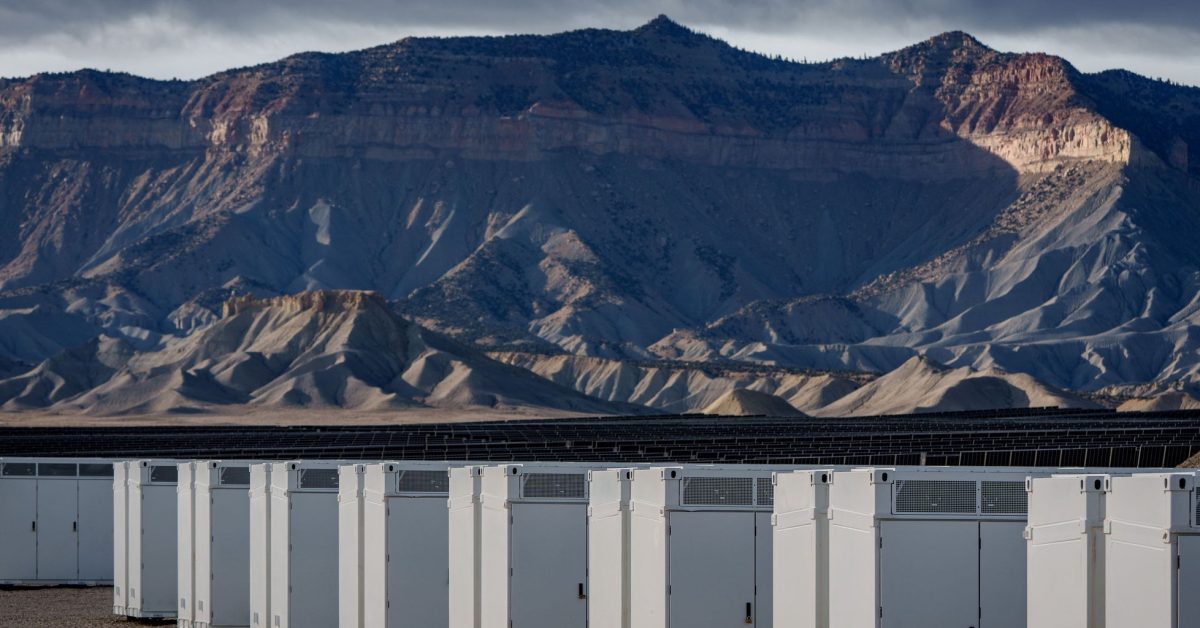
Electrek reports that the US installed 20.2 GWh in Q2 2026, taking the first half to 30.8 GWh, up 23%. Utility-scale was about 18 GWh, 44% paired with solar and 56% standalone. Arizona added 6.2 GWh, Texas 3.8 and California 3.6. Residential storage fell 27% to 657 MWh. Benchmark expects about 71 GWh in 2026 and raised its 2030 forecast to 683 GWh.
What the thread did with the scale
"…the peak electricity demand for the US is 750GW, so the added storage for the past 3 month corresponds to just 96 seconds of peak consumption." — a commenter doing the division
Another gave the average-demand version, about two minutes, and noted total installed storage of roughly 200 GWh, or 25 minutes of average demand (a commenter citing SEIA totals).
The counterweight was what batteries are for:
"In Australia, the real value of these big batteries is not necessarily to provide emergency power, but more to respond in milliseconds to variations in demand and to smooth out the 5 minute spot market." — a commenter describing Australia's grid
The seconds-of-demand framing measures energy, while the milliseconds-of-response framing measures service, so a record quarter can look small on one yardstick and necessary on the other.
Get breakdowns like this every day
The top Hacker News stories, unpacked — by email, Telegram, or RSS.
This is the last story in the October 30, 2026 issue.
Go to the issue archive