He asked if you'd restarted your Mac this week. Cue an uptime culture war
The post was a small Saturday ritual: restart the Mac, force-quit the 'are you sure?' dialog, feel a little rebellious. The thread turned it into an argument about what a reboot even signals.
A micro.blog writer described his weekly ritual of rebooting his Mac on Saturday mornings, force-quitting the unsaved-work warning for the small thrill of it. He isn't worried about losing anything: work syncs to OneDrive, files sync via Syncthing.
The 220-comment thread split by tribe. Linux and BSD users bragged about months of uptime and treated a forced reboot as a sign something is broken. A fleet admin countered from the trenches: it's pulling teeth to get 10,000 Windows users to accept one automated reboot a month.
A Saturday reboot, done for the feeling of it
The original post is barely more than a paragraph. Its author restarts his Mac on Saturday mornings, not because anything is wrong, but as a small ritual. He gleefully force-quits the "You have unsaved work! Are you sure?" dialog, calling it a chance to throw responsibility to the wind for a bit. He can afford the recklessness: most of his work lives in OneDrive, his personal files sync through Syncthing from Emacs, so a hard restart loses nothing. He signs off echoing the oldest line in IT, that the reset is one of the best ways to fix your computer's problems, and asks: have you restarted this week?
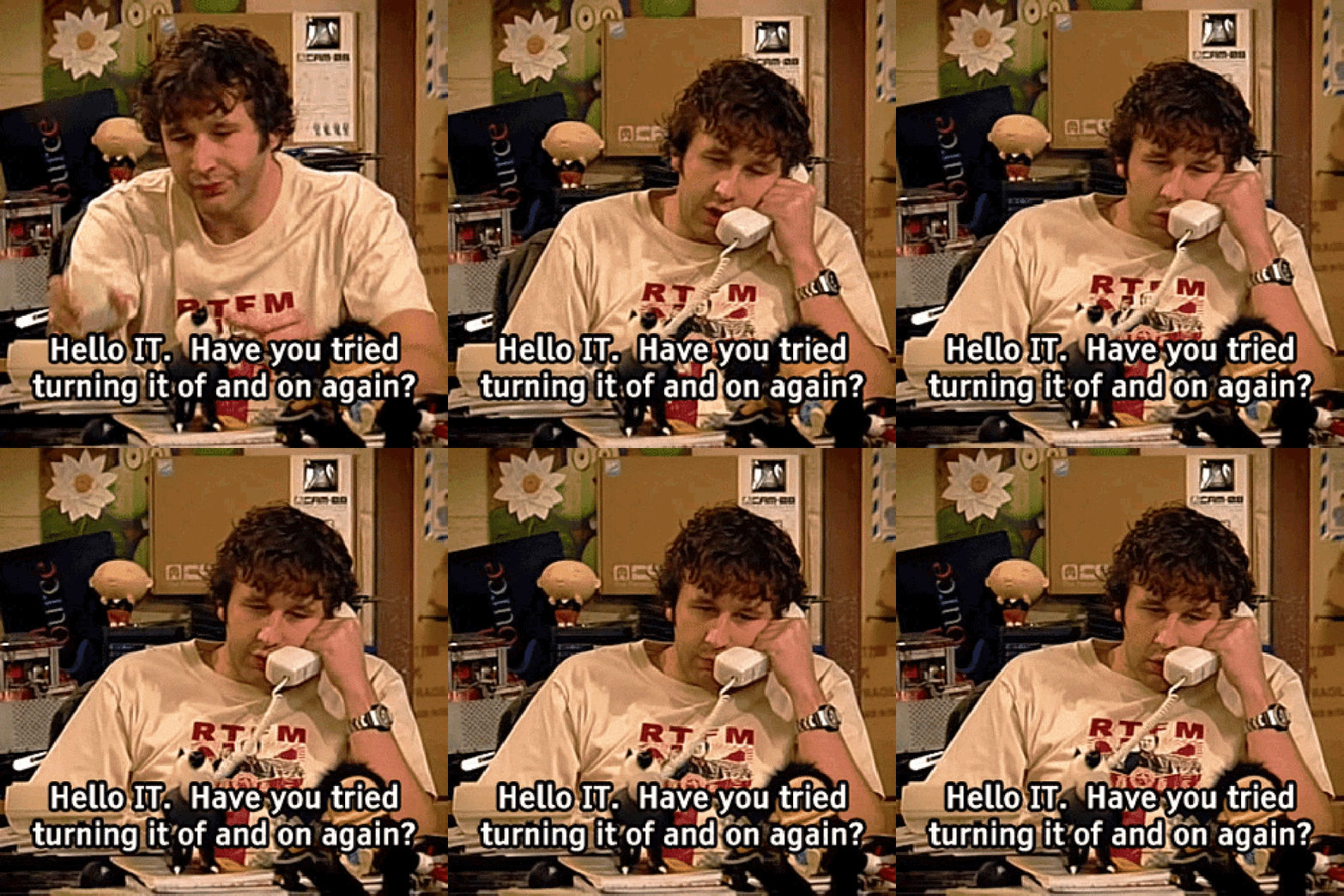
That gentle question detonated a 220-comment argument on Hacker News, and the reason it did is that a reboot means completely different things to different tribes.
For Linux and BSD users, a reboot is a confession of failure
The uptime-as-honor camp showed up first and loudest. To them, being forced to restart is an admission the system is broken.
"As a Linux user, it pisses me off whenever I am forced to reboot… Needing to shut down to me indicates something is broken." — a consultant doing AI, devops and cloud cost work
Others wore old uptime records like campaign medals: a server that ran roughly 3,400 days at OVH and survived only because the poster eventually got curious how long it would last, before a datacenter fire took out other bays and left it untouched. A ten-year-uptime Cisco router, replaced only because it was underpowered. But the same voices flagged the modern catch. Where huge uptime once meant pride, it now means fear:
"Now when I see a large uptime, I'm terrified of what security patches the kernel may be missing!" — a systems engineer working on drivers and network protocols
Why Mac users forget reboots exist — and one myth about it
A second thread branch tried to explain why Mac users rarely restart, and produced a small factual fight. One commenter argued macOS apps never really close, they just minimize. That drew a correction from someone who'd clearly looked:
"That is not true, when you close apps on macOS the process(es) really are finished, just like on Windows or Linux." — a developer correcting the closed-app claim
The more precise account: macOS separates an application's lifecycle from its open windows, so an app can persist with no windows and restore its whole window set through a system restart, something a longtime reader noted Windows and Linux still haven't managed. And the plain reason Mac users don't shut down, per another: Apple simply got sleep working properly. Not everyone's experience is clean, though. One person reported a Mac that, left running for weeks, accumulates strange bugs: cursor stops changing over links, app switching lags, and once keystroke latency shot up by 500–700ms until a reboot cleared it.
The counter-story: in a 10,000-PC fleet, nobody wants to reboot
The romantic uptime talk collided with an admin who runs machines at scale, and his reality was the opposite of the individualists':
"my department manages a fleet of ~10k Windows PCs and it's pulling teeth to get the users to allow an automated reboot once a month for updates. they invent all kinds of silly ways to avoid it." — an admin of a 10,000-PC Windows fleet
And running underneath the whole debate was a note that reframes the OP's whole premise: on Windows, "Shut Down" isn't a clean start. A commenter tracked down that the default Fast Startup feature hibernates the system rather than fully clearing it, so a manual power-off can be less fresh than clicking Restart. The person who reboots every Friday to feel clean might, on Windows, be getting the opposite of what they think.
What makes this thread the story isn't a verdict, because there isn't one. It's that a one-paragraph question sorted an entire profession into camps that each think the others are doing it wrong: the uptime purists, the fleet realists who'd kill for one reboot a month, and the ritualists who reboot Fridays purely, as one put it, for the sense of closure. Not for the machine. For themselves.
Get breakdowns like this every day
The top Hacker News stories, unpacked — by email, Telegram, or RSS.
72-year-olds did HIIT for six months. The fat-loss edge was 'not clinically meaningful'
A randomized trial put 123 healthy older adults on treadmills three times a week for half a year. The high-intensity group held onto slightly more muscle, but the authors themselves flagged the change as too small to matter.