Auto-download daily
Issue · July 1, 2026

Top of Hacker News

26 stories of the day: AI, technology, business and simply interesting discussions — recapped and unpacked.

GitHub Trending: Today — Black, Megatron-LM, awesome, awesome-mac, Stable Diffusion WebUI (github.com)

In today's GitHub Trending: sindresorhus/awesome, the curated index that spawned a thousand "awesome-*" lists; psf/black, the zero-config Python formatter; AUTOMATIC1111's Stable Diffusion web UI; and NVIDIA's Megatron-LM training library.

The page reads like a museum, not a newsstand. Two of its residents are trending as their own users drift to successors: Ruff is quietly replacing Black, and Forge and ComfyUI carry the image work AUTOMATIC1111 stopped shipping four months ago.

Not just a headline — the discussion unpacked

The top HN threads: facts from the discussions, both sides, insider voices. Email, Telegram, or RSS.

Claude Code hides a check for the word 'deepseek' in its own JavaScript (thereallo.dev)

Someone decompiled Claude Code and found obfuscated client code that fingerprints the API gateway it connects to, watching for strings like 'deepseek'. Match a competitor's name and your prompt gets silently tagged before it leaves your machine.

The thread's verdict split hard: half called it a clumsy anti-distillation tripwire any reseller defeats by renaming a domain, the other half asked the scarier question of what the server does with a tagged prompt: ban, throttle, or a quietly dumber model?

Anthropic ships Sonnet 5 and advertises that it's worse at hacking on purpose (anthropic.com)

Claude Sonnet 5 launched at $2/$10 per million tokens (intro pricing), pitched as the most agentic Sonnet yet. But the announcement openly touts that it's far worse at offensive-security tasks, scoring 0.0% on a Firefox exploit test where Opus succeeds.

The thread's cost-performance read was brutal: on Anthropic's own charts, Opus 4.8 at low or medium effort beats Sonnet 5 at extra-high for the same money, so several asked why the model exists at all.

A US Supreme Court ruling about the FTC just voided the EU-US data deal (noyb.eu)

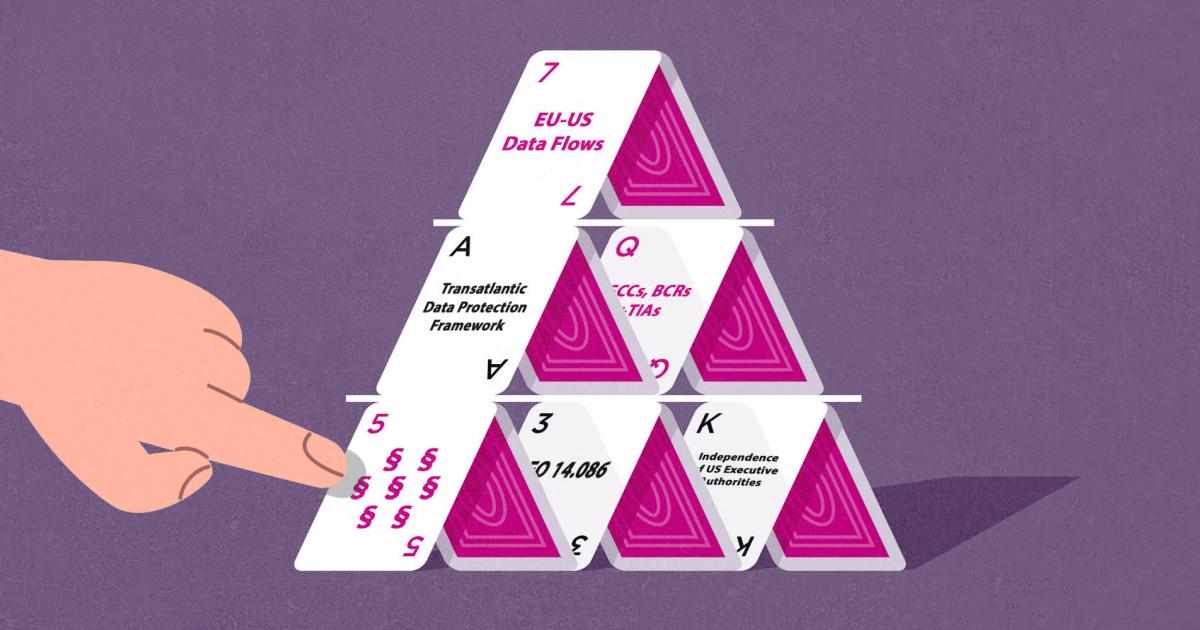
The EU Commission's 2023 adequacy decision leaned on the US FTC as an independent privacy enforcer, citing it 259 times. On 29 June the Supreme Court ruled the FTC is not independent of the President at all.

Max Schrems' group noyb says that collapses the legal ground under EU-US data transfers, and the only clean fix is a unanimous EU treaty change. A Schrems III case is already being drafted.

Overlapping CPU bookkeeping with GPU math bought Moondream 35% more throughput on a B200 (moondream.ai)

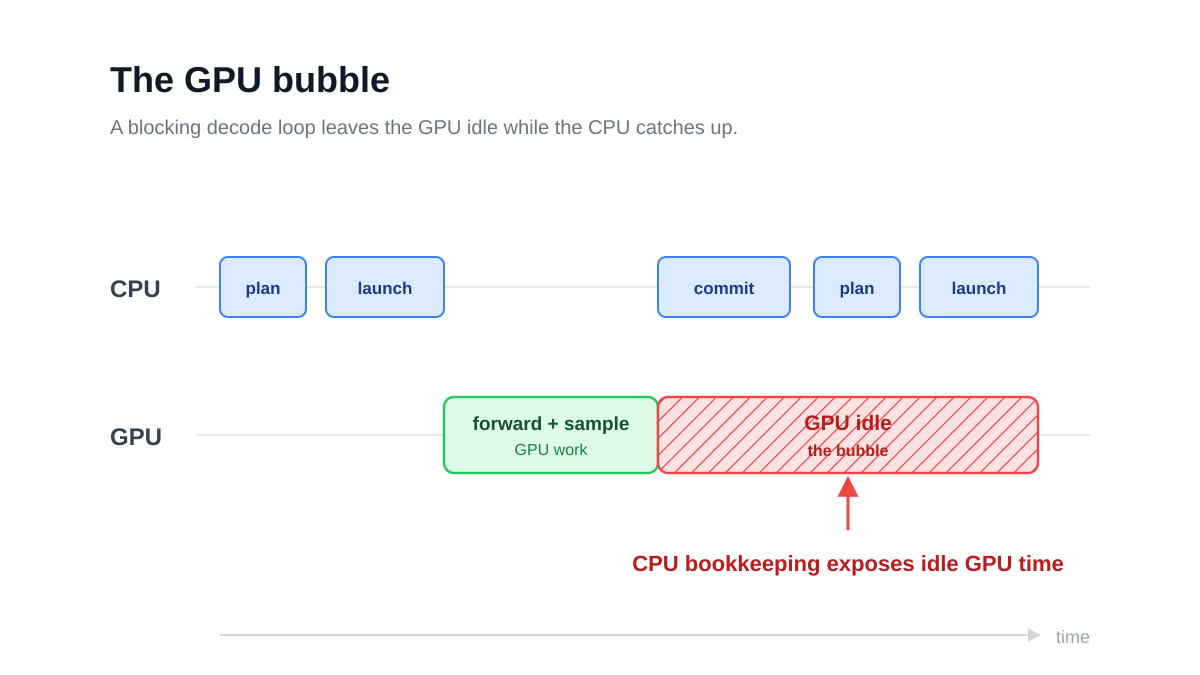
In LLM token generation the GPU often sits idle, not for lack of work but because the CPU hasn't finished housekeeping for the next token. Moondream calls that gap a GPU bubble and rebuilt its Photon engine to hide it, overlapping the next forward pass with the sampling of the previous one.

The payoff scales with the machine. On an RTX 3090 the trick adds about 6.5%; on a B200, where CPU sync is a bigger slice of a tiny 2.4ms forward pass, it adds 35.4%. An inference engineer pushed back: the win looks this big only because the model is small.

The US labor share hit a post-war low. The NY Fed's verdict: nothing new (libertystreeteconomics.newyorkfed.org)

Labor's share of US income sits at a post-war low, off 1.6 points from pre-COVID after holding flat through the 2010s. The New York Fed asked if the drop signals something new and answered no: it tracks past recessions and comes from within industries, not work shifting between them.

One reader called the title sensationalist and quoted the paper's own no. Another argued the metric is partly a tax-law mirage: doctors and lawyers who once drew a W-2 salary now bill through one-person corporations, so their pay counts as capital, not labor.

County with 37 data centers tells schools to 'conserve electricity' as rates jump 25% (404media.co)

Henrico County's manager emailed thousands of staff that power for all county and school buildings would rise 25% on July 1, about $5 million more a year, and urged them to conserve. The county hosts 37 data centers with plans for 17 more, some on Civil War battlefields.

The thread refused the easy villain. A Berkeley Lab analysis, cited in the thread, pins most of Virginia's rate rise on the state's 2020 clean-energy mandate, not the data centers. Another noted the email went to all government buildings; only 'schools' hit the headline.

A Debian desktop toy shows a Ukrainian flag only when your locale is Russian (lwn.net)

The xsnow screensaver's maintainer added code that shows a Ukrainian flag at 30% probability for Russian-locale users, versus 2% for others. A complaint calling it discrimination misfired: the DFSG governs licenses, not behaviour.

Russ Allbery flagged the real worry: software that secretly changes behaviour by locale. The thread's flip, from a Debian dev: the flag already appeared at random; the patch only changed the odds.

Europe's sovereign digital ID needs Google's blessing to trust your phone (waag.org)

The EU's digital identity wallet uses Google Play Integrity to vouch for a phone, which rejects de-Googled Android as untrusted. Switzerland uses Android's plain Hardware Attestation API instead; Italy and the Netherlands wired in Play Integrity unconditionally.

A Waag researcher argues that route breaches the Digital Markets Act. In the thread, the developer of the Fenrir protocol predicts nothing changes until an antitrust lawsuit lands.

Postgres 19 finally reorganizes tables without locking, and borrows GROUP BY ALL from DuckDB (snowflake.com)

Snowflake's Craig Kerstiens walks through the Postgres 19 beta: REPACK CONCURRENTLY reorganizes bloated tables without locks (no more pg_repack), partitions can now merge and split in place, autovacuum gets parallel workers, and SQL/PGQ brings graph queries to relational data.

The thread wanted what's still missing more than what shipped. A 15-year Postgres user in science flagged the absent columnar storage as datasets balloon; others miss materialized views and in-place major upgrades. And the top nitpick: GROUP BY ALL was DuckDB's idea first.

Sony deleted movies people 'bought'. The thread's verdict: you never owned them (arstechnica.com)

Sony removed StudioCanal movies that customers had paid for on the PlayStation Store, no refund, because the licensing deal behind them expired. The thread linked two near-identical removals from the same week, including 551 movies deleted from accounts.

The core reversal: a buy button that was never a sale. As one commenter put it, your purchase lives in someone else's garage. Another pointed at first-sale doctrine: buy a paper book and you can resell or will it to your kids; buy the ebook and you own nothing.

He grossed $6M on a bed scrunchie. A review card killed his Amazon account (latimes.com)

An Amazon seller who grossed $6 million on a bed scrunchie lost his account, apparently over a card offering a free accessory for a product review. The LA Times used his case to open a shadow market where suspended sellers pay brokers, sometimes for insider Amazon access, to get reinstated or sabotage rivals.

The thread split on the card. If it demanded a '5-star' review, one commenter noted, that's a federal FTC violation and the ban is earned; if the wording was neutral, he got railroaded with no recourse but the phone tree.

📈Biz ★ 117 · 💬 68 · Jul 1 · #big tech#economy#policy#Amazon

Commerce quietly un-bans Anthropic's Fable 5 after two months and a leaked letter (twitter.com)

The Department of Commerce withdrew the export controls that had made Anthropic's top models unavailable for weeks. The leaked withdrawal letter, addressed to Anthropic's Chief Compute Officer, lists the commitments made: proactively detect security risks and inform the government of any malicious activity.

The thread was more wary than relieved: readers asked how lobotomized the returning model will be, and whether you can build a business on a US frontier model that vanishes for two months on a policy whim.

Reporters asked the US ambassador one question. Police called it an 'active threat' (europeancorrespondent.com)

The US embassy rented a chunk of Brussels' Cinquantenaire park for an invitation-only 250th-anniversary event. When European Correspondent reporters tried to question ambassador Bill White, police removed them, having been told one was an 'active threat.'

The thread splits on who's responsible: a reader explains the rented-park trespass mechanics, while others fault the Belgian police for complying at all.

Waag moved its whole Bluesky account to a European server, and nothing broke (waag.org)

Waag migrated its Bluesky data to Eurosky, an EU-based host, using an 'EU-Haul' service. Because AT Protocol stores your posts on a movable personal data server, the account, history and followers came along.

The thread's flip: this buys portability, not privacy. A Bluesky-using engineer notes AT Protocol replicates everything publicly by design — 'there's no privacy at all.'

A startup fired up the first private non-light-water reactor in four decades (antaresindustries.com)

Antares hit initial criticality on its Mark-0 microreactor at Idaho National Laboratory, the first privately developed non-light-water reactor to go critical in the U.S. in over four decades. The fuel is BWXT-made TRISO pebbles; the roadmap reads criticality 2026, electricity 2027, 'power to the warfighter' 2028.

The thread caught the tell: the milestone is real engineering on schedule, but the end user is a military base, not the grid, which is why the commercial-power pitch rings hollow to some readers.

Meta decoded typed sentences from brain waves at 61% accuracy, no surgery required (ai.meta.com)

Meta's Brain2Qwerty v2 reads typed sentences off non-invasive MEG brain scans: 61% word accuracy overall, 78% for the best of nine volunteers, versus 8% for prior non-invasive methods. Each participant wore the helmet ~10 hours and typed ~22,000 sentences to train it.

The catch a reader flagged: it's an incremental gain on existing techniques, and the MEG scanner is a room-sized machine that has to sit in a magnetically shielded chamber, nowhere near a keyboard replacement.

Anthropic's 'Claude Science' is a data-science app that hallucinates its citations (claude.com)

Anthropic launched Claude Science, a local-server workbench wired to UniProt, PDB, ChEMBL and HPC clusters, with a background 'reviewer agent' that checks citations and flags untraceable numbers. A former Anthropic engineer who built one of its tools called the database-integration work genuinely valuable.

A German university lecturer ran a literature review and watched it hallucinate references and resolve a DOI to the wrong paper; another researcher noted the 'science' here is really just the data-science slice of life sciences.

Google's new image model is fast and cheap, and its chart omits ChatGPT (deepmind.google)

Google shipped Nano Banana 2 Lite, a distilled Gemini image model that renders in seconds at $0.034 an image. An early tester confirmed it behaves like a lighter Nano Banana 2 with good text rendering, but you can't force aspect ratios like the full model.

Two things the thread caught: the comparison chart quietly omits ChatGPT and DALL-E, and one longtime engineer noted Grok's image model beats Nano Banana on nearly every metric Google chose to highlight.

🚀Tech ★ 308 · 💬 120 · Jul 1 · #AI#big tech#Google DeepMind#Google Gemini#Grok+1

An LLM wrote 100,000 lines putting Kubernetes in a browser; he read every one (ngrok.com)

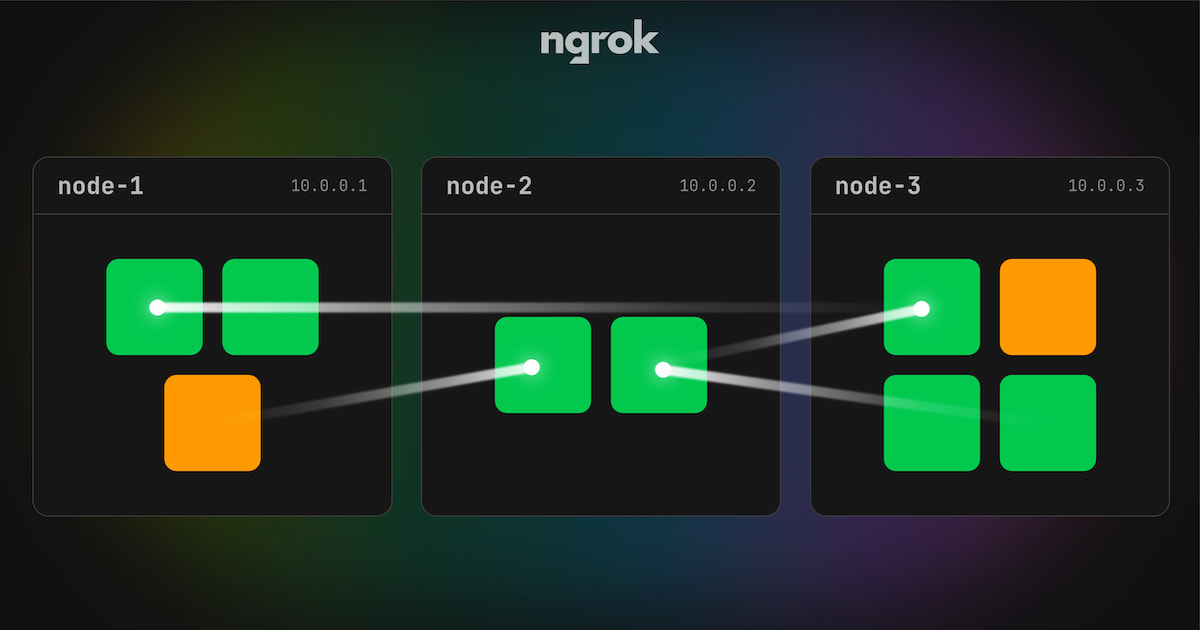
An ngrok developer educator ported a slice of Kubernetes to TypeScript so a cluster runs entirely in the browser: pods, DNS, deployments, garbage collection, all client-side. LLMs wrote almost all of it, roughly 100,000 lines across 552 commits in two months.

His answer to the inevitable 'is this just slop?': read every line, plus 204 integration tests and 1,855 unit tests asserting it matches a real cluster via the official k8s client. An SRE in the thread noted the easy 80% is done; ConfigMaps, Secrets and Ingress are where the pain lives.

🚀Tech ★ 167 · 💬 55 · Jul 1 · #AI#dev tools#web#Kubernetes#ngrok#Sam Rose+2

'Parse, don't validate' in a language that fights you: TypeScript's structural typing problem (cekrem.github.io)

An essay walks through making 'parse, don't validate' work in TypeScript, where structural typing means a validated Email is indistinguishable from any string. The fix is a branded type: a phantom symbol that makes Email incompatible with string at compile time and vanishes at runtime.

The thread's senior voices split on whether that's the real idea or a fake-out: one argued branding just labels a string as 'validated,' while another countered that all type guarantees are ultimately validation the compiler agrees to trust.

He asked if you'd restarted your Mac this week. Cue an uptime culture war (taonaw.com)

A micro.blog writer described his weekly ritual of rebooting his Mac on Saturday mornings, force-quitting the unsaved-work warning for the small thrill of it. He isn't worried about losing anything: work syncs to OneDrive, files sync via Syncthing.

The 220-comment thread split by tribe. Linux and BSD users bragged about months of uptime and treated a forced reboot as a sign something is broken. A fleet admin countered from the trenches: it's pulling teeth to get 10,000 Windows users to accept one automated reboot a month.

🚀Tech ★ 115 · 💬 220 · Jul 1 · #culture#dev tools#programming#Linux#macOS#OVH+1

72-year-olds did HIIT for six months. The fat-loss edge was 'not clinically meaningful' (maturitas.org)

A six-month randomized trial split 123 adults averaging 72 years old into high-intensity intervals, moderate treadmill work, or a low-intensity control, then scanned body composition with DXA. HIIT preserved lean mass a touch better, fat loss was roughly equal, and the paper called the difference 'small and not clinically meaningful.'

A Carnegie Mellon CS professor in the thread reframed it: the real news is guidance for the elderly quietly shifting away from 'gentle' movement toward genuinely hard training.

A blogger says words are a byproduct of consciousness. The thread brought Helen Keller (ranpara.net)

A short essay argues humans think first and speak second, so meaning underlies our words, while an LLM is 'a big pile of words that predicts the next word' with meaning as an accidental byproduct. 183 comments mostly took it apart.

The killer counter: a reader quoted Helen Keller's pre-language memoir, 'Before my teacher came to me, I did not know that I am,' suggesting consciousness may follow language, not precede it. Others noted the LLM has no words inside it at all, only vector embeddings.

EU HQ cut AC on lower floors in a heatwave, sparing the commissioners' offices (politico.eu)

During a 40C heatwave the European Commission's Brussels HQ cut air conditioning on floors 1 to 7 while upper floors stayed cool. The thread surfaced the timeline from an EU-politics journalist: the shutdown rolled floor by floor from 4pm Friday, hit the whole building by day's end, and worked fine by Monday.

The mundane cause: ACs sized for 30C can't cope at 40C, so cutting the lower half buys performance up top. The awkward detail, from a separate outlet: the failure spared floors above level 8, where von der Leyen and the commissioners sit.

An essay mourns the last people who understand machines. Every generation has said that (unix.foo)

A programmer's essay mourns a vanishing kind of knowing: not skill, but the acquaintance you earn from a machine that resists you. "You only ever know the things you can lose to." AI can recite every manual flawlessly, he grants, yet that isn't the hands-on understanding built from struggle.

The thread turned on him. A programmer in Paris: back in 1990, classmates already called someone else to fix their PC. Another mapped the same nostalgia onto cars, telephones, electricity, then shrugged: "We could do this forever."