Simon Willison shipped a release mostly written by AI for $149.25 — the number everyone will misuse
From a Fourth of July parade, Willison prompted Claude Fable to review his own library and it caught five release-blocker bugs he'd missed. The headline cost is $149.25. The thread's sharpest voice warns that's the expert's number, not yours.
Willison used Fable to do a pre-release review of sqlite-utils 4.0rc2: 37 prompts, 34 commits, five blocker bugs found — the worst, delete_where() leaving a transaction open so later writes silently rolled back. He estimates $149.25 in API cost; a cross-review by GPT-5.5 caught two more.
The reversal: $150 spent by an expert who knows exactly what to ask is not the $150 a novice will spend chasing invented problems — because these models never say "nothing found, good to go."
What $149.25 actually bought
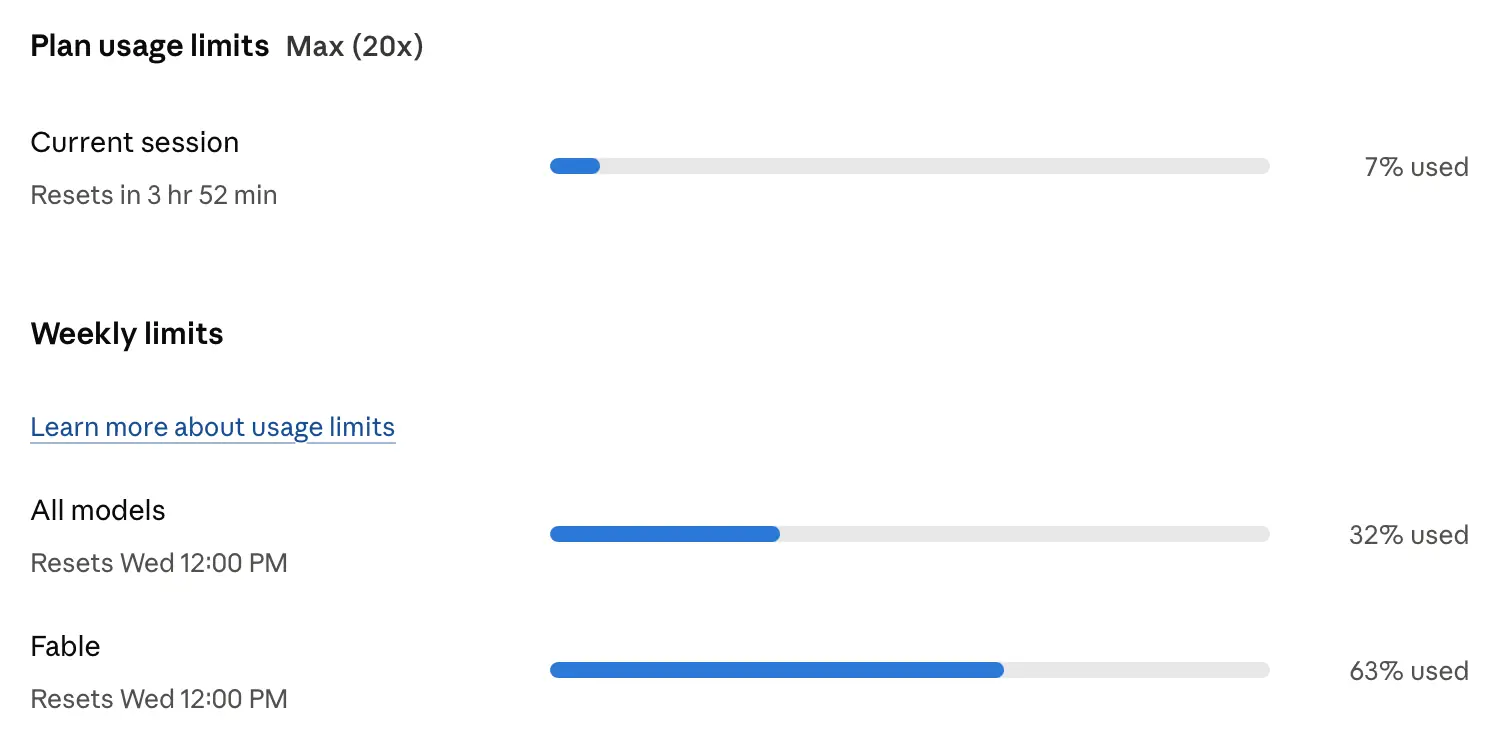
Simon Willison describes shipping sqlite-utils 4.0rc2 mostly written by Claude Fable, then using Fable to run a pre-release review that caught bugs he'd missed. The tally: 37 prompts, 34 commits, +1,321/−190 across 30 files, and five "release blocker" bugs — the worst being delete_where() leaving a connection in an open transaction that silently rolled back later writes on close. He estimates the unsubsidized API cost at $149.25, though in practice it was covered by his $200/mo Claude Max plan. He also ran a cross-model review with GPT-5.5, which caught two more commit-timing bugs Fable had missed — leading him to conclude that having one model review another "really does work," even though it first felt superstitious. He was, by his own account, prompting from his phone at a Half Moon Bay Fourth of July parade.
The thread took the money number apart before anyone else could weaponize it.
The caveat the headline will lose
"$150 spent by an expert, a software engineer with significant practical knowledge in AI, is not equivalent to the exact same amount spent by a novice. … Expect alarmist posts tomorrow morning … claiming building software is now as cheap as diner at the restaurant." — a developer who self-hosts his own infrastructure
A practitioner named the failure mode that makes the novice's bill balloon — these tools are sycophants with a linter:
"the models are still too eager to please. If I ask it to scan a release and note possible issues, it absolutely will find issues. … There is never a "Nothing found, good to go!"." — a developer who runs repeated LLM PR reviews
And a pointed engineering objection: maybe don't ask an AI what's broken — write the test that would have caught it:
"I'm kind of surprised that there is no test case that would have identified the fact that delete_where() leaves the state corrupted. … maybe instead of asking Claude what is wrong it would be wiser to invest in test coverage." — a commenter arguing from testing discipline
Even a peer tool-builder chimed in from experience — Jeremy Howard of fast.ai noted his own apsw port has quietly run in production for years, a reminder the ecosystem around this library is deeper than one release.
Why the number is a trap
Willison's result is real and impressive: an AI caught five shipping bugs in his own code, and a second model caught two the first one missed. But "$149.25 to build a release" is about to become "AI builds software for the price of dinner," and the thread inoculates against exactly that. The cost isn't the API bill — it's knowing which five bugs are worth chasing and ignoring the fifty the model invents to please you. That expertise is the product. The invoice is just what it costs him.
Get breakdowns like this every day
The top Hacker News stories, unpacked — by email, Telegram, or RSS.
This is the last story in the July 6, 2026 issue.
Go to the issue archive