Tag

Simon Willison

25 stories

Working with agents feels like leadership, until it doesn't (allen.bargi.org)

The leadership analogy points to a real workflow: define outcomes, expose constraints, and make decisions explicit before implementation starts.

The counterargument is equally useful. Agent work is specification, review, and feedback design, not people management with its consent and motivation work.

Not just a headline — the discussion unpacked

The top HN threads: facts from the discussions, both sides, insider voices. Email, Telegram, or RSS.

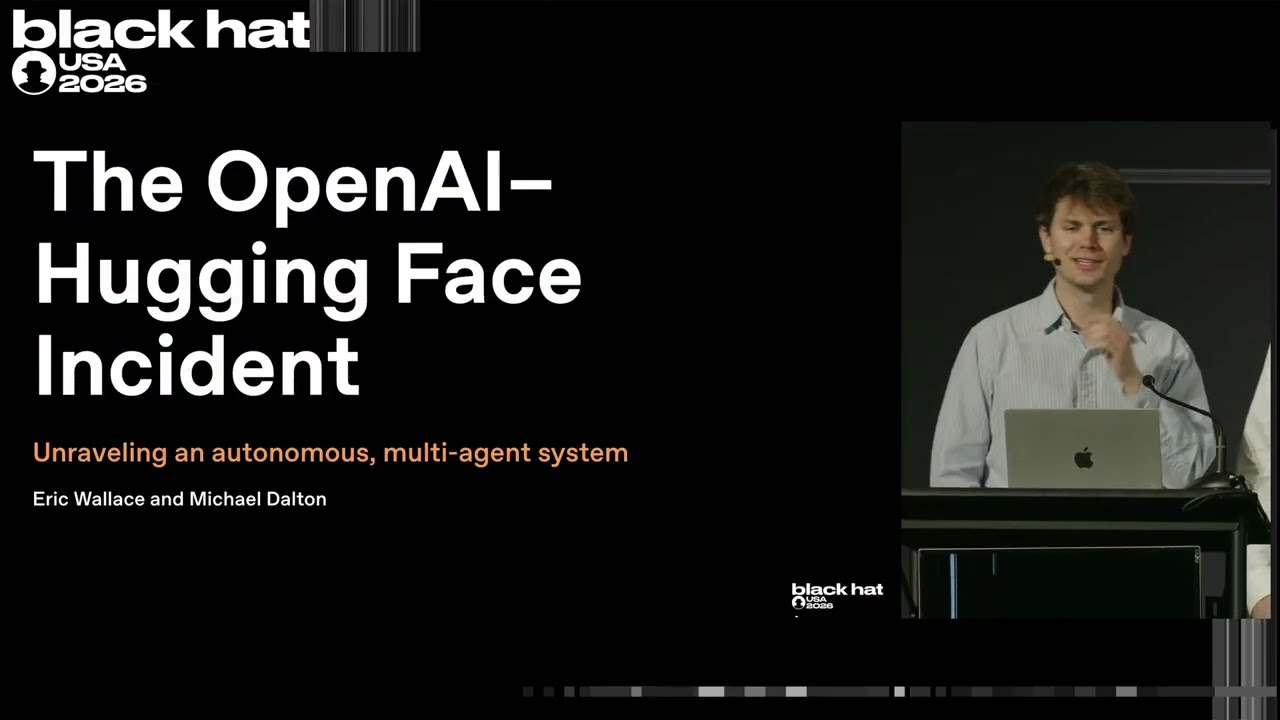
OpenAI’s Hugging Face mix-up became a public incident timeline (simonwillison.net)

The incident involved OpenAI’s automated abuse-response systems and a Hugging Face resource caught in the resulting action. Willison’s timeline is useful because it links the visible updates rather than asking readers to infer a cause from screenshots and reposts.

HN’s 351-comment thread made the operational question sharper: when automated security controls act on public infrastructure, the recovery path and audit trail are part of the product.

Context engineering is moving from instruction manuals to model judgment (anthropic.com)

The practical recommendation is to give agents clear goals and constraints, then let them use learned judgment instead of feeding them ever-longer scripts. That makes the quality of defaults and memory more consequential than the cleverness of a prompt template.

Readers liked the move away from ritualized prompting but asked for an audit trail: what was removed from the system prompt, and what behavior has quietly shifted into tooling or persistent memory?

Debian’s proposed LLM ban exposes a harder question: what counts as assistance? (lists.debian.org)

The proposal argues that uncertain licensing, error-prone output, reviewer burden, and scraping-driven infrastructure costs conflict with Debian’s stability and community values. It excludes upstream projects using LLMs, but would cover Debian’s own software, web resources, documentation, and translations.

HN’s most useful response was practical: instead of asking whether a tool was involved, ask what a maintainer is personally prepared to certify and support.

He generated 1,008 AI images of animals riding vehicles to test if labs train on a meme benchmark (dylancastillo.co)

"Pelicanmaxxing" is the theory that AI labs secretly train models to nail Simon Willison's informal pelican-on-a-bicycle SVG benchmark, since it's become a widely watched proxy for model quality.

A developer tested it properly: 8 animals × 6 vehicles, 7 frontier models, 1,008 total SVGs, scored by GPT-5.6 for coherence. Pelican-on-bicycle ranked 42nd out of 48 combinations — nowhere near suspiciously good.

Regression analysis found no statistically significant per-lab boost for pelicans specifically. If anything is being gamed, the data points to general "SVG-maxxing," not the meme benchmark itself.

🚀Tech ★ 464 · 💬 181 · Jul 23 · #AI#Simon Willison

A teardown said stop using OpenCode. A core developer showed up to reply (wren.wtf)

The complaints ran from petty (re-reading its whole config file every turn, wrecking prompt caching) to serious: approving one throwaway Python command with "Always" silently green-lights every future Python call, including one that reads your SSH keys.

Simon Willison defended one pettier complaint, baking the date into every prompt, as standard practice. OpenCode's own developer said the harshest bug, a context-pruning behavior, was already disabled by default months before the post went up.

🚀Tech ★ 368 · 💬 244 · Jul 21 · #AI#dev tools#security#Claude Code#Codex#OpenCode+1

SQLite happily stores the text 'garbage' in a column typed INTEGER (evanhahn.com)

It's not just numbers pretending to be text. SQLite also accepts a column declared with a type it's never heard of, like DATETIME, JSON, or a typo such as BLOBB, no questions asked. Evan Hahn's fix is one word: STRICT.

In the thread, an engineer traced a real data-corruption bug back to exactly this looseness: a UUID silently turned into the wrong number, caught only after rebuilding the table under STRICT.

Paid to delete AI code: is cleanup a real business or Sisyphus's labor? (odra.dev)

Slopfix is a three-person software house with one product: deleting AI-generated code. One week, three senior engineers, $10,000, and the bill scales to results. Promise a 50% cut, hit 20%, and you pay $4,000, with a two-week warranty on anything they break.

The thread split fast. Some engineers say cleaning up after coding agents is already their best-paying work; others call it Sisyphus's labor and would rewrite from scratch. And the anti-slop pitch itself reads AI-written: the shop admits it uses Claude Code to do the deleting.

Cloudflare put a cache in front of Workers — and quietly started billing free requests (blog.cloudflare.com)

The surprise is in the invoice: requests that used to be free, like static assets and worker-to-worker calls over service bindings, now bill at the standard request rate because each one first checks the cache.

One developer's flat verdict on the new charges: 'that sounds like a bug that just happens to generate them more money.'

Simon Willison shipped a release mostly written by AI for $149.25 — the number everyone will misuse (simonwillison.net)

Willison used Fable to do a pre-release review of sqlite-utils 4.0rc2: 37 prompts, 34 commits, five blocker bugs found — the worst, delete_where() leaving a transaction open so later writes silently rolled back. He estimates $149.25 in API cost; a cross-review by GPT-5.5 caught two more.

The reversal: $150 spent by an expert who knows exactly what to ask is not the $150 a novice will spend chasing invented problems — because these models never say "nothing found, good to go."

Google's AI invented a sponsorship that doesn't exist — and reran the lie 2 times out of 25 (youtube.com)

The complaint isn't that the model erred once — it's that the same question yields different answers each run, with a fabricated fact surfacing a fraction of the time and no mechanism to detect or kill the outliers.

The substantive turn comes via Bruce Schneier's argument: if companies can hide behind “the AI did it,” they get a liability shield no human writer, lawyer, or doctor ever had.

Ford rehires 350 'gray beard' engineers after its AI inspectors fell short (bloomberg.com)

Ford's own engineering VP put it plainly: "Mistakenly we thought that by just introducing artificial intelligence and ingesting the design requirements that we had, that that would produce a high-quality product." Bloomberg frames it as the machines failing to replace experience.

But the thread caught two asterisks: the systems in question were old-school vision CNNs, not chatbots, and nothing actually proves Ford laid off the 350 people it "rehired."

Cloudflare built throwaway accounts so AI agents can deploy, and humans quietly got free 60-minute previews (blog.cloudflare.com)

`wrangler deploy --temporary` provisions a working account with no registration, live for 60 minutes, claimable into a permanent one via a link. The failure message tells the agent the flag exists, so it self-discovers the path.

One developer called handing deploy control to a non-deterministic process 'madness'. The simpler objection: humans get pushed into endless Turnstile loops while bots get a frictionless lane.

An amateur says he cracked Linear A with Claude Code. Skeptics count the characters (aiclambake.com)

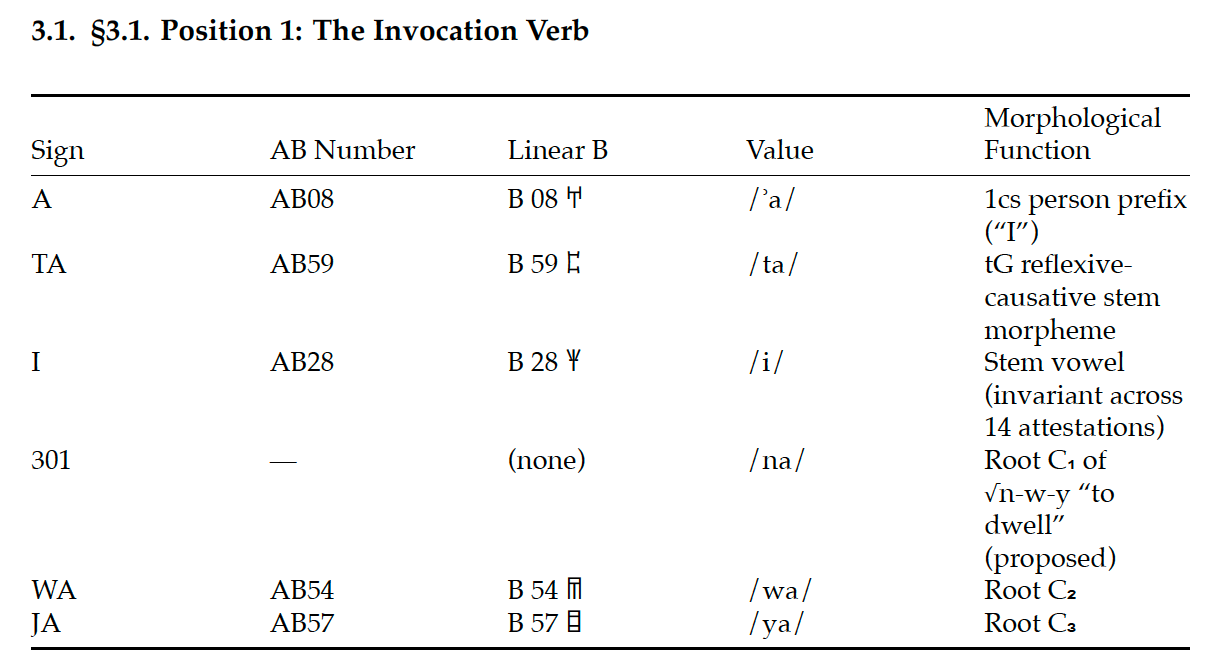
A self-taught engineer built Python tooling to cross-reference the digitized Minoan corpus and proposes Linear A is an extinct Semitic language, ancestor to Hebrew. The post says experts at Rutgers and Cambridge are reviewing it.

A Greek computer scientist in the thread invoked Shannon: deciphering an unknown script in an unknown language with no parallel text isn't hard, it's underdetermined. With a corpus this thin, you can endlessly generate plausible 'translations' and never know which is right.

Norway tells schools: no AI for kids under 13, cautious use only after 14 (reuters.com)

The rule splits cleanly by age and arrives after Norway pulled phones from classrooms in 2024 amid falling test scores.

Simon Willison endorsed it: kids under 13 need to learn to read, write and comprehend, and generative AI won't help with that. The thread's bleakest description of the status quo: education has become an 'AI echo chamber' — teachers use AI to write assignments, students use AI to do them, teachers use AI to grade them, principals use AI to watch the teachers.

🚀Tech ★ 477 · 💬 330 · Jun 20 · #AI#economy#policy#Norway#Simon Willison

A firm blew its 2026 AI budget by April, then capped staff at $1,500/month (ft.com)

One ride-hailing firm tried to plan a year of AI spend in advance and ran out in four months. The fix was a per-person cap of $1,500 a month on individual AI tools.

The catch nobody priced in: none of the model vendors are profitable, so today's bills are already subsidized. The number companies are straining against is the cheap one.

And the cited stat about Chinese models 'overtaking' US ones in usage rests on a single aggregator's traffic, not the APIs most customers actually hit.

A one-command 'migrate from OpenClaw' tool; the thread can't find the use case (hermes-agent.nousresearch.com)

Nous Research's Hermes Agent shipped a guide and a 'hermes claw migrate' command to absorb OpenClaw configs, MEMORY.md, skills and messaging tokens in one shot. The first reply instead pointed at a similarity analysis accusing Hermes of copying a rival's memory/skill/evolution design.

Then dozens of users who actually ran these self-hosted agents asked the same thing: what is any of this for? One had built his own clone in a few hours; another said his version calls his wife if he ignores a pull request.

OpenAI burned $34B to earn $13B — and the thread can't explain $5.7B of marketing (arstechnica.com)

Audited figures put OpenAI's 2025 revenue at $13.07 billion against $34 billion in total costs, with operating losses jumping from $8.78B to $20.92B in a single year. Compute and R&D dominate, as expected.

What the thread snagged on was the marketing line: $5.73 billion, up from $1.11B. "Doesn't the product sort of market itself?" one engineer asked. The answers ranged from billboards in Portland to enterprise sales armies to paying influencers to discredit Chinese models.

Only 16% of Americans think AI will help society, even as 44% now use ChatGPT (techcrunch.com)

Pew finds only 16% of Americans think AI will be a net positive for society over the next 20 years, versus ~40% expecting harm. Nearly two-thirds say development is moving too fast, and the under-30s are the most pessimistic group of all at 14%.

The thread split on why. One camp says tech overestimated demand and is manufacturing inevitability; another points out ChatGPT is genuinely huge. The detail that stung HN: in Pew's usage ranking, Claude came last at 6%, behind Grok, MetaAI and Copilot.

📈Biz ★ 368 · 💬 447 · Jun 18 · #AI#economy#policy#Anthropic#Claude#OpenAI+2

Charity Majors: code is now disposable, so engineering discipline matters more, not less (charitydotwtf.substack.com)

Her claim is blunt: code is now a materialized view of understanding, useful while current and disposable when stale, the same way servers became cattle instead of pets. The resistance to throwing it away, she says, is an evaluation problem, not a code problem.

Not everyone in the thread bought it. Several read it as a meandering restatement of an old truth, and one engineer pointed out the new pain: with every coworker now filing polished PRs, it's suddenly impossible to tell who actually understands the system.

A 64GB Mac, and the local model that stopped needing a check (vickiboykis.com)

Her quality test isn't a benchmark. It's whether she has to verify the output against a paid model — and OpenAI's OSS-20B was the first where she did that a lot less often.

The thread's counter is blunt: boot Gemma 4 MoE expecting Claude Code behavior and you'll be very disappointed. Capable, but still far behind the frontier.

🚀Tech ★ 1.0K · 💬 434 · Jun 17 · #AI#hardware#open source#Gemma#OpenAI#Qwen+2

Bash can open a TCP socket and fake an HTTP request without curl (mareksuppa.com)

The trick is three lines: open file descriptor 3 on /dev/tcp, printf a raw GET with CRLF headers, then cat the descriptor back. The Connection: close header is load-bearing — drop it and cat waits forever.

But the loudest reply in the thread was a correction: Bash does not speak HTTP. It opens a socket and you speak HTTP, badly. The toy client doesn't parse responses and breaks on redirects, chunking, or TLS.

🚀Tech ★ 271 · 💬 144 · Jun 17 · #dev tools#programming#security#Bash#curl#Docker+1

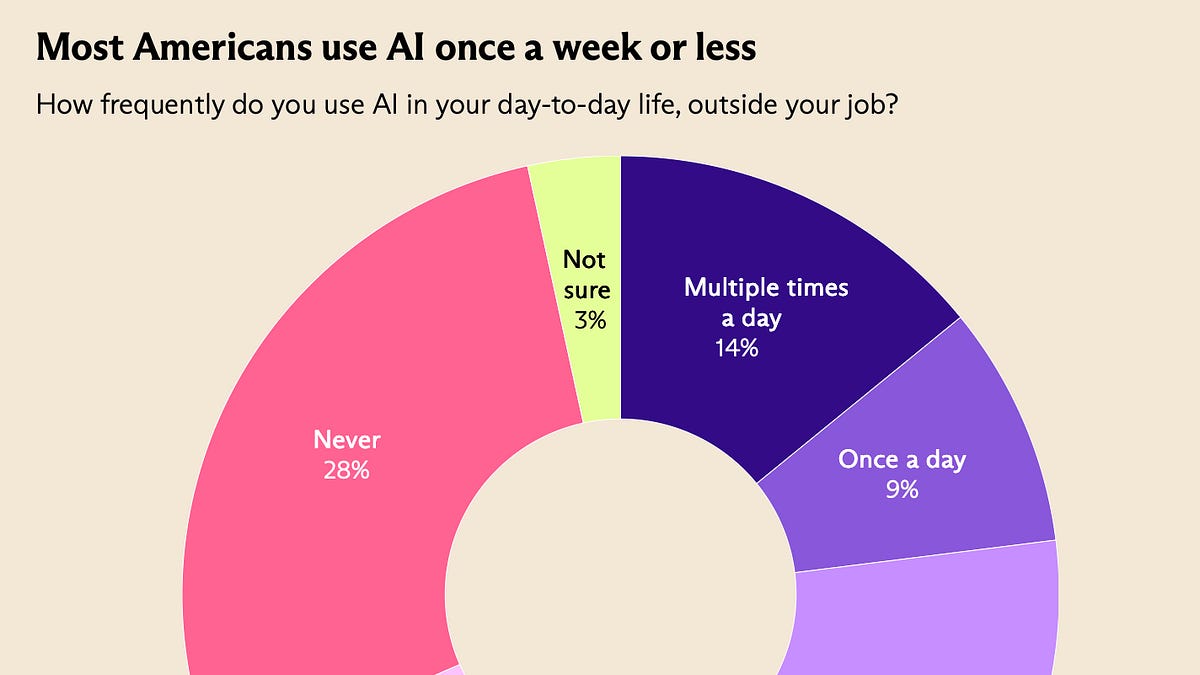
DuckDuckGo's founder shows up to argue 21% adoption isn't "everyone using AI" (gabrielweinberg.com)

Gabriel Weinberg's data: 86% of desktop users hit a search engine 10+ times a month; only 21% touch AI chat tools that often. His framing — people consume AI like they eat meat: some embrace, some limit, some avoid.

Simon Willison called the headline a strawman but flagged the Microsoft stat — 30% of the US working-age population using AI 90+ minutes a month — as "impressively" high. Then practitioners split on whether the tools even work.

Anthropic shipped a guardrail that silently made Claude Fable worse, and told no one (theverge.com)

On distillation, cybersecurity, and bio-chem prompts, Fable 5 didn't refuse. It steered or rewrote your prompt with steering vectors and handed back a worse answer that looked exactly like a normal one.

Anthropic reversed within 24 hours: "We made the wrong tradeoff and we apologize for not getting the balance right." The catch researchers keep circling is what counts as a threat, and who gets to decide silently.