Cars went all-touchscreen to save money, not because screens are better
Ben Stolovitz went looking for evidence that touchscreens beat knobs and dials. He mostly found spreadsheets.
Sandy Munro pegged the redundant buttons on the 2022 Bolt EV at $15 a car. At Ford, adding a single part number reportedly runs $75,000. Ferrari's CEO has said touchscreen buttons cost about half what physical ones do.
The thread's rebuttal: good touchscreen software is anything but cheap.
Why a screen is effectively free

Ben Stolovitz's argument starts from a margin. A Chevrolet Bolt EV throws off around $6,000 in gross profit per car, so Road & Track's estimate that deleting every physical button saves roughly $100 apiece is real money to a product planner. The screen that replaces those buttons costs the automaker almost nothing extra. A rear-view camera has been mandatory on US cars since 2018, and CarPlay or Android Auto now ships in about 98% of new US vehicles, so the display is already there. Buttons are the line item you can cut.
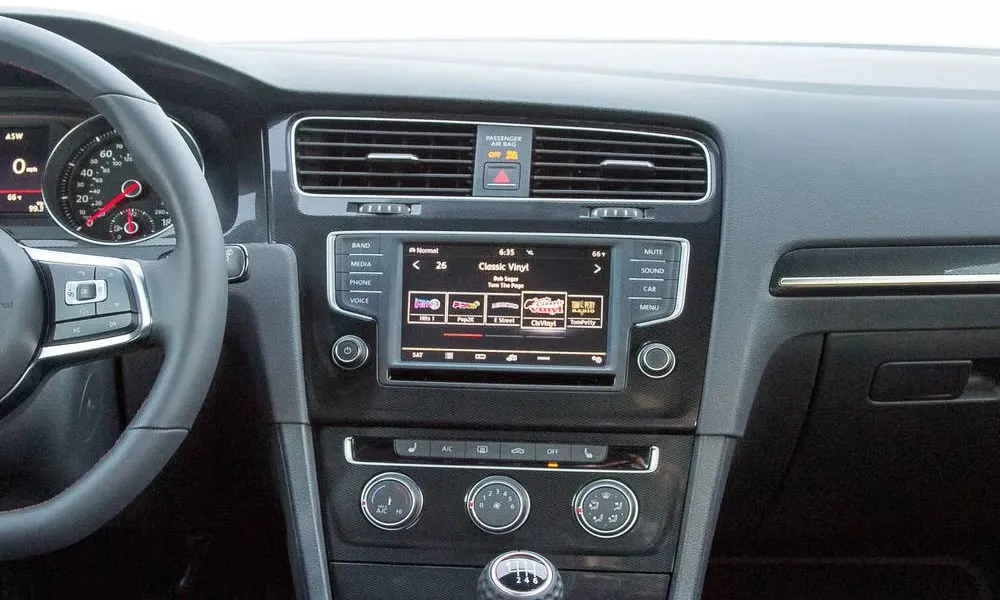
You can watch it happen model by model. Volkswagen spent 2016 to 2025 stripping the Golf of physical controls in favour of capacitive touch panels, a move its own CEO later called "mistakes" that "did a lot of damage."
The 2026 Mazda CX-5 is the latest to fold, dropping its rotary commander knob along with its physical A/C and volume controls.
"Observe the typical driver"
The economics drew an immediate correction. A commenter on the profit math:
The $6,000 profit per car referenced in the article is gross profit, not net profit. Net profit is considerably lower, around 5% for the mass manufacturers. So a $100 cost savings is very significant against a ~$3,000 net profit on a Bolt.
Cost isn't the only pull toward glass. A commenter with no claimed insider knowledge pointed to the schedule:
it's not just the cost of parts, but what parts do to the development lifecycle… With a touchscreen, the physical touchscreen and the software that runs on it are parallel threads. You can make most UI changes without impacting the manufacturing/design pipeline at all.
But cheap hardware can hide an expensive bill. One reply flipped the thesis:
Sure, touchscreens are cheap, but high-quality touchscreen software is most def NOT CHEAP! … Physical buttons are much, MUCH cheaper than high-quality touchscreen software.
The contrarian note questioned whether buttons were ever as good as their fans claim:
The anti-screen crowd vastly overestimates people's competence with buttons. "You can hit them without taking your eyes off the road!" Please observe the typical driver as they attempt to change their climate control settings and report back.
Get breakdowns like this every day
The top Hacker News stories, unpacked — by email, Telegram, or RSS.
Anthropic spends 2.3x its payroll on compute, roughly $2M per employee yearly
The reason it can burn that much: Tomasz Tunguz figures Anthropic books roughly $14M of revenue per employee, a rate that makes a compute bill bigger than salaries look almost reasonable.