Rescued after 55 years of slavery in Brazil, she has nowhere else to go
Maria entered a Brazilian household in 1971 and spent the next 55 years there unpaid, isolated from her own relatives, working for three generations of the same family. When authorities finally intervened this month, they didn't remove her — they let her stay, worried that after 55 years, freedom without support might do more harm than the enslavement itself.
Maria worked unpaid for three generations of the same Brazilian family, from 1971 until investigators freed her this month. The settlement came to 50,000 reais, Brazil's currency, which works out to roughly three dollars for every week of the 55 years she spent there.
On Hacker News, two Brazilian commenters split hard on how it happened: one called arrangements like hers common well into the 1980s; a self-described Brazilian doctor said actual slavery like this was something he'd never personally encountered.
Three generations of one family, 55 years without pay
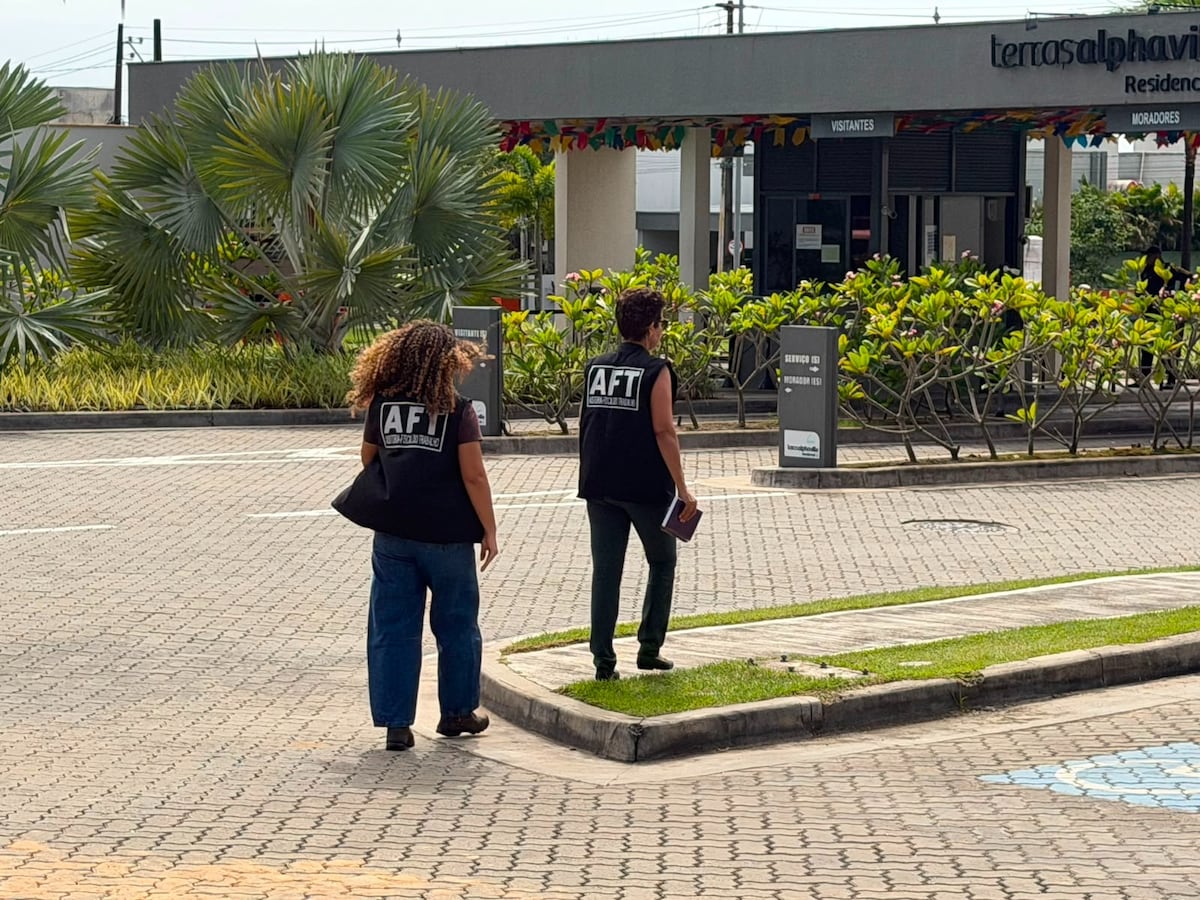
Maria entered the household in 1971 and stayed for 55 years, through three generations of the same family, without pay and without contact with her own relatives. Labor inspectors finally located and freed her this month, according to El País. What happened next is the part the thread couldn't stop arguing about:
"Although the family has agreed to compensate her, Maria, who lived in near-total isolation and without contact with her relatives, will remain with her employers." — El País
Freed this month, and told to stay where she's always been
The reasoning, as the article laid it out, wasn't neglect. It was caution:
"The concern is that Maria's dependence on the exploiting family is so extreme that removing her abruptly, without a structured support network, could do more harm than good." — El País
The settlement leaves the door open for more: a statement on the case noted that agreeing to compensation "does not rule out the possibility that the worker may pursue individual claims through the courts." One reply pointed to a detail it said the article included: Maria described herself as free to leave but "was afraid of the violence outside." That's likely why prosecutors settled instead of pursuing a criminal slavery charge, as one commenter walked through it: proving someone was explicitly forbidden from leaving is a far higher legal bar than proving they were left with no real choice.
What 50,000 reais buys after 55 years of unpaid work
One reader, replying early in the thread, placed the case inside a longer Brazilian pattern: families taking in poor girls for housework in exchange for food and a room, a practice the commenter traced back to Brazil's own delayed abolition of slavery in 1888, the last country in the Americas to end it, decades after its neighbors.
The same commenter then did the arithmetic on the settlement:
"Minimum wage is about US$300, which would make about US$220k total (you get about 13.3 salaries per year), plus fines and overtime. … It seems to me that the case doesn't include the labour part of the situation." — the commenter who'd called the arrangement common into the 1980s
Fifty thousand reais, Brazil's currency, works out to roughly three dollars for every week Maria worked at current exchange rates, according to the same math another reader ran independently.
Two Brazilian commenters, two different pictures of how common this was
That "common occurrence" framing didn't survive contact with the rest of the thread. It ran into a direct rebuttal:
"I am a brazilian doctor. … I've yet to uncover a case of literal slavery like TFA though. One could argue the workers aren't getting paid enough and I'd agree, but the workers are getting paid." — a commenter who says he's a Brazilian doctor
A third reply split the difference, dating the practice to a specific window rather than either extreme: common through the 1970s, fading through the 1980s as reforms cut into it. A different reader surfaced an older case raised in the thread: Alex Tizon's 2017 Atlantic essay My Family's Slave, about a woman held in domestic servitude by a family that brought her from the Philippines to the United States. HN had already argued about it once, in a 2017 thread of its own. A reader who found the essay for the first time this week traced a version of the same trap in ordinary, long-running abusive marriages: people who understand intellectually that a better life exists elsewhere, but for whom picturing it has become impossible after decades inside one house.
Should Maria have been left exactly where she was?
The most contested comment in the thread didn't dispute any fact. It disputed the rescue itself:
"As bad as this is, I wonder if it would be kinder to leave her with the family for the rest of her life. This lady is in her 60s, does she even know any other way to even live?" — a reply that opened with "Hot take:"
Another reply answered it directly, further down the same sub-thread:
"You can't keep someone isolated for 55 years, working them without pay — regardless of whether the victim thinks that they want it or not." — another reply in the same sub-thread
Neither side was arguing about the facts of the case. They were arguing about something no compensation agreement can settle: what freedom is worth to someone who never had the chance to define it for herself.
Get breakdowns like this every day
The top Hacker News stories, unpacked — by email, Telegram, or RSS.
A Grand Canyon guide rowed solo to Hawaii, faster than any man
Kelsey Pfendler spent 43 days, 17 hours and 55 minutes rowing alone from Monterey, California to Honolulu — more than 2,400 miles across the open Pacific in a boat named Lily, with no motor and no support vessel behind her. She tied up at Honolulu Harbor on July 3, the first American woman ever to row that crossing solo.