An amateur says he cracked Linear A with Claude Code. Skeptics count the characters
Tom Di Mino claims readings for 40 signs and a 408-word lexicon of a script unsolved for over a century. The catch a classicist raised in the thread: the entire surviving Linear A corpus is about 7,500 characters.
A self-taught engineer built Python tooling to cross-reference the digitized Minoan corpus and proposes Linear A is an extinct Semitic language, ancestor to Hebrew. The post says experts at Rutgers and Cambridge are reviewing it.
A Greek computer scientist in the thread invoked Shannon: deciphering an unknown script in an unknown language with no parallel text isn't hard, it's underdetermined. With a corpus this thin, you can endlessly generate plausible 'translations' and never know which is right.
A century-old script, a hobbyist, and a pile of Python scripts
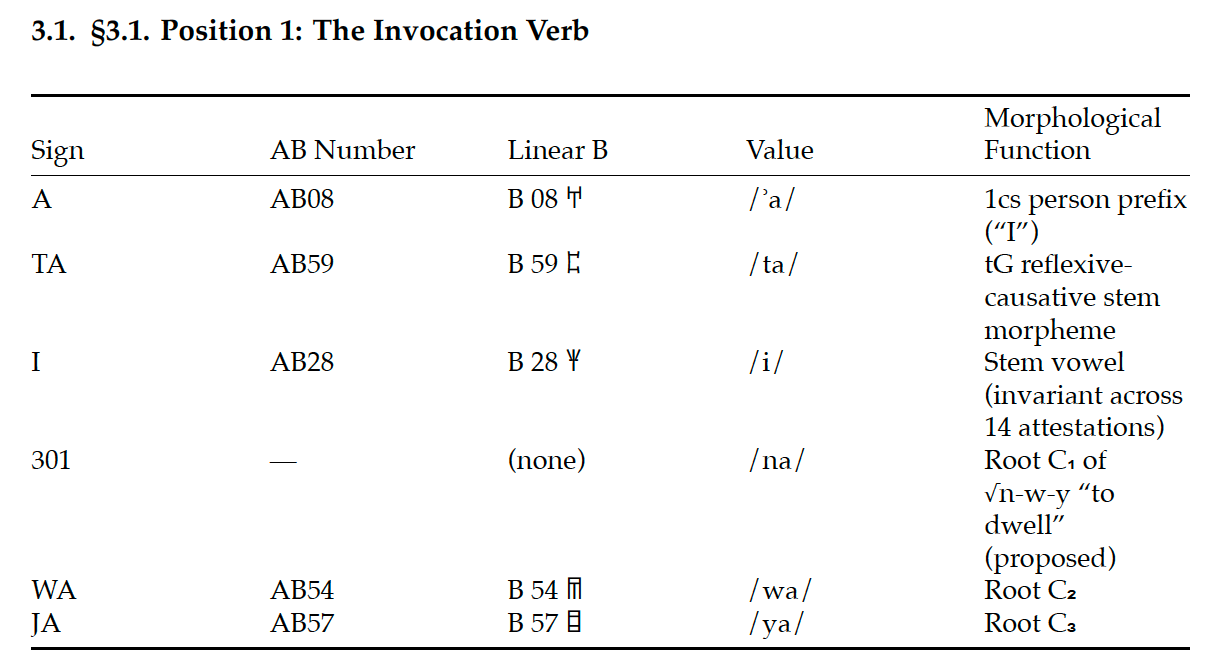
The post profiles Tom Di Mino, described as a self-taught AI engineer and amateur linguist from the Hudson Valley, who says he has deciphered Linear A — the Bronze Age Minoan script that has resisted scholars for over a hundred years. His claim: it encodes an extinct Semitic language, a precursor to biblical Hebrew, anchored on a recurring prayer phrase and the verb root nawaya, "to dwell."
The method is the part HN cared about. Di Mino used Claude Code to build a suite of Python scripts that query and cross-reference the digitized corpus (from the GORILA and SigLA databases), letting him test hypotheses at a scale that would be impractical by hand. The author reports proposed readings for 40 signs — including 13 whose phonetic values were previously unknown — and a lexicon of 408 terms.
The post's author disclosed in the thread that he wrote the piece and knows Di Mino socially, adding that the work is being reviewed by linguists at Rutgers and Cambridge.
Why "cracked" is the wrong word for a 7,500-character corpus
The sharpest constraint came not as an opinion but as a number:
"The total remaining corpus of Linear A text is ~7500 characters, spread out over ~1500 inscriptions. If you have a 4k screen, you can fit all remaining Linear A text on your screen at once, in 14pt high font." — an engineer summarizing the size of the dataset
With inscriptions averaging five symbols, several readers asked the same thing in different words: how would you even know you'd cracked it? An amateur who has studied the puzzle laid out the trap precisely — that the base text Di Mino used, the "Libation Formula," is the single most-studied recurring phrase precisely because it's almost all the connected text there is.
"If Linear A were a Semitic language, then we should already be able to establish Semitic etymologies for those [Greek substrate] words … which still does not match that of any known language." — an amateur who has worked the same puzzle
A Semitic language that writes its vowels?
A linguistic objection cut at the core claim. Semitic languages are built on triconsonantal roots and typically don't write vowels — so why would a Semitic Linear A use a vowel-carrying syllabary?
"Why would Linear A have consonant+vowel syllabary if it were semitic?" — a reader who walked through the K-T-B and D-R-S root paradigms
The Shannon objection: not hard, but impossible
The longest rebuttal came from a self-described Greek computer scientist who has stood in front of these inscriptions in museums and wants a decipherment to be real:
"You can't translate text written in an unknown script, encoding an unknown language, without any parallel texts with a known language. There is just not enough information to do the job. Worse, if you try, you can endlessly come up with plausible 'translations' and convince yourself that you have the right one, but you have no way to know you do." — a Greek computer scientist who grew up reading on Minoan history
He pointed to Bletchley Park: cracking Enigma worked because they knew the plaintext was German. Here there is no known language and no Rosetta Stone.
Not everyone was sour. Simon Willison liked the tooling angle on principle:
"That's exactly the kind of thing I'd hope Claude would be used for in these kinds of projects - building tools, not black-box 'solving' the problem." — Simon Willison, creator of Datasette
The even-handed read won the thread: an interesting conjecture, worth following, not a solution. As one measured voice put it, you shouldn't call Linear A solved until experts confirm it and, ideally, newly found inscriptions match the method. Until then, the corpus that fits on a single screen is also small enough to fit a great many stories.
Get breakdowns like this every day
The top Hacker News stories, unpacked — by email, Telegram, or RSS.
Java value classes ship in JDK 28, but not the flat ArrayList everyone wanted
Add one word, 'value', to a class and the JVM stops storing arrows to scattered heap boxes and starts packing the data flat: 8 bytes per Point, no headers. A decade of Project Valhalla, finally previewing.