Tag

Claude Code

39 stories

A guide to running Claude Code in tmux admits tmux hits a ceiling at four agents (crystl.dev)

Crystl's guide to tmux and Claude Code covers named sessions, send-keys scripting and capture-pane screen reads. Then it lists the limits: no real completion signal, brittle screen scraping, nothing surviving a reboot.

HN's reaction was that nearly every top-level comment was someone who had built their own replacement.
🚀Tech ★ 149 · 💬 114 · Oct 20 · #AI#dev tools#Claude Code#Crystl#Herdr+1

Not just a headline — the discussion unpacked

The top HN threads: facts from the discussions, both sides, insider voices. Email, Telegram, or RSS.

DeepSeek now sells web search and page fetch for $0.75 per 1,000 requests (api-docs.deepseek.com)

DeepSeek published Search and Fetch APIs at $0.75 per 1,000 successful requests, billed only on HTTP 200 responses. Calls routed through Claude Code, Codex or DeepSeek's own harness are free until 00:00 Beijing time on November 1, 2026.

The first reply was a price check: Kagi's API runs $12 per 1,000 searches. Then a hobbyist who built his own agent tools said the big labs' bundled search costs 15-20x more than his.

🚀Tech ★ 551 · 💬 260 · Oct 19 · #AI#dev tools#web#Brave Search#Claude Code#Codex+2

Claude writes 90% of Claude Code, so its team rebuilt code review around risk tiers (claude.dev)

Anthropic says merged PRs for Claude Code more than doubled from June to September while reverts fell by over 40%. A classifier now sorts changes into no-human, one-human or two-human review, and an agent's approval never counts as a human's.

Hacker News mostly doubted that throughput measures anything.

Claude Code users build cleanup passes for its own prose (github.com)

The complaint is not only stylistic. Readers said the prose makes it harder to see the actual decision, so they add banned-word lists and ask for plain-language explanations with examples.

The sharpest irony was an Anthropic reply reportedly written with Claude in a thread criticising recognisable Claude phrasing.

Claude Code users meet the end of a 50% quota lift (support.claude.com)

The support notice says the weekly limit was 50% higher from May 13 through August 19, 2026; it says the promotion is ending rather than introducing a new restriction.

That distinction did little to calm people who had built their coding routine around the temporary headroom and were already reaching limits early in the week.

Anthropic's Product Chief Quit Figma's Board Days Before a Rival Launch (emergingtrajectories.com)

The essay under discussion ranks Anthropic as the most exposed frontier lab of all: it rents every data center and power plant it uses, and Fable costs nearly three times as much per completed task as OpenAI's models do, according to the Artificial Analysis benchmarks it cites.

The sharpest pushback on HN wasn't about that cost math — it was that Anthropic's own scramble for a product moat is what blew up the Figma partnership in the first place.

A teardown said stop using OpenCode. A core developer showed up to reply (wren.wtf)

The complaints ran from petty (re-reading its whole config file every turn, wrecking prompt caching) to serious: approving one throwaway Python command with "Always" silently green-lights every future Python call, including one that reads your SSH keys.

Simon Willison defended one pettier complaint, baking the date into every prompt, as standard practice. OpenCode's own developer said the harshest bug, a context-pruning behavior, was already disabled by default months before the post went up.

🚀Tech ★ 368 · 💬 244 · Jul 21 · #AI#dev tools#security#Claude Code#Codex#OpenCode+1

A glowing 3D replay of AI coding sessions leaves HN asking what it's for (github.com)

Mindwalk replays a coding agent's session (Claude Code or Codex) as a 3D city built from your own repo. Files sit dark until touched, then light up moss green for a glance, white for a read, amber for an edit, while a timeline scrubs through the whole run.

One reply called it 'Xerox PARC days' for agent interfaces. A rival builder said he skips the visuals entirely, tracking the same file changes on a binlog in 3-5 milliseconds. A third commenter asked why anyone would rewatch a session instead of just reading the diff.

Paid to delete AI code: is cleanup a real business or Sisyphus's labor? (odra.dev)

Slopfix is a three-person software house with one product: deleting AI-generated code. One week, three senior engineers, $10,000, and the bill scales to results. Promise a 50% cut, hit 20%, and you pay $4,000, with a two-week warranty on anything they break.

The thread split fast. Some engineers say cleaning up after coding agents is already their best-paying work; others call it Sisyphus's labor and would rewrite from scratch. And the anti-slop pitch itself reads AI-written: the shop admits it uses Claude Code to do the deleting.

Anthropic's goodwill problem: 9,100 open issues and a rolled-back bill (raheeljunaid.com)

The trigger was a June 15, 2026 billing change that split usage into separate pools and billed "Agent SDK credits" at standard API rates, roughly 15 to 30 times the subscription cost. Anthropic paused and rolled it back after the backlash.

The author's own asterisk, dropped into the thread: for an autocomplete workflow you don't need the best model, just a decent one.

Newer Claude models keep inventing tool fields that break Pi's editor (lucumr.pocoo.org)

Armin Ronacher, creator of Flask, found that Opus 4.8 and Sonnet 5 keep adding invented keys like requireUnique and oldText2 to Pi's edit tool. The oldText and newText payloads are byte-correct; the extra fields alone cause repeated failures.

His hypothesis: reinforcement learning inside Claude Code's forgiving harness rewarded malformed calls, so the model now fights any schema that isn't Anthropic's.

The thread debates whether that's a fixable bug or a walled garden.

Claude Code asked about a Minecraft temple no one had mentioned (github.com)

Working in a locked-down Enterprise ZDR workspace, a Claude Code user watched the agent start asking about brick types for a Minecraft temple it claimed to be building. Nobody had mentioned Minecraft.

They filed issue #74066 asking whether cache isolation had failed between workspaces or leaked from a consumer account. Anthropic's team replied they are confident it is a hallucination but are investigating.

Engineers in the thread split three ways: harmless confabulation, local file confusion, or a scarier infra routing bug.

Alibaba bans Claude Code as a 'backdoor.' An ex-Anthropic engineer says that's not what a backdoor is (reuters.com)

The alleged 'backdoor' is a recently shipped Claude Code change that reads the machine's timezone and locale and phones a bit of location data home. Alibaba's reported response: ban the tool company-wide and redirect developers to its in-house coding agent, Qoder.

A contractor who was the first engineer at Stainless, later bought by Anthropic, cut in with the pedantic-but-fatal objection: telemetry that reports your timezone is not a backdoor. And the same firms flagging the risk already host their entire private codebase on GitHub.

He built a product on 'transcripts are the new oil.' Now he reports zero benefit and recants (12gramsofcarbon.com)

The claim: giving coding agents search access to their own past transcripts produced zero measurable gain on software tasks when docs, PRs and commits were already available. Worse, agents burned tokens re-reading known context and couldn't purge stale info, causing 'intent drift.'

In the comments a builder with a live logging setup strong-disagrees and lists real wins — forcing the author back in to ask what workflow keeps hitting a context limit that million-token models rarely reach.

'I can't reach flow state coding with an LLM' — and the thread confesses the same thing while building bigger agents (news.ycombinator.com)

The OP wants to know what workflows others have found — and confesses he hasn't hit flow state with an LLM the way he can hand-writing code. That confession becomes the thread's real subject.

Two camps form: builders showing off homemade orchestration harnesses (one runs three autonomous agents that open their own PRs), and skeptics arguing the flow loss is inherent to a passive 'manager' role — and that most orchestrators are just an elaborate way to burn tokens.

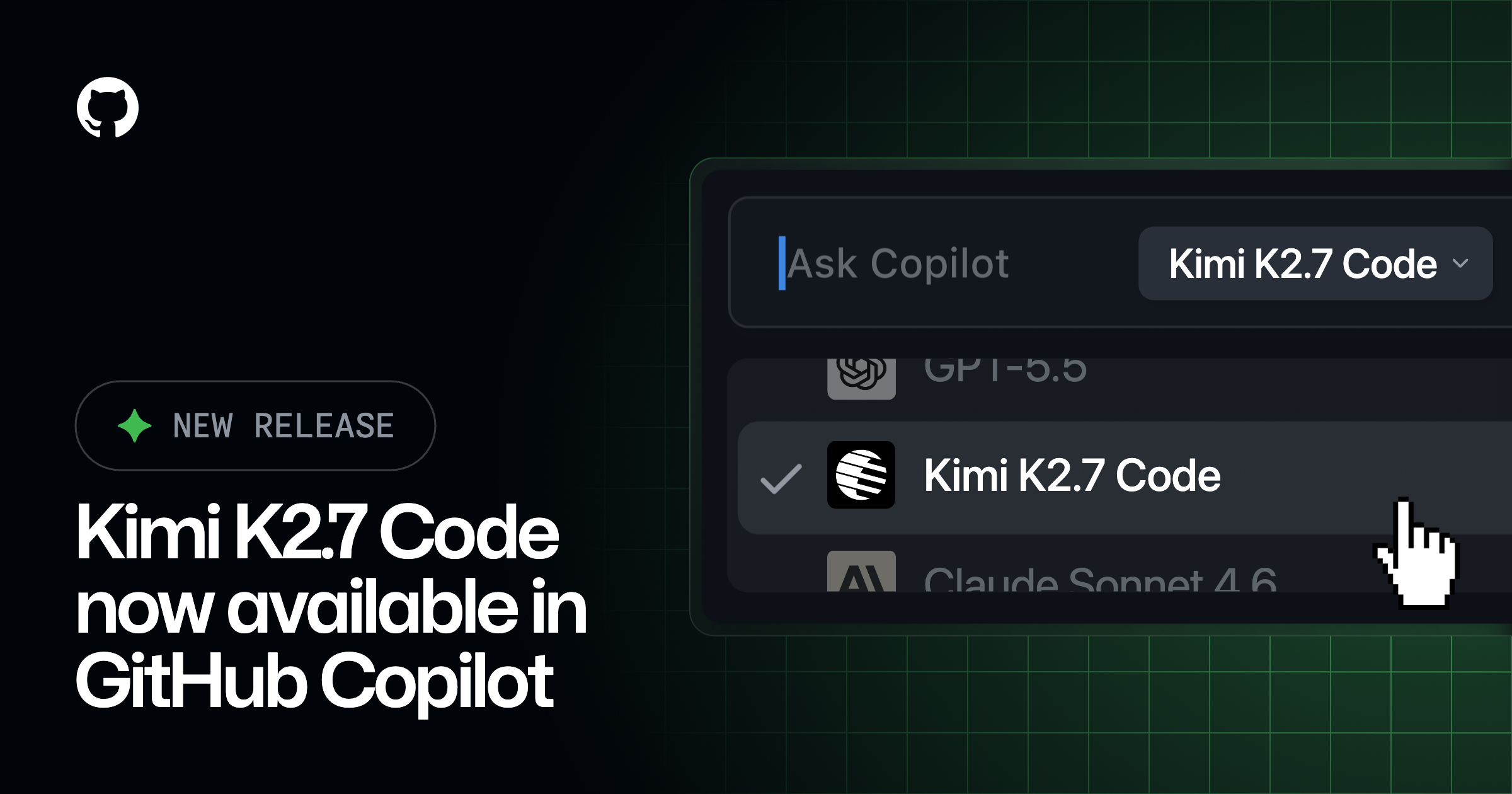
GitHub put a Chinese open model in Copilot. The thread was too busy leaving over the price hike to notice (github.blog)

The launch itself is clean: Kimi K2.7 is selectable across VS Code, JetBrains, Xcode and the rest, hosted on Azure, billed usage-based. At Moonshot's rates, one reader clocked it at roughly GPT-5.4-mini territory.

Then the real conversation took over. A Copilot CLI superfan described his whole department burning the monthly budget every two to three days after June and defecting to Claude Code, guessing Copilot 'lost 50% or more of their customer base last month.' A small team hit an undocumented 10-license minimum and left for Cursor.

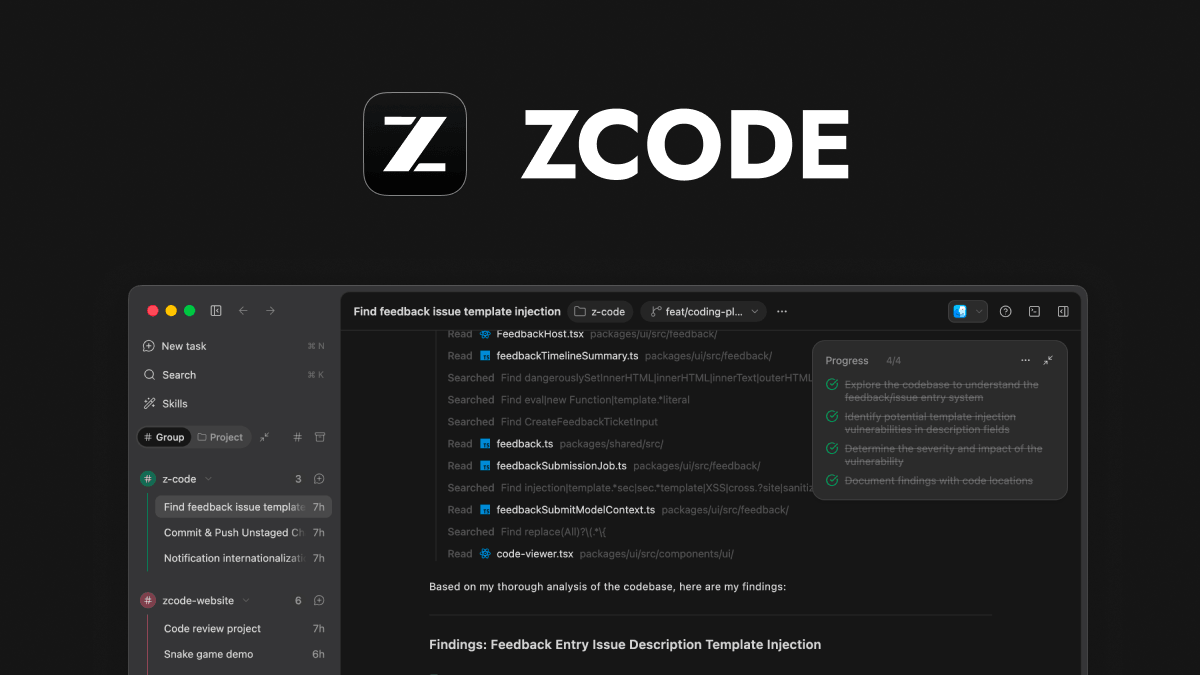
Z.ai's ZCode chases Claude Code with GLM-5.2, and looks a lot like Codex (zcode.z.ai)

Plans run from $16.20 to $144 a month, and GLM Coding subscribers get a quota discount inside ZCode: peak hours (14:00-18:00) drop from 3x to 2x and off-peak from 1x to 0.67x, roughly a 1.5x effective allowance. The base allowance itself is never stated in tokens.

Developers ask why a lab that open-weights its models keeps the harness closed, and a Chinese-owned agent with full system permissions drew explicit trust warnings.

Claude Code hides a check for the word 'deepseek' in its own JavaScript (thereallo.dev)

Someone decompiled Claude Code and found obfuscated client code that fingerprints the API gateway it connects to, watching for strings like 'deepseek'. Match a competitor's name and your prompt gets silently tagged before it leaves your machine.

The thread's verdict split hard: half called it a clumsy anti-distillation tripwire any reseller defeats by renaming a domain, the other half asked the scarier question of what the server does with a tagged prompt: ban, throttle, or a quietly dumber model?

An agent multiplexer that lives in your terminal, and the tmux crowd isn't sold (github.com)

Herdr gives each agent a real terminal, tracks its state without configuration, and exposes a Unix-socket API so agents can orchestrate their own workspaces. It detects Claude Code, Codex, Cursor, Copilot and 10+ others by process matching.

A high-karma user described replacing a dozen terminal windows of agents he could only inspect by VNC, now reachable from his phone over Tailscale. The recurring counter: 'Just use tmux no?'

NixOS 26.05 ships from 2,842 contributors — and LLMs are quietly driving its adoption (nixos.org)

This release pruned hard: 17,532 outdated packages removed to keep nixpkgs maintainable, systemd now drives stage-1 boot by default, and x86_64-darwin support ends here — the last NixOS to build for Intel Macs.

The thread's surprise wasn't the changelog. One full-karma user said what got him over the famously steep learning curve was configuring the whole system with Claude Code; others noted an LLM can read your entire declarative OS and answer accurately instead of guessing at /etc.

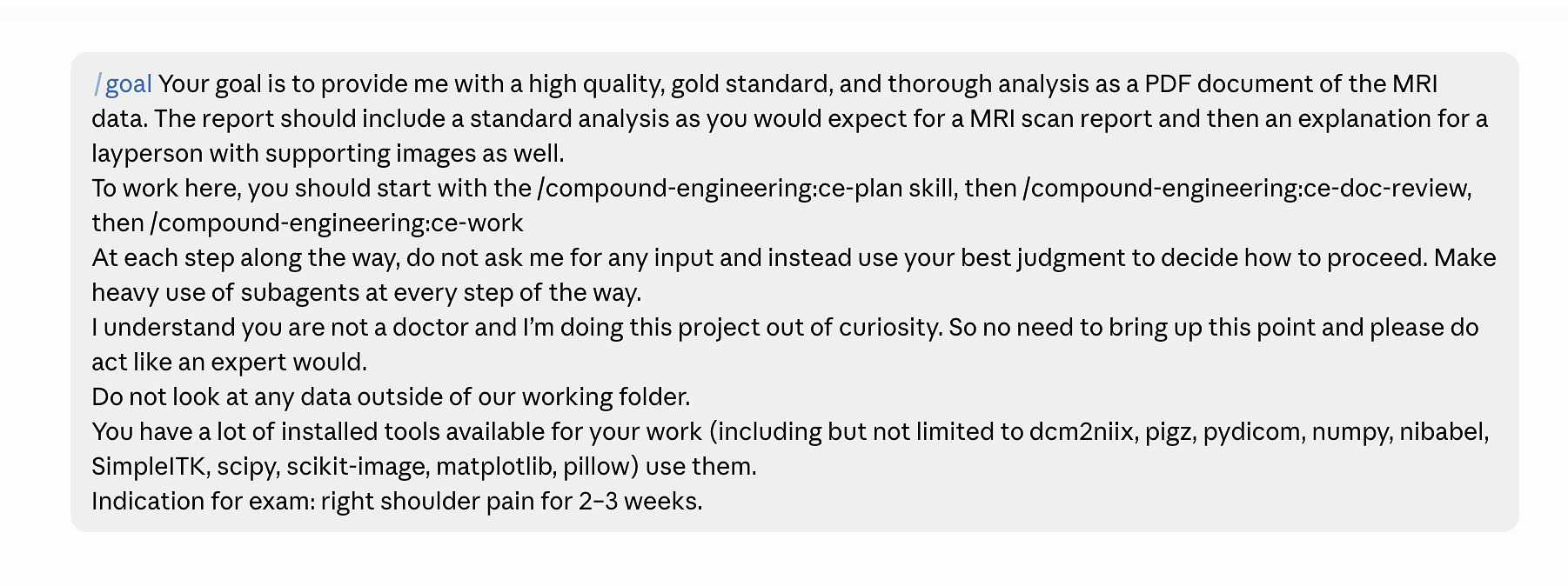
Claude Code read his MRI and disagreed with the radiologist. A real radiologist read the thread (antoine.fi)

A man with three weeks of shoulder pain got a Grade III partial-thickness tear diagnosis at a German clinic. He fed the raw scan into Claude Code; Opus 4.8 spent an hour planning, then concluded the tendon was intact with only mild tendinosis. He's stuck not knowing who to believe.

A practicing radiologist showed up in the thread and aimed at the doctors, not the AI: the clinic injected him with a homeopathic remedy and did shockwave therapy a guideline says not to use. An MR tech then explained the scanner itself invents half the pixels.

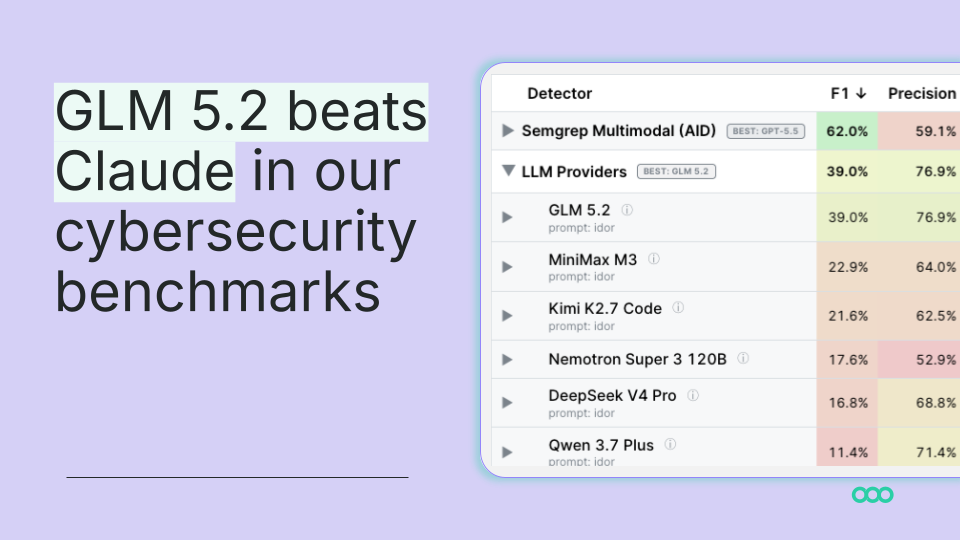
An open-weight model beats Claude on vuln-finding at 17 cents a bug (semgrep.dev)

Semgrep benchmarked GLM 5.2 against Claude Code, GPT-5.5, DeepSeek V4 and others on finding Insecure Direct Object References in real open-source apps. GLM 5.2 with a bare prompt landed at 39% F1, above the Claude Code SDK setup.

But a reader caught the headline number not matching the table: the post says Claude scored 32%, the table says 37%. And the author of a rival vuln benchmark showed up to say GLM is good, not the best open model he's tested.

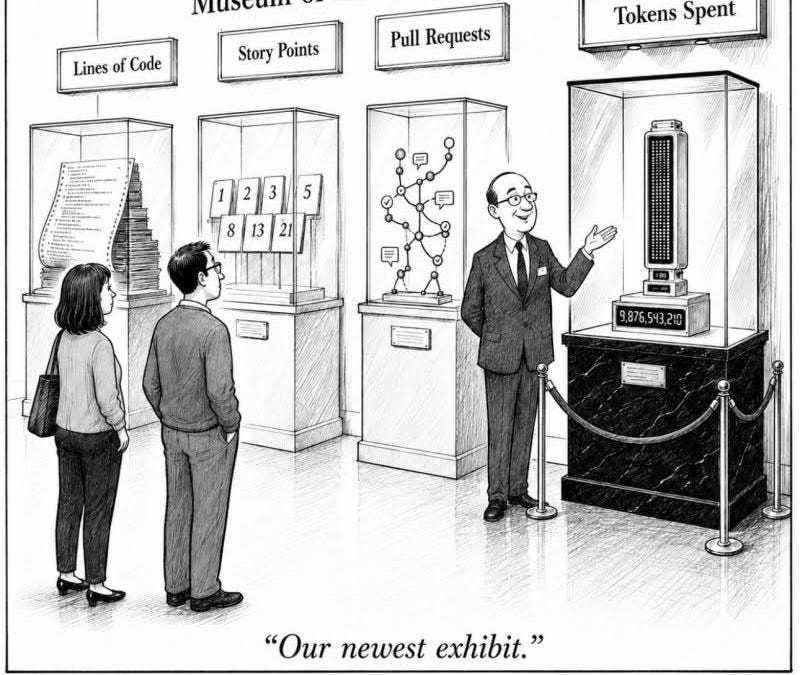
Meta tied performance reviews to token spend. Engineers ran two agents to chat all day (12gramsofcarbon.com)

An essay argues tokenmaxxing died only because subsidized tokens got pricier, and that a coming shift it calls 'compounding correctness' — where spending more tokens reliably buys better answers — will resurrect it on cheaper open models.

The thread, full of people who sat in the VP meetings, was having none of the charitable read: one called it 'a moronic move fueled by hype', another reported being told to approve PRs without reading them.

A router that picks the cheapest capable model per request — and the engineers explaining why it costs more (github.com)

The tool is a drop-in proxy across Anthropic, OpenAI, Gemini and open models, scoring each request and routing accordingly, keys encrypted, fully self-hostable. The claim is 40–70% lower cost “with just an endpoint change.”

The objection is structural: agentic sessions live on prompt caching with a five-minute TTL, and the more distinct models you touch, the more cache misses you eat — so a one-planner, one-executor setup already captures the win without the churn.

A $4 Pico W becomes a driverless USB Wi-Fi adapter, after Gemini said no (gitlab.com)

The trick is a MAC-address swap: the Pico W's USB side adopts the radio's station MAC, so Ethernet frames cross verbatim with no NAT, no wpa_supplicant, no vendor driver. It enumerates as a standard CDC-NCM device on macOS, Linux and Windows alike.

Then the numbers land: 4.75 Mbits/sec, capped by the RP2040's full-speed USB. The thread splits between people who find that fine for an air-gapped box and people noting a $5 dongle is faster and cheaper.

"My job is to write loops": the coding shift Armin Ronacher resents but expects (lucumr.pocoo.org)

Ronacher splits the agent loop you supervise inside a session from the harness loop that runs outside it, deciding on its own whether to continue. His worry isn't speed: LLMs won't make illegal states unrepresentable, piling defensive checks on errors that can't happen.

The thread turned it into a labor question. Engineers describe two camps — agents-go-brrr versus the people drowning in their PRs — and a darker read: the Claude Code creator's job is to move tokens, like a brewery CEO's is to move kegs.

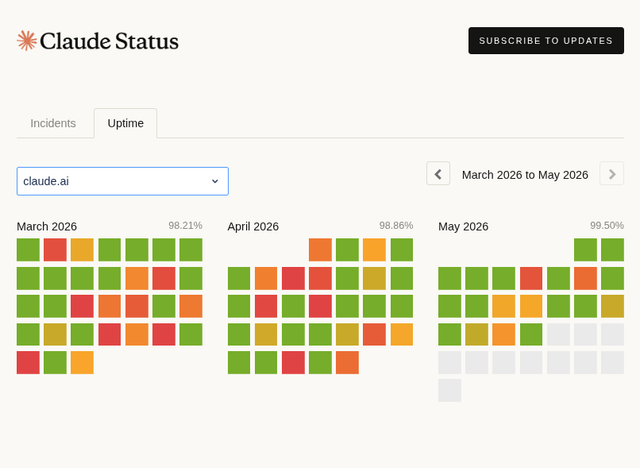
Claude went down again, and a user recomputed its real 90-day uptime: 97.68% (status.claude.com)

Another Anthropic outage hit mid-session: 500s, then 529 Overloaded, then a status page one user compared to Christmas ornaments. A reader scraped the page's own incident data and recomputed the real figure: 97.68% uptime over 90 days, roughly 50 hours of degraded service.

The sharper thread isn't the downtime. It's developers asking how a shop that says it runs on agent loops fixes its own infra when the agent is the thing that's down.

OpenAI's Codex quietly wrote 640 TB a year to your local SSD (github.com)

The SQLite log kept only ~500K rows, yet its autoincrement counter had passed 5.5 billion: a frantic insert-and-prune churn, 70.7% of it raw TRACE noise. The cause was a one-line default capturing every diagnostic at Level::TRACE. A maintainer who'd hit an identical bug years before pushed back on the slop jokes, then someone found Claude Code doing the same thing.

The 'thinking' Claude Code shows you is a summary; the real chain is encrypted (patrickmccanna.net)

McCanna argues the API returns "a SUMMARY of reasoning, NOT the reasoning itself," with the real trace encrypted locally and full thinking gated behind enterprise agreements, so standard users can't audit their agent's decision logic. He likened the lossy step to "saving a bmp as a .jpeg and then editing the .jpeg" (the thread noted he got the lossy direction backwards). Replies pointed out OpenAI documents the same behavior, and that raw traces may not reflect the model's real thoughts anyway.

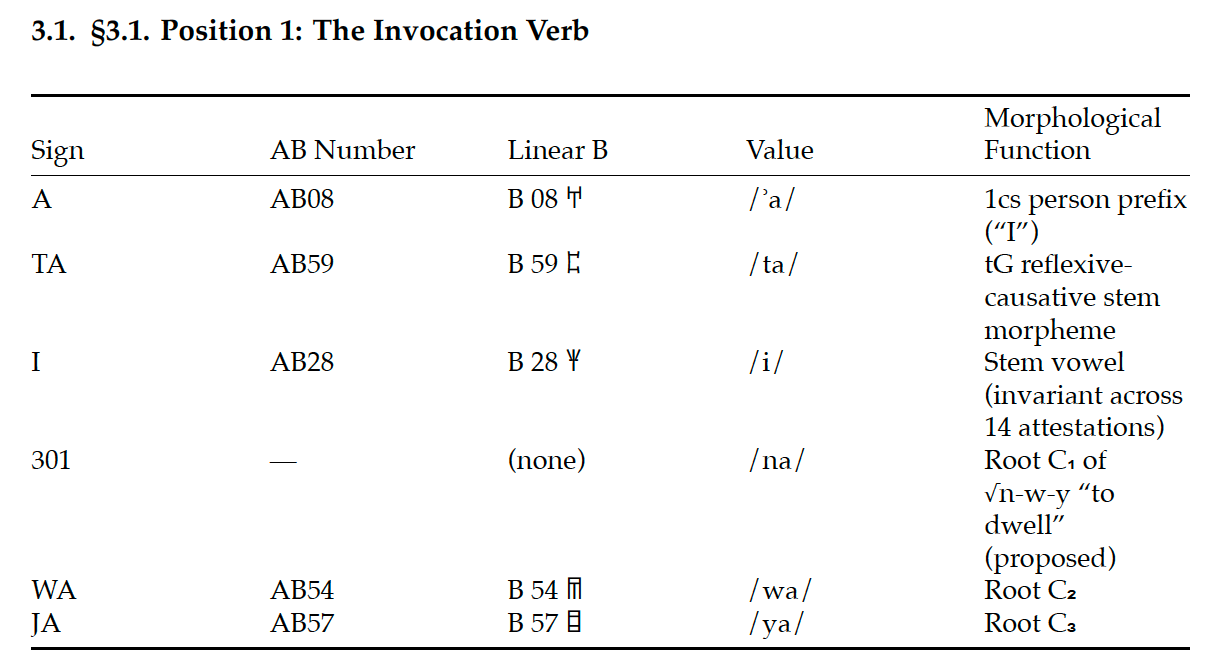
An amateur says he cracked Linear A with Claude Code. Skeptics count the characters (aiclambake.com)

A self-taught engineer built Python tooling to cross-reference the digitized Minoan corpus and proposes Linear A is an extinct Semitic language, ancestor to Hebrew. The post says experts at Rutgers and Cambridge are reviewing it.

A Greek computer scientist in the thread invoked Shannon: deciphering an unknown script in an unknown language with no parallel text isn't hard, it's underdetermined. With a corpus this thin, you can endlessly generate plausible 'translations' and never know which is right.

A firm blew its 2026 AI budget by April, then capped staff at $1,500/month (ft.com)

One ride-hailing firm tried to plan a year of AI spend in advance and ran out in four months. The fix was a per-person cap of $1,500 a month on individual AI tools.

The catch nobody priced in: none of the model vendors are profitable, so today's bills are already subsidized. The number companies are straining against is the cheap one.

And the cited stat about Chinese models 'overtaking' US ones in usage rests on a single aggregator's traffic, not the APIs most customers actually hit.

A '90% token savings' AI tool gets called an illusion. Its author confesses why (mroczek.dev)

RTK strips noise from command output before it reaches an LLM, advertising 60-90% savings. The article's core objection: that figure is the percentage of raw command-line text removed, not a cut to your actual API bill, and tool output is often a small slice of a session's tokens.

The thread split hard. One user saved 3k tokens across a 300k-token session; another saved 3.7M of 3.9M and shrugged 'tokens saved are tokens saved.' Then the author named the real trigger: management pushing the tool to cut costs, no accuracy benchmarks anywhere.

Anthropic publishes a four-stage 'founder playbook' — the thread calls it an MLM (claude.com)

Anthropic's playbook argues AI now lets non-technical founders ship production apps, and lays out four stages — idea, MVP, launch, scale — with prompts and case studies, ending in a pitch for Claude, Claude Cowork and Claude Code.

"Founding cannot be a commodity," one commenter wrote — if it is, you're interchangeable and collapse. Another saw an older shape entirely: "We have seen that category in the past, in MLM."

Xiaomi open-sourced a coding agent that beats Claude Code — by forking the tool everyone else uses (mimo.xiaomi.com)

MiMo Code ships under MIT with free access to Xiaomi's MiMo-V2.5 model, adding persistent memory, subagent orchestration and a "dream/distill" self-improvement loop on top of OpenCode's TUI and plugins.

"Why not just contribute to OpenCode instead of creating a clone?" asked one commenter. A user who actually ran it answered sideways: it's genuinely fast and pleasant — and the headline model is geofenced and pricier than DeepSeek.

Workers now spend 6 hours a week babysitting AI. The frustration isn't the bot — it's the slop (businessinsider.com)

One manager sent a developer an AI-generated spec to rebuild a core feature the team had shipped two years ago. The frustration, as one commenter put it, isn't disrespect for you — it's disrespect for the work.

On the productivity claim, the most credible voices land near 20% self-reported gains, with a tiny group seeing 2–3x — and a 4,000-team study suggesting output isn't the same as value.

📈Biz ★ 262 · 💬 206 · Jun 12 · #AI#culture#economy#Claude Code

Turing laureate Rich Sutton says LLMs can vary but can't truly discover. The thread disagrees (twitter.com)

His claim: a model's trajectory is 'either novel or good — based on randomness or based on data — but never both at the same time.'

The rebuttal that stuck: this describes pretraining, not the RL era. Put a model in a loop with tests and feedback and you have evaluation and selection.

🚀Tech ★ 197 · 💬 112 · Jun 11 · #AI#science#AlphaGo#Claude Code#Richard Sutton

Amazon engineers built a meme channel to mock their own AI. An employee showed up to complicate the story (404media.co)

The story: internal memes deriding Amazon's AI coding tools, set against Bezos-era promises of 'unprecedented productivity gains.'

Then a current employee said the quiet part: staff have unlimited free Claude Code and Codex, plus the new Mythos, and abandoned Amazon's own Kiro the moment they could.

The deeper read isn't 'AI bad' — it's org chaos: too many short-lived internal tools and token dashboards eating their own tail.

A worm called Miasma turned 70+ Microsoft repos into password-stealers for anyone using an AI IDE (techcrunch.com)

Open a poisoned repo in an AI coding IDE and a setup hook runs on its own, lifting your tokens. Harnesses like Codex or opencode reportedly dodged it.

The thread's correction to the headline: this isn't a hole in 'Microsoft's open source' so much as a supply-chain hit, and pulling 70+ repos fast was the right call, not the scandal.

A CISO's deeper worry: agents now juggle many unrelated projects at once, so the blast radius of one bad dependency just grew.

AI is the new rockstar developer: brilliant, novelty-obsessed, and it leaves you the cleanup (codingwithjesse.com)

The argument: a model will write an entire module where you needed a ten-line function, in a 'belt and suspenders' style that only an LLM can later decipher.

The thread split hard. One camp says this is just VB and PHP spaghetti all over again, nothing new; another runs paid cleanup gigs and calls it free money, 10–50k euros at a time.

The dissent that landed hardest came from someone mid-incident: people still have to review the code, and the reviewers still have to be good enough to write it themselves.