OpenAI floated giving Washington a 5% stake — worth about $43 billion. The thread called it a moat, not a gift
According to the Financial Times, OpenAI proposed handing the US government 5% of the company — roughly $43 billion at its $852 billion valuation — and wants other AI labs to do the same. Sam Altman has also been talking to Bernie Sanders, who wants 50%.
Altman's pitch: it shares AI's upside with the public, modeled on Alaska's oil fund. The reported terms include an ask for Anthropic, Google and Meta to match, with talks running through Trump, Lutnick and Bessent.
HN read it as strategy, not generosity. If the government owns a slice of OpenAI, how does it regulate OpenAI — or bless a rival's merger? One founder called it a Trojan horse for 'too big to fail' status. Another asked: if the public shares the upside, why 5% and not 50%?
What was actually proposed
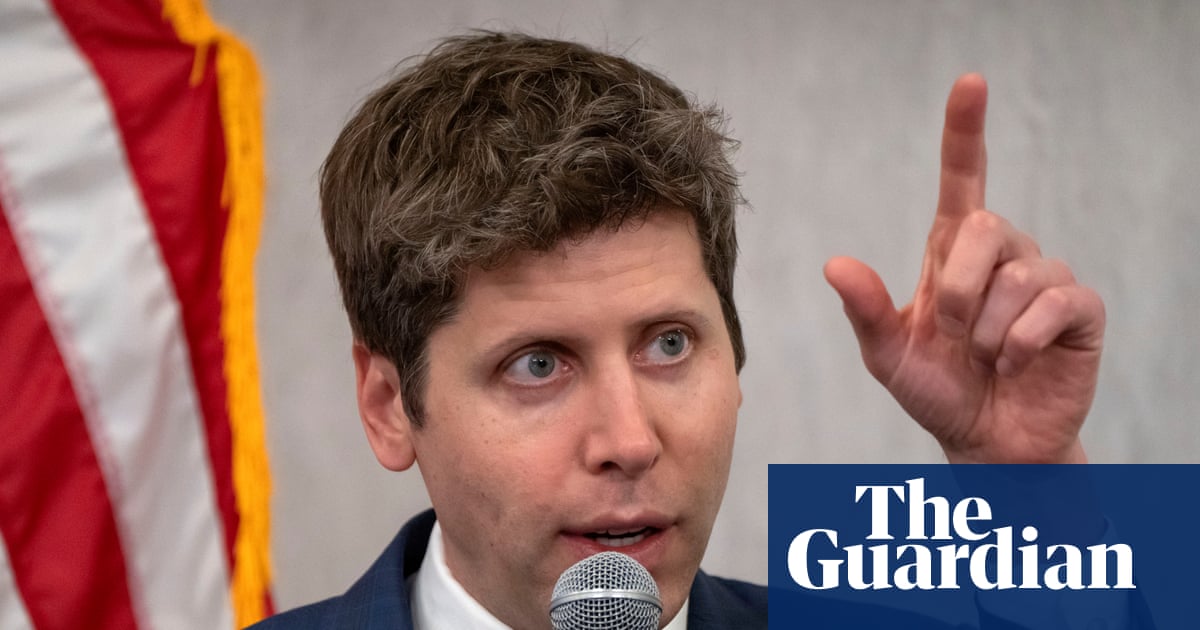
Per the Financial Times, as reported by the Guardian, OpenAI is in early talks to give the US government a 5% stake — worth roughly $42.6 billion against the $852 billion valuation from its March funding round. Sam Altman has reportedly framed it as the best way to share AI's upside with the public, modeled on the Alaska Permanent Fund, and has engaged directly with President Trump, Commerce Secretary Howard Lutnick and Treasury Secretary Scott Bessent. The proposal reportedly asks other US AI companies to grant a similar stake, "although it is not clear yet whether companies such as Anthropic, Google and Meta would agree." Separately, Altman has spoken with Senator Bernie Sanders, who is pushing a far more expansive version: a sovereign wealth fund taking a 50% stake in the biggest AI firms, financed by a one-time 50% tax on their stock.
The thread heard a moat closing, not a gift
The core objection is a conflict the arrangement bakes in from day one:
"How is the government supposed to be able to regulate them impartially when they're literally invested in them. What if a competitive startup starts to really take away from OpenAi's profits and then all of a sudden requires some approval for merger with Anthropic… I don't know if I would trust the government to be fair." — a reader on the regulator-as-investor problem
A software founder read the whole thing as defensive positioning:
"This is a trick to lock in "too big to fail" status and have leverage to lobby the government to ban "dangerous" Chinese models that are "robbing the taxpayer". 100% Trojan horse." — the CEO of a software company
Others reached for sharper historical framing, one likening the state-capture dynamic to Putin's Russia — a system that is "transactional and parasitical, not bureaucratic or regulatory," where the King and his friends get their cut. But the cleanest puncture of the "sharing the upside" language was a single arithmetic question: if the public is meant to benefit, why is the number 5% and not 50%? Sanders, notably, is the one asking for the bigger figure — which tells you the 5% wasn't designed to maximize the public's cut. It was designed to buy something else.
Get breakdowns like this every day
The top Hacker News stories, unpacked — by email, Telegram, or RSS.
Google lost its last appeal on a $4.7B EU fine. The thread argued whether the fine ever mattered
Europe's top court upheld the roughly €4.1 billion ($4.7 billion) penalty over Android — a case that began with a 2018 Commission decision. By the time it's final, a developer noted, the world it policed has already changed.