Tag

Pangram

4 stories

About 20 percent of new Wikipedia drafts were AI-generated; a volunteer team cut it to 15 (spectrum.ieee.org)

With AI-detection company Pangram, Lebleu estimates about 20 percent of new articles and drafts were flagged in late 2025, falling to roughly 15 to 16 percent in early 2026. English Wikipedia now bans LLM-generated articles, and a source verifier checks whether citations support their claims. She cannot tell whether the drop is policy or models that evade the detector.

Commenters supplied the reader's side.

🌍Other ★ 454 · 💬 209 · 10h ago · #AI#culture#Ellia Lebleu#Pangram#Wikipedia+1

Not just a headline — the discussion unpacked

The top HN threads: facts from the discussions, both sides, insider voices. Email, Telegram, or RSS.

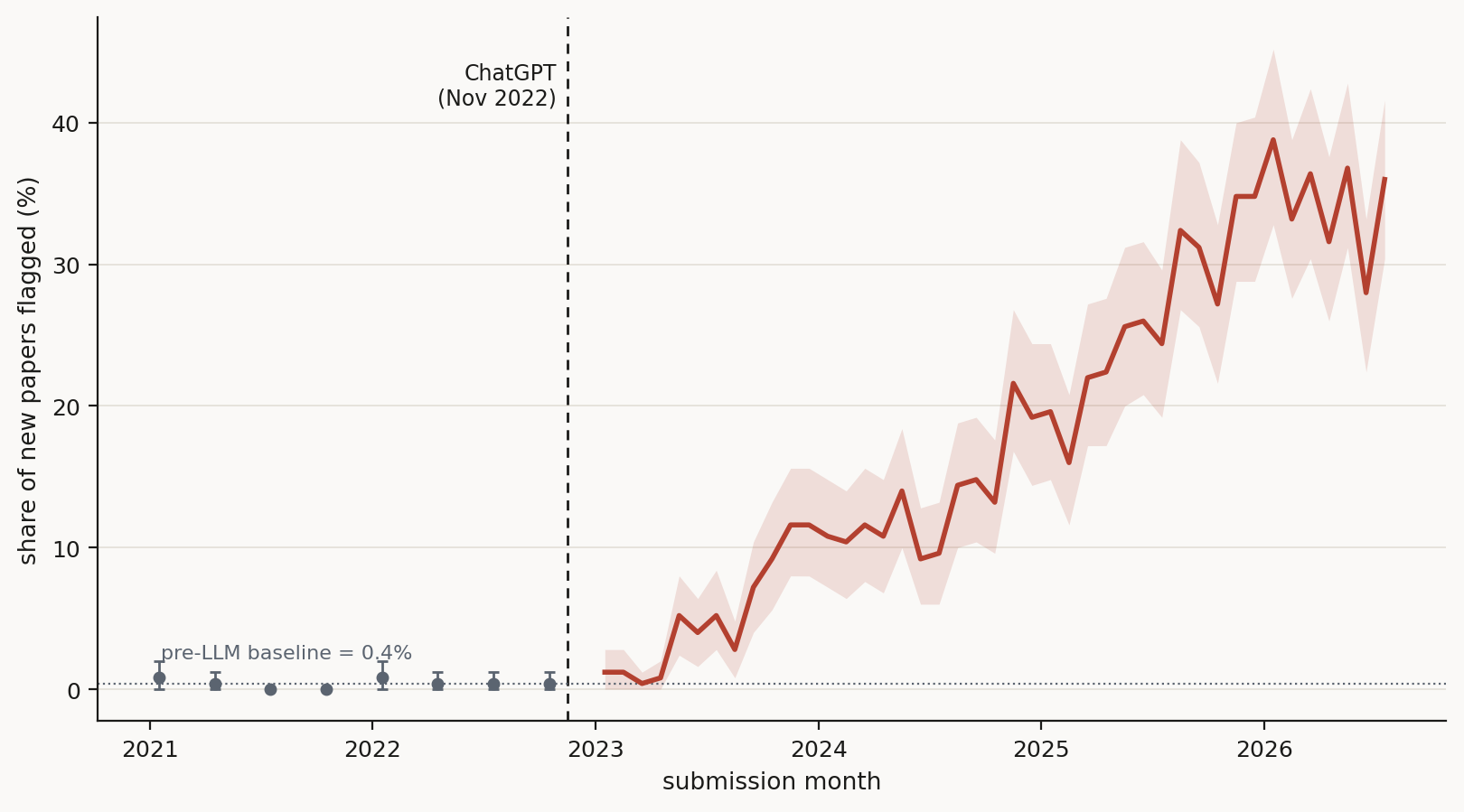
A Detector Flagged 65% of CS Papers as AI-Written, Then Flagged Its Own Post (unslop.run)

The detector flagged a 2015 conference paper at 74% machine-written and a 2012 PhD dissertation at 40%, both submitted years before large language models existed, according to a commenter who ran his own decade-old work through the tool.

The tool's creator conceded in the thread that he has no clean way to build a control group of human writing from after 2023, since every available shortcut relies on the very detectors he's trying to outperform.

🚀Tech ★ 194 · 💬 143 · Jul 21 · #AI#science#arXiv#ChatGPT#Pangram

Kent Beck says YAGNI was never about saving effort. The thread says the essay is AI slop (newsletter.kentbeck.com)

Beck's argument drops the old 'you save typing' defense of YAGNI and replaces it with discounting: build structure now for a feature arriving in three months and you've sequenced cost ahead of return, a loss that lands whether or not your prediction was right.

Half the thread debates the economics; the other half noticed the author's own disclaimer that the back half is a 'genie-generated description of YAGNI', ran it through Pangram, and got 70% AI. One regular: 'I don't know what happened to Kent Beck.'

A signup form 'validated' his email by mailing him spam about magnets (milek7.pl)

An engineer testing Pangram's signup found that the act of entering his email address triggered an unsolicited message from a churn of throwaway domains, its payload a base64 HTML blob of physics filler buried off-screen.

Then the company's founder turned up in the thread: 'I had no idea this was happening' — he traced it to a third-party validation vendor in his own stack.