Tag

NVIDIA

10 stories

Big Tech's Hidden AI Debt Hit $1.65 Trillion. It's Completely Legal. (asia.nikkei.com)

A Nikkei investigation puts five US tech giants' off-balance-sheet AI debt at $1.65 trillion, an eightfold jump in four years that now tops the $1.35 trillion they report outright, mostly through data-center leases and GPU deals that never touch a debt line.

On HN, the fight moved past the number to who eats the loss if AI demand disappoints: one reply blamed the banks; a sharper reply said the real exposure sits with private credit funds most readers have never heard of.

📈Biz ★ 355 · 💬 247 · Jul 22 · #AI#big tech#markets#Alphabet#Amazon#Meta+3

Not just a headline — the discussion unpacked

The top HN threads: facts from the discussions, both sides, insider voices. Email, Telegram, or RSS.

Nvidia's $2 Billion Stake Covers Just 6% of CoreWeave's GPU Spending (io-fund.com)

CoreWeave's first-quarter free cash flow came in at negative $4.71 billion even as revenue more than doubled. To close the gap, it raised $3.5 billion in new debt this week alone, on top of $24.86 billion already owed, with interest payments now eating over a quarter of revenue.

One HN reader ran the actual math: Nvidia's investment is only 5.7% of CoreWeave's yearly GPU budget, making it "hardly circular." The real story, he argued, is who is financing the other 94% and what happens when Treasury yields keep climbing.

📈Biz ★ 314 · 💬 128 · Jul 12 · #AI#big tech#markets#CoreWeave#Meta#Microsoft+2

$54 to fix TypeScript types across 50 files — and the case that today's LLM prices can't hold (aditya.patadia.org)

The article argues subscriptions are heavily subsidized and per-token API pricing is the real, brutal number — $54 for one afternoon of TypeScript cleanup. With GLM-class open models beating flagships on coding benchmarks at a fraction of the price, the author sees routine work commoditizing.

The most concrete reply isn't a forecast — it's a deployment: banks and insurers already run anything that matters on models inside their own datacenters, with Claude and Codex kept on a tight leash.

🚀Tech ★ 109 · 💬 190 · Jun 27 · #AI#economy#markets#DeepSeek#NVIDIA#OpenRouter

Apple skips the high-end M6 entirely, betting the Mac on an AI-tuned M7 (bloomberg.com)

Apple plans a base M6 for entry Macs this year but is dropping the Pro, Max, and Ultra tiers of that generation — a first — to launch M7 Pro, Max, and Ultra instead, per Gurman. The high-end variants land as late as 2027 and 2028.

The catch an investor flagged: the base M7 targets 240GB/s of memory bandwidth. An Nvidia RTX 6000 already does roughly 1,600. The whole 'AI Mac' pitch rides on whether a future Ultra closes that gap for local inference.

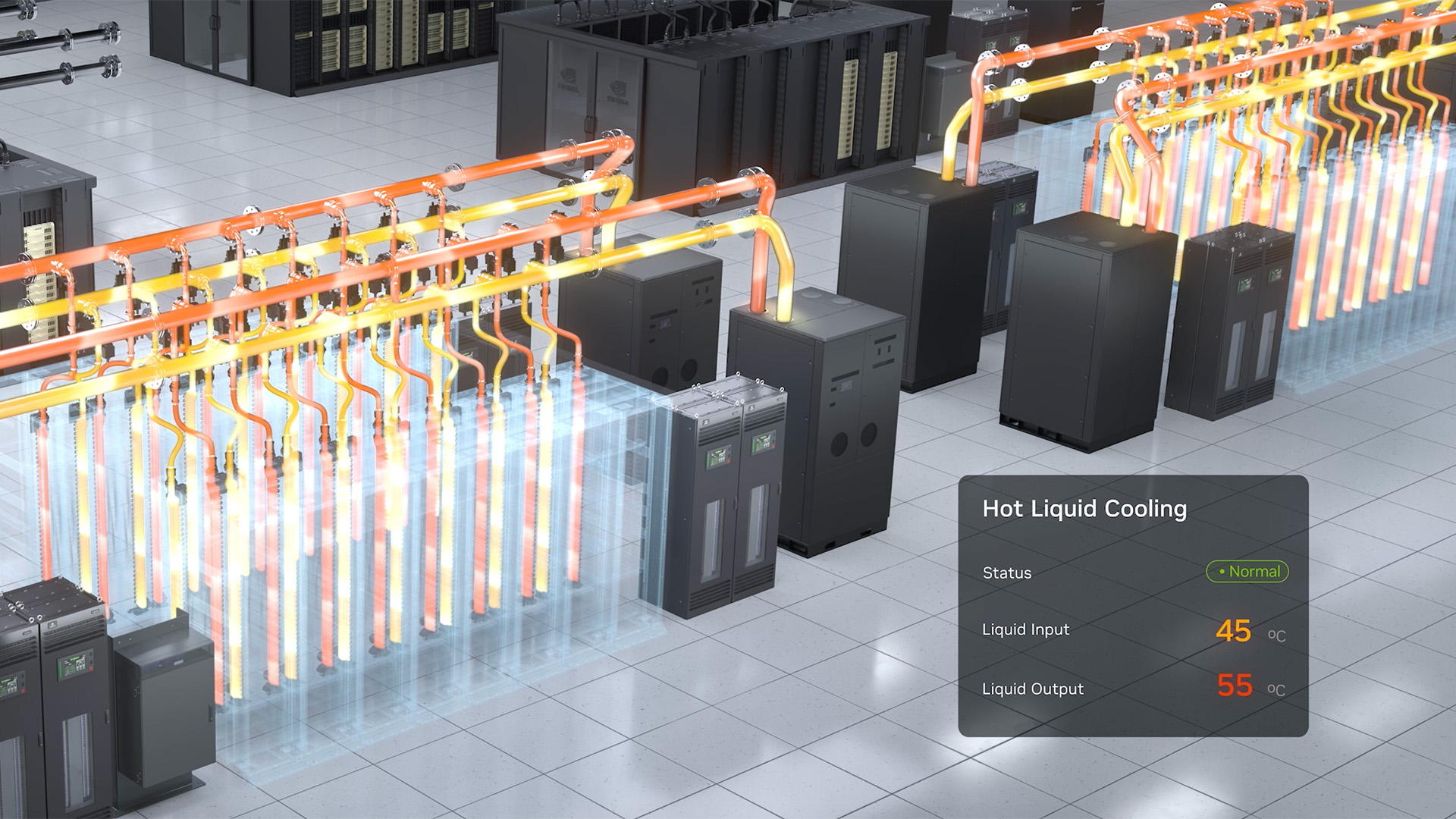
NVIDIA's 45C inlet water lets a data center run with no evaporation (blogs.nvidia.com)

Rubin-generation racks go fully liquid: every chip and switch sits on a cold plate, no fans, with 75% water and 25% glycol in a sealed loop. A 50MW site is pitched at over $4M a year saved on cooling and water.

Practitioners say the catch is climate. You need outside air below about 37C to guarantee a 45C outlet, so most sites still keep cooling towers for the hot days.

And the bigger water sink stays untouched: power generation, not the building, is where most of a data center's water actually goes.

🚀Tech ★ 213 · 💬 158 · Jun 25 · #AI#energy#hardware#Blackwell#NVIDIA#Rubin

LeCun: serving one $200/mo power user costs about $15,000 (techstrong.ai)

LeCun's economic punchline: today's subscriptions don't cover their own compute, and he wants a diversity of AI systems "for the same reason we need a high diversity of the press."

The thread's flip is hardware, not weights. You can't have open-source AI, one widely-read commenter argues, without open hardware specs and manufacturing. Another asks the unglamorous question: can most of the world afford the machine to run any of it?

Qualcomm buys Chris Lattner's Modular, the anti-CUDA bet, for ~$4B (reuters.com)

Modular's pitch was a portable compiler stack that breaks NVIDIA's CUDA lock-in; founder Chris Lattner built LLVM, Clang and Swift before this. The buyer designs ARMv9 chips and has almost no presence in the H100-class training market.

The thread reads it two ways. One commenter notes Modular's founder repeatedly wrote that hardware firms fail at AI software, making the acquirer the punchline. Another sees a portfolio play, lining Modular up beside Tenstorrent and Ventana as Qualcomm pushes from phone chips toward RISC-V and datacenter AI.

OpenAI's first chip, 'Jalapeño', went from design to silicon in nine months (techcrunch.com)

The part targets inference, not training, so Nvidia keeps the training moat while OpenAI chases the recurring per-token cost. The pitch leans on one phrase: development "accelerated by OpenAI's models".

On Hacker News a chip engineer called the nine-month timeline impossible and guessed it is a relabeled Broadcom design with little real OpenAI contribution.

ReactOS ran Half-Life with real GPU acceleration — the hard part Linux sidesteps with translation (phoronix.com)

Steam on Linux runs newer games fine — but by translating DirectX onto Vulkan. ReactOS did the harder thing: load the native Nvidia driver for an old GeForce 8 card directly, the way Windows itself would.

Whether that's triumph or indictment is the open question. As one reader noted, ReactOS has been in development almost exactly as long as Half-Life itself has existed.