Tag

DeepSeek

30 stories

Not just a headline — the discussion unpacked

The top HN threads: facts from the discussions, both sides, insider voices. Email, Telegram, or RSS.

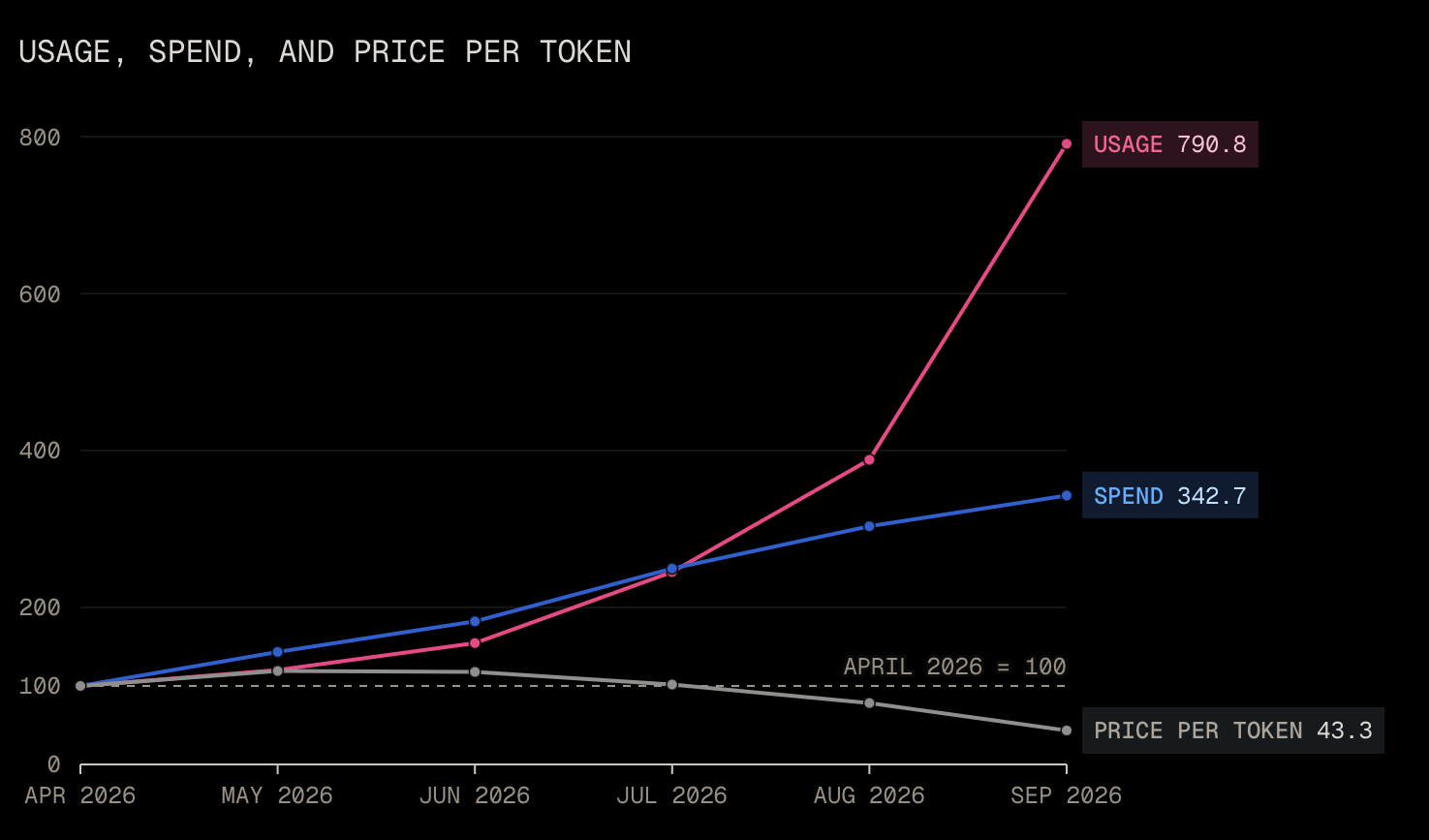
OpenAI's small GPT-5.6 model fell 80% in price in July. By September, the flagships followed (minimaxir.com)

The author's favorite explanation is not generosity. Models are now swappable through routers like OpenRouter, and 29 hosts already serve one open DeepSeek model.

The thread's most practical answer came from a team that left for cheaper models over refusals.

🚀Tech ★ 156 · 💬 179 · 2 days ago · #AI#big tech#markets#Anthropic#Claude Opus 5.5#DeepSeek+2

DeepSeek open-sourced the inference engine that serves its own production traffic (github.com)

The release covers one model, DeepSeek-V4.1-Flash, and runs on NVIDIA SM100 GPUs and Huawei Ascend 950 NPUs. It deliberately leaves out the KV cache system and prefill/decode disaggregation.

In the thread, one reader wants to know if the whole release is a bet against US valuations. Another answers that investors don't believe Western firms will run Chinese models.

DeepSeek now sells web search and page fetch for $0.75 per 1,000 requests (api-docs.deepseek.com)

DeepSeek published Search and Fetch APIs at $0.75 per 1,000 successful requests, billed only on HTTP 200 responses. Calls routed through Claude Code, Codex or DeepSeek's own harness are free until 00:00 Beijing time on November 1, 2026.

The first reply was a price check: Kagi's API runs $12 per 1,000 searches. Then a hobbyist who built his own agent tools said the big labs' bundled search costs 15-20x more than his.

🚀Tech ★ 551 · 💬 260 · Oct 19 · #AI#dev tools#web#Brave Search#Claude Code#Codex+2

DeepSeek's cheap Flash model beats Opus 5 on four agent benchmarks, and HN's own tests disagree (huggingface.co)

DeepSeek-V4.1-Flash-1017 posts 77.0 on DeepSWE v1.1 against Opus 5's 74.0, with a 1M-token context and MIT-licensed weights. It still trails Opus 5 on Terminal-Bench 4.0 (42.3 vs 51.8) and ProgramBench (29.1 vs 37.0).

Then someone pointed four agents at the same 200-file C++ diff: DeepSeek needed 20 minutes for one relevant bug, GPT 6.1 Sol needed 4 and a half for two.

DeepSeek Harness trends before readers can explain its job (deepseek.com)

DeepSeek Harness is a developer preview for coding-agent workflows, but its sparse initial material made its architecture clearer than its everyday use case.

HN readers were curious about first-party harnesses, yet the most repeated question was simpler: what is this tool for and why should a developer switch?

DeepSeek ships V4-Flash API beta without changing the endpoint (api-docs.deepseek.com)

The release keeps the API method unchanged and adds native Responses API support, with DeepSeek publishing agent-benchmark results alongside the update.

The practical detail is the narrower scope: V4-Pro and the app/web models are unchanged, so this is an API-model rollout rather than a platform-wide replacement.

Google's efficient Gemini Flash-Lite now costs six times what Gemini 2.5 charged (blog.google)

Google's launch post for three new Gemini Flash models compared them only to its own older versions, never once to GLM 5.2, DeepSeek, or any other rival lab.

A Brokk founder ran the missing comparison himself in the thread: Gemini 3.6 Flash lands about even with GLM 5.2 on price and intelligence, just roughly 8 times faster.

Engineers who had built products on the cheap Flash-Lite tier said they were already moving workloads to Deepseek and OpenAI, tired of watching each new release cost more than the last.

A founder says he runs Chinese AI models at a twentieth of Anthropic's price (werd.io)

One reader tested the censorship complaint directly, asking four Chinese models (Kimi K3, two Qwen variants, and GLM 5.2) to write a function named FreeTaiwan(). All four wrote clean, working code with the banned name intact.

A different reader called the whole framing suspicious: the post reads like the argument Palantir's CEO made on CNBC days earlier, and enterprises don't actually care whether a model is open: they care whether the vendor promises to delete their data.

An open model at $4.40/MTok threatens frontier labs' 90% inference margins (martinalderson.com)

GLM 5.2 lists near $4.40 per million tokens, under a fifth of Opus retail, and Alderson says he can barely tell it from Opus in daily use, with switching between them costing almost nothing via Anthropic- and OpenAI-compatible APIs.

The flip: the article's own 'margin collapse' payoff is punted to an unpublished part two.

Claude Code hides a check for the word 'deepseek' in its own JavaScript (thereallo.dev)

Someone decompiled Claude Code and found obfuscated client code that fingerprints the API gateway it connects to, watching for strings like 'deepseek'. Match a competitor's name and your prompt gets silently tagged before it leaves your machine.

The thread's verdict split hard: half called it a clumsy anti-distillation tripwire any reseller defeats by renaming a domain, the other half asked the scarier question of what the server does with a tagged prompt: ban, throttle, or a quietly dumber model?

A 27B model runs local coding well — on a $6,699 laptop that burns your fingers (quesma.com)

The post pits the dense 27B against the faster 35B mixture-of-experts variant and argues for quality over throughput — 'I'd rather generate a third as much code, but of higher quality.' It ran the model through a hex-minesweeper build and a candle-shop landing page.

A founder who owns the exact machine pushed back hard: run a heavy job on the laptop itself and your fingers burn and the fans scream. His fix — stick a Mac Mini in the basement and reach it over Tailscale, at a third of the price.

🚀Tech ★ 649 · 💬 528 · Jun 30 · #AI#dev tools#hardware#Apple#DeepSeek#Gemma+2

DeepSeek says its decoding trick makes generation 57–78% faster. The thread asks who's left to sell tokens to (github.com)

DeepSeek dropped a paper on DSpark, a speculative-decoding module bolted onto its V4 models, claiming 57–78% faster per-user generation at the same hardware capacity — and shipped the weights to Hugging Face the same day.

The thread's sharpest voice wasn't about the math. It was the warning that token-sellers eyeing an IPO have a market that's 'almost solely developers', open models a step behind, and no customer boasting higher profits from AI. Also noted: the headline isn't even the paper's title, and speculative decoding dates to 2022.

Vendors say Mythos changes cybersecurity forever. A practitioner says the real change is who Washington lets use it (cephalosec.com)

A security blogger's 'keep calm and carry on' post pushes back on the Mythos hysteria — most breaches are still misconfigurations and bad practice, and vendors hawking 'Mythos solutions' the day it was announced gave the game away.

A higher-karma reply moves the target: the danger isn't the model's marginal edge, it's Washington choosing who gets it, creating defenders who can break everyone else's systems. The release-ban-IPO timeline, one reader notes, reads like a stock pump.

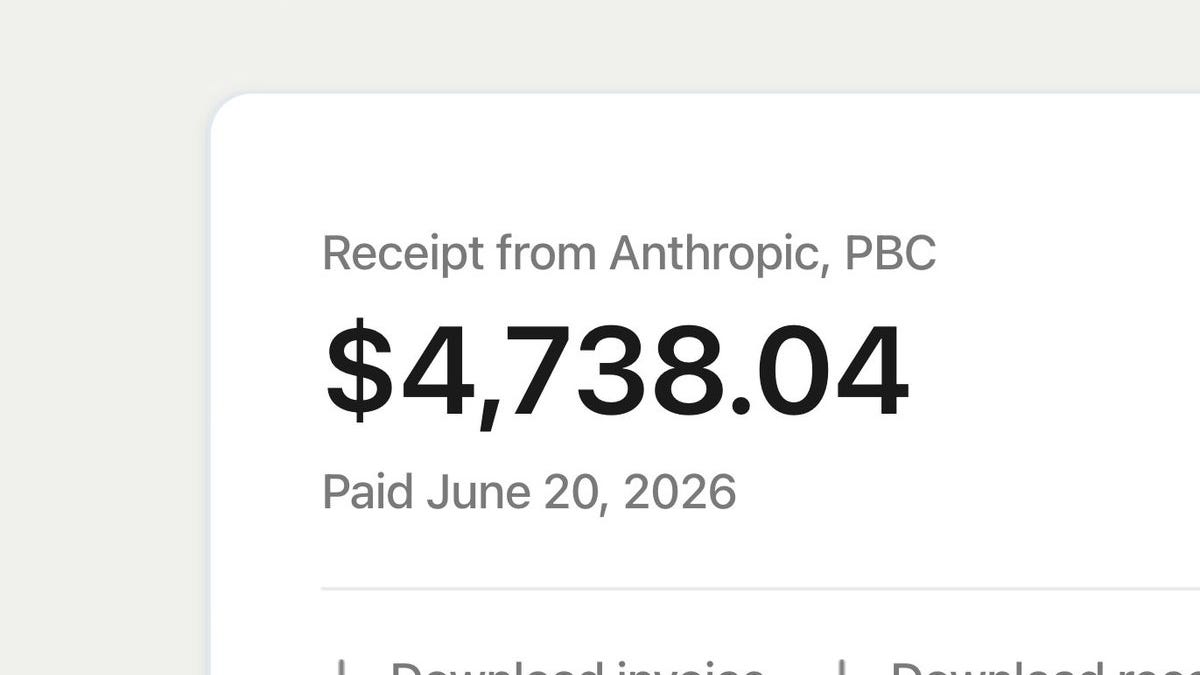
$54 to fix TypeScript types across 50 files — and the case that today's LLM prices can't hold (aditya.patadia.org)

The article argues subscriptions are heavily subsidized and per-token API pricing is the real, brutal number — $54 for one afternoon of TypeScript cleanup. With GLM-class open models beating flagships on coding benchmarks at a fraction of the price, the author sees routine work commoditizing.

The most concrete reply isn't a forecast — it's a deployment: banks and insurers already run anything that matters on models inside their own datacenters, with Claude and Codex kept on a tight leash.

🚀Tech ★ 109 · 💬 190 · Jun 27 · #AI#economy#markets#DeepSeek#NVIDIA#OpenRouter

Open-weights LLMs are either 5 months behind forever, or caught up by Christmas — pick your benchmark (blog.doubleword.ai)

On a single intelligence index the open-vs-closed gap projects to zero by Christmas; spread across 18 benchmarks it's stayed near five months for two years. Coding is the one clear mover, from 15 months behind to one or two.

The thread's reframe: the number doesn't matter, because closed access can be revoked and an open weight can't be put back in the bag — whatever capability it reaches stays reachable forever.

🚀Tech ★ 132 · 💬 108 · Jun 27 · #AI#data#open source#DeepSeek#GLM#Qwen

“Where is the programming profession going?” — 150 engineers answer, and they don't agree (news.ycombinator.com)

One camp says nothing built with an AI exceeds what its operator could have built alone — the CS background is what shapes the prompt, and “knowing Dijkstra by heart” matters less than architecture. Another says the comparison was settled years ago: outsourcing to an LLM is the same trust trap as outsourcing to a dev shop.

A developer in China reframes the cost worry entirely: a $4,699 box already runs a smarter model locally, and a new state-of-the-art lands every two months.

💬Ask HN ★ 135 · 💬 150 · Jun 27 · #AI#economy#programming#Claude#DeepSeek#Qwen

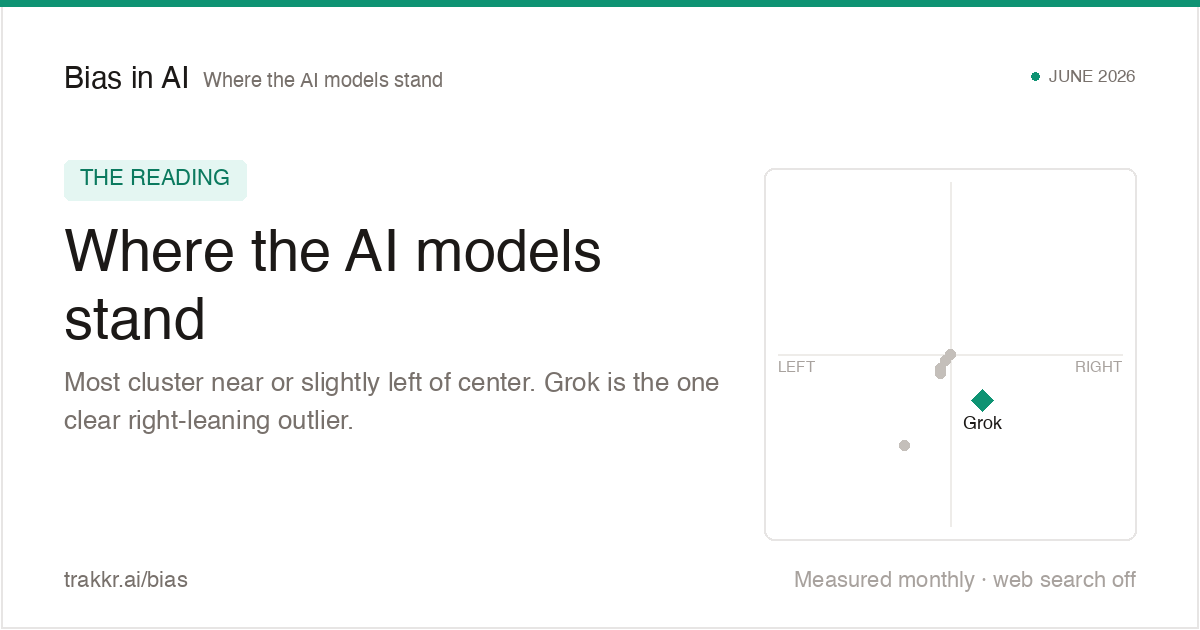
4,392 answers later: the AI political-bias map and the fight over the grader (trakkr.ai)

Trakkr ran six models through 61 political questions, twelve times each, web search and reasoning off to mimic the consumer default. A classifier scores every answer -1 to +1, a rival-lab judge re-scores a sample. Gemini lands neutral, ChatGPT at -0.29, Grok at +0.21.

The creator turned up to defend the grading against the core objection: you're measuring the gap between the model and whoever wrote the rubric. The sharpest catch was about pixels: grey lines drag Grok's logo rightward, hiding that ChatGPT sits further left than Grok sits right.

🔥Hot Discussion ★ 125 · 💬 241 · Jun 26 · #AI#data#policy#ChatGPT#Claude#DeepSeek+3

Anthropic locked away Mythos as too dangerous. A hobbyist benchmark says: maybe (swelljoe.com)

Anthropic pulled Mythos and Fable, calling the security-research model too dangerous to ship. A developer rebuilt the test from the nine bugs Anthropic credited it with, then turned a dozen rival models loose on the same code with no hint of what to find.

The headline isn't the frontier. The best public models top out at 4 of 9 bugs, and the cheap Chinese ones (MiMo, DeepSeek) match Opus 4.8 at a tenth the price. The thread's own users say Fable felt like a real step up, while others call it a token furnace.

A tool asks 14 LLMs who you are. Most invent someone who never existed (intheweights.com)

Show HN "Are You in the Weights?" fires your name at a dozen-plus models, from Llama 3.2 1B to GPT-5.5, and grades how 'memorized' you are with a strength score and a 'Top N%' rank. The replies read like funhouse mirrors: people with a genuinely unique name still got fake biographies, fake sports careers, fake crimes.

Then a privacy warning surfaced: every name typed in lands on a public 'latest' leaderboard that paginates endlessly. And one quiet question nobody answered: what does being in the weights mean for the right to be forgotten?

🌍Other ★ 334 · 💬 185 · Jun 19 · #AI#privacy#DeepSeek#Gemini#GPT-5.5+2

GLM-5.2 tops open-weights at 51 on the Intelligence Index — and burns 43k tokens to get there (artificialanalysis.ai)

Z.ai's GLM-5.2 (744B total, 40B active) is now the top open-weights model on Artificial Analysis at 51, ahead of DeepSeek V4 Pro and Kimi K2.6, and it scored 1524 on one benchmark versus GPT-5.5's 1514.

The catch is verbosity: 43k tokens per task, 37k of it reasoning. One tester clocked 15 minutes and 45k tokens before the first file appeared. Sibylline's chief scientist still recommends it — pair GLM for writing with a cheap GPT sub for review, and you've got near-Opus output at a fraction of the price.

US approved DeepSeek for its trade blacklist, then sat on it for eight months (reuters.com)

The case against the firms is built and approved. What's missing is a signature: the Commerce Department's Entity List hasn't been touched since October 2025, and an under secretary has spent months avoiding new listings to keep US-China talks from souring.

Anthropic's claim that DeepSeek ran a campaign to 'illicitly extract' Claude's capabilities became the thread's flashpoint. One reader's reply: by that logic, every model learned to introduce itself as a competitor — and he had the screenshots.

🚀Tech ★ 355 · 💬 383 · Jun 18 · #AI#policy#security#Anthropic#Claude#CXMT+2

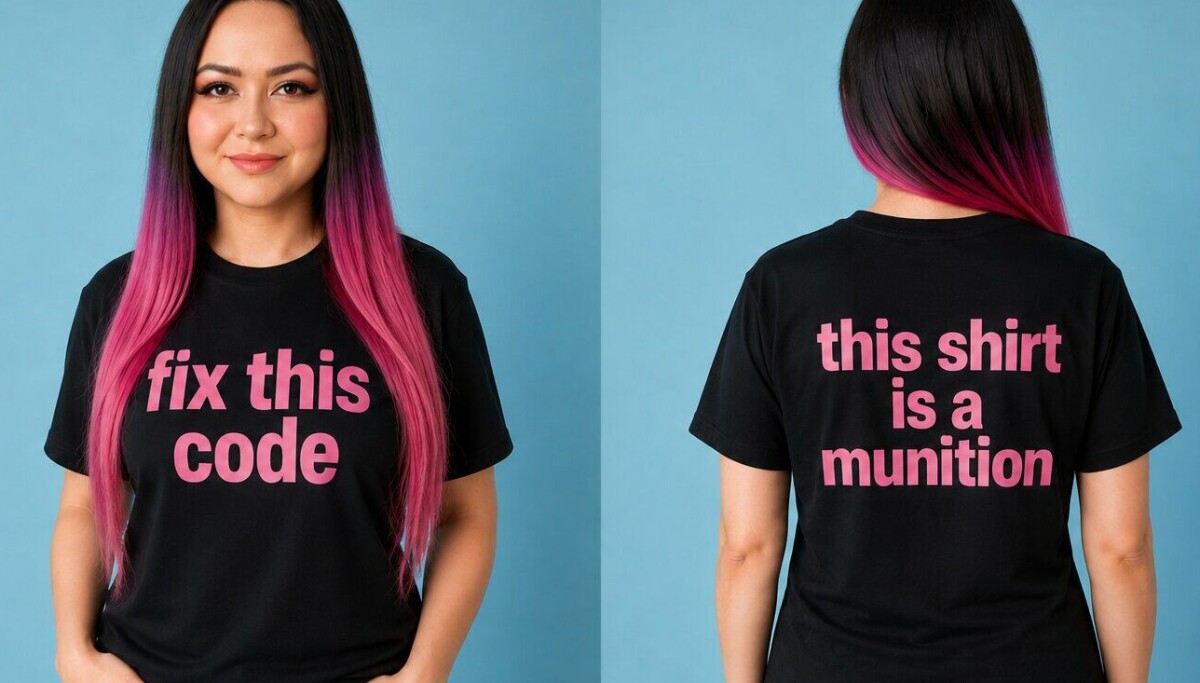
The Fable 5 'jailbreak' that triggered an export ban was just 'fix this code' (theregister.com)

Researchers fed Fable 5 open-source code seeded with known CVEs. It declined to enumerate flaws but agreed to patch them — and the patches plus test scripts revealed the exploits anyway.

Katie Moussouris, founder of Luta Security, says that was the whole technique. The Trinkets: an export-control directive barring access by any foreign national, and Anthropic disabling the models for everyone.

🚀Tech ★ 546 · 💬 322 · Jun 17 · #AI#policy#security#Anthropic#DeepSeek#Fable 5+2

Ask HN: has anyone really replaced Claude/GPT with a local model for daily coding? (news.ycombinator.com)

The closest anyone gets: GLM and Qwen run agentically on self-hosted boxes and feel near Haiku, but the thread's experienced voices agree none of them reach Opus 4.8 or GPT 5.5 for real work.

The most-upvoted reply isn't an answer, it's a complaint about the genre: 'I use Qwen and get great results' tells you nothing without the quantization, llama parameters, context window, GPU and VRAM behind it.

💬Ask HN ★ 694 · 💬 338 · Jun 16 · #AI#dev tools#hardware#Claude#DeepSeek#GLM+2

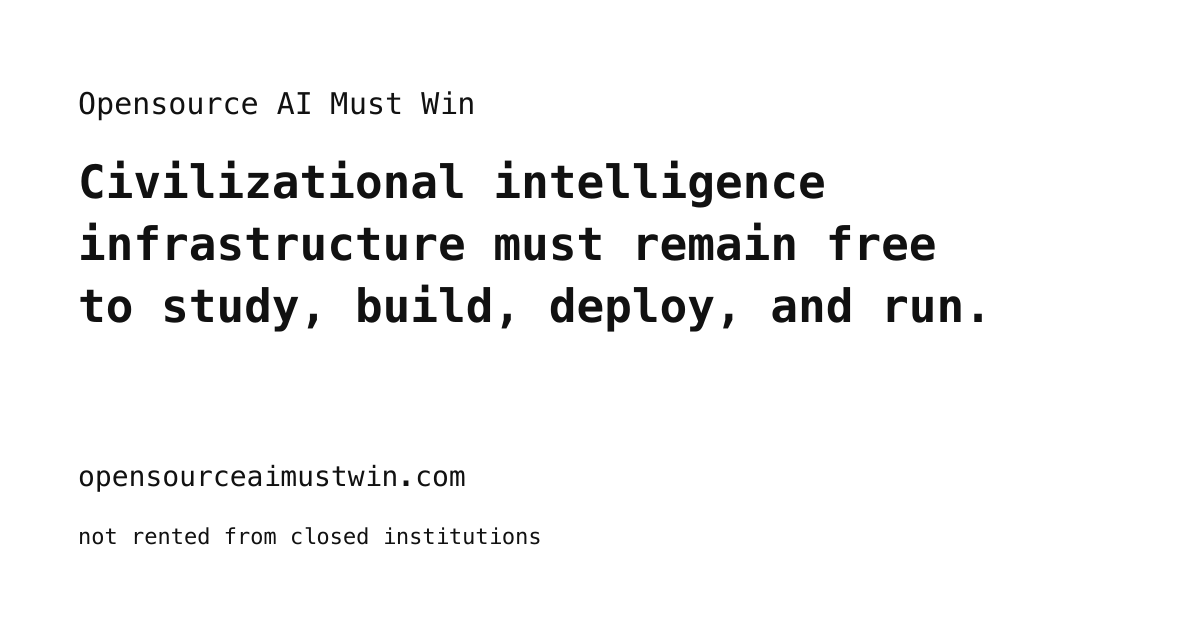
A one-page manifesto says open AI must win. The thread asks: win what, paid by whom? (opensourceaimustwin.com)

The pitch landed on raw nerves the weekend a government switched off a frontier model: keep AI usable, auditable, locally deployable, community-governed, or live inside a subscription economy for cognition.

Readers who share the sentiment took apart the words. If a model runs on hardware you don't control, one developer asked, in what sense is it open — and who funds the next training run when 'open' means nobody charges?

A guide to 'AI coding without going broke' gets schooled by people who go broke far slower (stephen.bochinski.dev)

One reader running a local Gemma and Qwen setup on a GPU-less box says he does plenty of AI coding for almost nothing; another shipped three client apps this month on 15 cents of DeepSeek API.

The real economics the thread surfaces is blunter: there's no point running local models while VCs subsidize frontier subscriptions to absurd token ceilings. 'Going broke' is mostly self-inflicted by long, unmanaged sessions.

An AI one-shotted a herding game in 45 minutes. The thread found it on the Game Boy Advance (koenvangilst.nl)

He frames it as an 'idea I've had for years' finally built in one go. Readers were unconvinced on both counts: the genre is decades old and surely in the training data, and someone reproduced it free in a DeepSeek chat.

One reader actually played it and itemized the bugs — broken pathfinding, forced landscape, controls that bark when you mean to move. The clickbait title, not the game, is what put it on the front page.

He hit 72 tokens/sec coding locally on a MacBook. The thread asked: why not just use Ollama? (ikyle.me)

The guide wires up an offline coding agent on a 64GB M1 Max: llama.cpp built with Metal, Gemma 4 in Q4, and a Multi-Token Prediction draft model that lifts generation from 58 to 72 tokens/sec.

The thread's sharpest critique wasn't the setup but the metric: every local-AI post benchmarks tokens per second, none benchmark answer quality. 'Quickly serving me slop doesn't make it more useful.'

Xiaomi open-sourced a coding agent that beats Claude Code — by forking the tool everyone else uses (mimo.xiaomi.com)

MiMo Code ships under MIT with free access to Xiaomi's MiMo-V2.5 model, adding persistent memory, subagent orchestration and a "dream/distill" self-improvement loop on top of OpenCode's TUI and plugins.

"Why not just contribute to OpenCode instead of creating a clone?" asked one commenter. A user who actually ran it answered sideways: it's genuinely fast and pleasant — and the headline model is geofenced and pricier than DeepSeek.