Tag

Meta

27 stories

ChatGPT keeps sending locked-out users to 404 Media, and writes their emails (404media.co)

404 Media says it is inundated with AI-written emails from people with ordinary tech problems. After it began asking senders how they found it, every one it asked said a chatbot recommended contacting it.

ChatGPT, asked how to recover a banned Instagram account, concluded that emailing Meta was probably hopeless.
🌍Other ★ 219 · 💬 82 · yesterday · #AI#social media#404 Media#ChatGPT#Instagram+2

Not just a headline — the discussion unpacked

The top HN threads: facts from the discussions, both sides, insider voices. Email, Telegram, or RSS.

Brazil's electoral court has fined Meta daily. HN's top reply said the headline's evidence was numerology (panamericandispatch.org)

Brazil's electoral court ordered Meta to apply identical criteria to both campaigns, with a fine of R$500,000 a day. Watchdog groups filed new screenshots as evidence.

The thread split the exhibits into laughable ones and one that a commenter said was real.

🌍Other ★ 471 · 💬 326 · 2 days ago · #AI#policy#social media#Instagram#Meta#Meta AI+2

Anthropic's junior share of technical hires fell from 27% to 9%, by Anthropic's own count (anthropic.com)

Anthropic's report says agents logged six hours of work for every human hour by August, and juniors fell from 27% to 9% of technical hires. Its revenue per employee was 2 to 4 times Meta's and Google's at the same age.

Hacker News mostly distrusted the messenger: the report 'would say that', and one reader pointed out that every line of code is a liability, not a trophy.

📈Biz ★ 108 · 💬 191 · Oct 19 · #AI#big tech#economy#Anthropic#Claude#Google+1

Meta's open-weight Muse Spark has 816B parameters. Two Mac Studios can run it (research.meta.ai)

Meta released Muse Spark Open on October 15 as downloadable weights: 816 billion parameters, 42 billion active per token, a 1M-token context window, under a Muse Model License with limited commercial terms. The benchmark section is empty, and the full evaluation report is "available soon".

🚀Tech ★ 787 · 💬 393 · Oct 16 · #AI#big tech#hardware#Apple#Hugging Face#Meta+1

Big Tech's Hidden AI Debt Hit $1.65 Trillion. It's Completely Legal. (asia.nikkei.com)

A Nikkei investigation puts five US tech giants' off-balance-sheet AI debt at $1.65 trillion, an eightfold jump in four years that now tops the $1.35 trillion they report outright, mostly through data-center leases and GPU deals that never touch a debt line.

On HN, the fight moved past the number to who eats the loss if AI demand disappoints: one reply blamed the banks; a sharper reply said the real exposure sits with private credit funds most readers have never heard of.

📈Biz ★ 355 · 💬 247 · Jul 22 · #AI#big tech#markets#Alphabet#Amazon#Meta+3

Meta calls its DOE lab AI open source. The license says otherwise. (ai.meta.com)

Two Meta vision models do the labeling: DINOv3 finds the structures, SAM 3 draws the pixel-precise boundaries around them, running across roughly 300 GPUs inside the DOE's Genesis Mission science program.

Meta's post calls the pipeline open source. A commenter who read the actual SAM 3 license found it bans reverse engineering and any weapons-related use, oddly restrictive wording for a federally funded lab.

Nvidia's $2 Billion Stake Covers Just 6% of CoreWeave's GPU Spending (io-fund.com)

CoreWeave's first-quarter free cash flow came in at negative $4.71 billion even as revenue more than doubled. To close the gap, it raised $3.5 billion in new debt this week alone, on top of $24.86 billion already owed, with interest payments now eating over a quarter of revenue.

One HN reader ran the actual math: Nvidia's investment is only 5.7% of CoreWeave's yearly GPU budget, making it "hardly circular." The real story, he argued, is who is financing the other 94% and what happens when Treasury yields keep climbing.

📈Biz ★ 314 · 💬 128 · Jul 12 · #AI#big tech#markets#CoreWeave#Meta#Microsoft+2

Rejecting Chat Control now needs 361 EU votes. Passing it needs a simple majority (heise.de)

Chat Control 1.0 expired in April after Parliament rejected it. It is back because a rejected bill doesn't clear the agenda: the problem the government wanted solved is still 'a priority,' so the same text returns with new procedural parameters.

One developer-activist's blunt reframe: chats on Meta, Google and Microsoft were never private anyway, as Snowden showed, so the real move is leaving those platforms rather than petitioning Strasbourg.

Meta's own teen-engagement decks, not the $1.4T headline, are the real case (the-independent.com)

The Independent hangs a trillion-dollar-plus price tag on the case — a number almost no one in the thread believes will survive a courtroom. What they can't wave away is the paperwork underneath it.

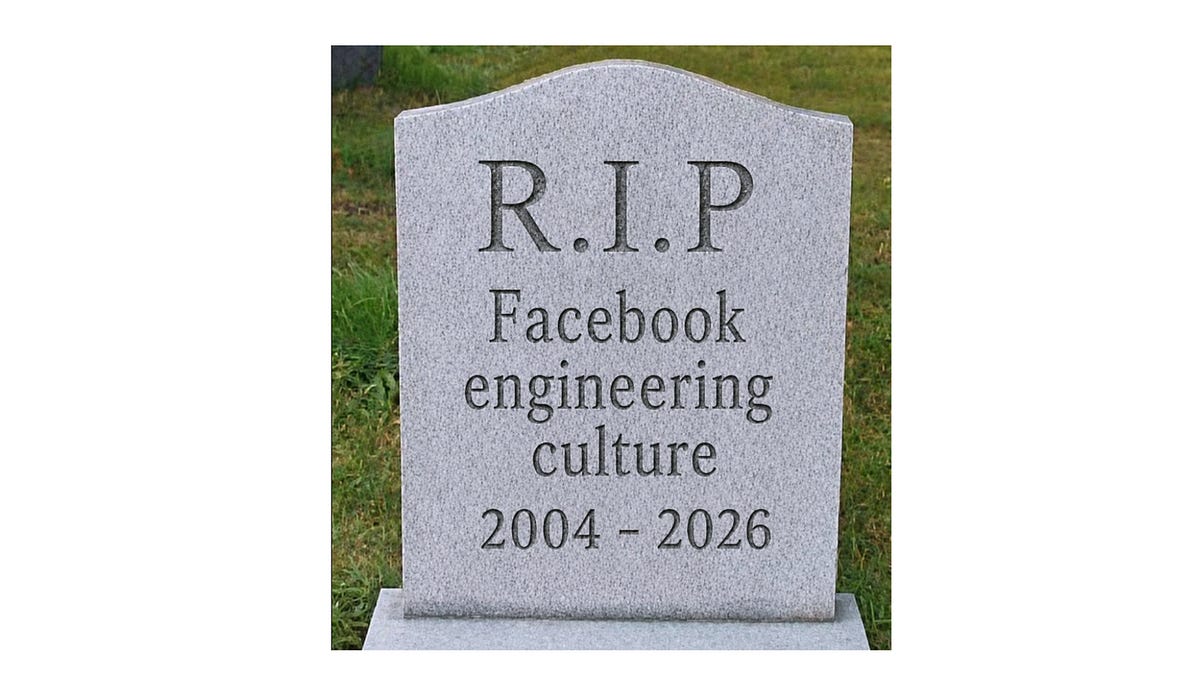
A Facebook engineer who worked on the relevant team from 2017 to 2019 says the cited documents are real, and that safety projects with evidence behind them were 'cancelled or turned backwards to maximize harm' whenever they cut into Time Spent.

A rare bacterium in Cheyenne's water halted Meta's data-center discharges (tomshardware.com)

A rare metal-resistant bacterium, Cupriavidus gilardii, turned up in Cheyenne's reclaimed water. The city traced it to Goat Systems LLC, the contractor building Meta's data-center campus, and suspended the plant's fill-and-flush and closed-loop discharges.

Officials say it isn't a drinking-water emergency. A former microbiologist in the thread calls the find routine; others map how even 'closed-loop' cooling still breeds bacteria that force these purges.

A viral post says Zuckerberg 'admitted' the AI layoffs failed. Ex-Meta engineers say the quote doesn't say that (eshumarneedi.com)

The piece argues Meta runs on 'vibes-based management,' reading Zuckerberg's line that agentic-dev progress 'hasn't really accelerated in the way we expected' as proof the AI-driven layoffs were a blunder — and claims AI chief Alexandr Wang was put 'in charge of the entire company.'

Ex-Meta engineers in the thread call it a shallow, sensationalized wrapper of a Reuters report: the quote doesn't support the headline, and the Wang claim is unsupported.

Meta Kills Its Token Leaderboard After Staff Burn 73.7 Trillion in a Month (mlq.ai)

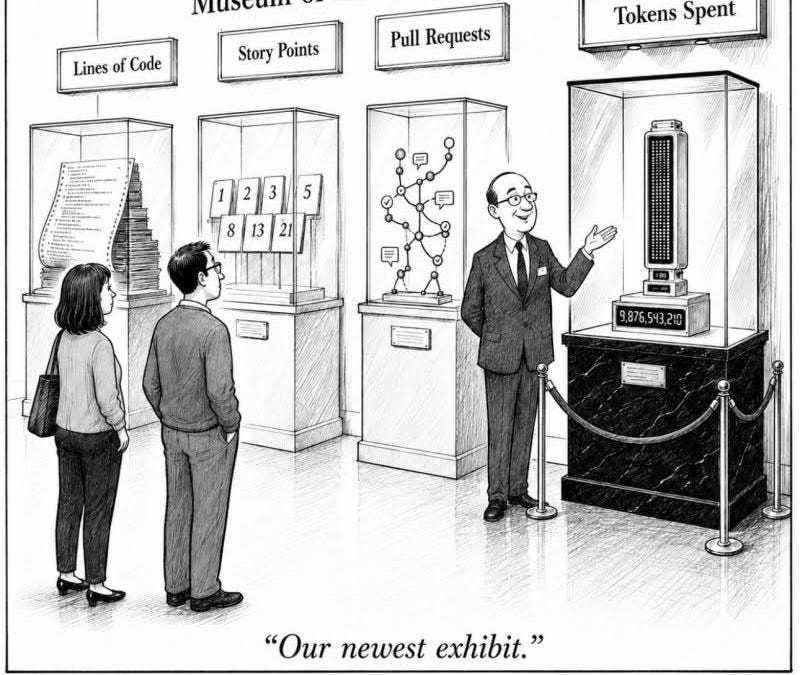
Meta employees burned 73.7 trillion tokens in roughly a month, putting the company on track for billions in 2026 AI costs. An internal leaderboard nicknamed Claudeonomics had turned raw token consumption into a staff ranking.

Meta is scrapping the board and pushing devs toward its own MetaCode, with formal budgets due in 2027. The thread's twist: one commenter says the leaderboard was never a mandate but a rogue side project some engineer built for fun.

Judge lets 29 states take Meta to trial over child addiction claims (reuters.com)

U.S. District Judge Yvonne Gonzalez Rogers refused to throw out 29 states' claims that Meta engineered Facebook and Instagram to hook kids, and she granted the states summary judgment on Meta's failure to obtain parental consent under COPPA.

A 38-page ruling sends the addiction question to a jury, with trial on August 18. On HN the reaction runs from calls for case law to a skeptic who reads it as the government seeing dollar signs and blaming Meta for users' own choices.

🌍Other ★ 165 · 💬 76 · Jul 2 · #policy#social media#COPPA#Facebook#Instagram+2

County with 37 data centers tells schools to 'conserve electricity' as rates jump 25% (404media.co)

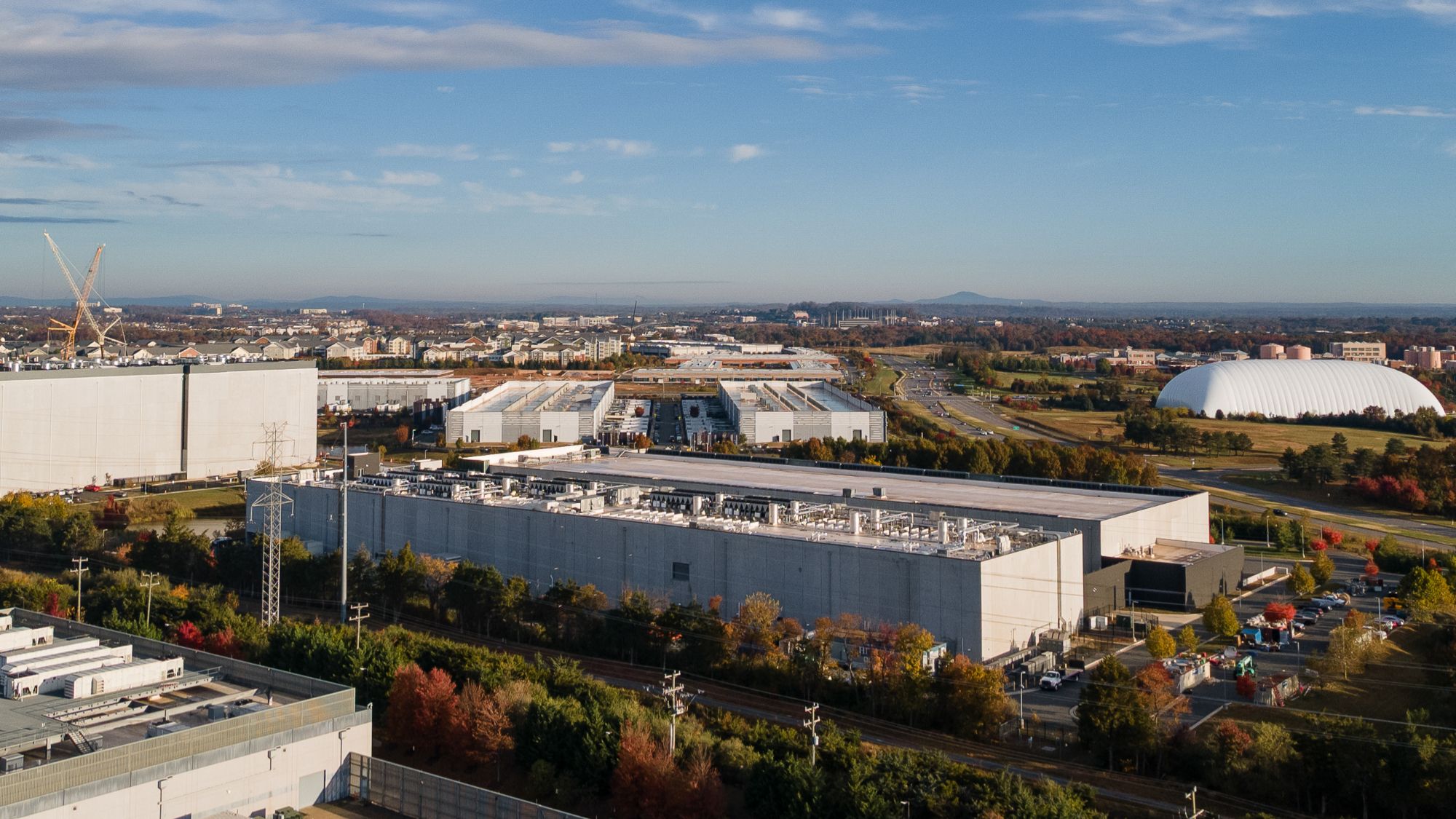
Henrico County's manager emailed thousands of staff that power for all county and school buildings would rise 25% on July 1, about $5 million more a year, and urged them to conserve. The county hosts 37 data centers with plans for 17 more, some on Civil War battlefields.

The thread refused the easy villain. A Berkeley Lab analysis, cited in the thread, pins most of Virginia's rate rise on the state's 2020 clean-energy mandate, not the data centers. Another noted the email went to all government buildings; only 'schools' hit the headline.

Apollo says the Mag 7 is cracking. The thread says: one month proves nothing (apollo.com)

Apollo's chief economist published a deck claiming the Magnificent Seven are starting to underperform, with AI capex projected to balloon roughly 70% past $700B this year while shareholders see no return. A Google staff engineer in the thread flagged the real bombshell on page 25: 60% more US data centers are now planned or under construction.

The catch: half the room called the headline a chart crime. 'You can't draw any conclusions from one month of market data,' one ETF specialist wrote, especially with a giant IPO distorting the window.

Instagram is dropping users' own photos into ads for Meta's smart glasses (twitter.com)

A widely shared post claims Instagram is now inserting users' own photos into ads for Meta's smart glasses, with the caption 'the era of ultra personalized ads has begun.' The reaction on HN was less alarm than fatigue.

One reader dug up Facebook's 2013 terms granting exactly this permission, name, photo and content for sponsored use, with no compensation. As another put it: ten years ago this caused outrage; in 2026 nobody, including potential customers, seems to care.

Meta tied performance reviews to token spend. Engineers ran two agents to chat all day (12gramsofcarbon.com)

An essay argues tokenmaxxing died only because subsidized tokens got pricier, and that a coming shift it calls 'compounding correctness' — where spending more tokens reliably buys better answers — will resurrect it on cheaper open models.

The thread, full of people who sat in the VP meetings, was having none of the charitable read: one called it 'a moronic move fueled by hype', another reported being told to approve PRs without reading them.

Google 'limits' Meta's Gemini use, but the limit is that it ran out of capacity (cnbc.com)

Around March, Google told Meta it couldn't supply the full Gemini capacity Meta had tried to purchase, delaying some of Meta's internal AI work. Meta then asked staff to be more efficient with tokens. Other Google Cloud clients were squeezed too.

The thread's flip: this isn't Google restricting a rival's access, it's a compute shortage dressed as a restriction. And the buried oddity is Meta, which builds Llama, leaning on a competitor's model in the first place.

Meta's arbitrator fined a whistleblower $50,000 per criticism. She responded by sitting silent on stage for an hour (pluralistic.net)

After her memoir, a Meta-paid arbitrator ordered Wynn-Williams to stop promoting it at $50,000 per criticism — over $11 million, more than she and her husband have earned in their lives. So at a UK festival she sat on stage for an hour and said nothing.

Cory Doctorow frames it as a Streisand-effect self-own. The thread's skeptics aren't defending Meta so much as noting his essay never once mentions Meta's side — that she signed an NDA, took severance, and that he overstates the China claim.

Meta sent staff to photograph a former exec at a literary festival. Now there's a lawsuit and a docket to read (fortune.com)

Wynn-Williams' new federal suit alleges Meta surveilled her for over a year, sending people to her public appearances to photograph her, while seeking $50,000 per claimed breach of a non-disparagement deal.

Meta says she's using the courts to sell books. The thread's skeptics agree she signed an NDA and took severance a decade ago. The counter is harder to dismiss: a company that pays staff to photograph a critic who says nothing is doing exactly what she accuses it of.

Imaging a living brain through the skull with ultrasound and a cloud of microbubbles (alephneuro.com)

The technique injects sparse, FDA-approved sulfur-hexafluoride microbubbles and uses their isolated blur to localize each one far below the diffraction limit — building a vascular map 100x finer by volume than CT, then decoding neural activity from blood flow.

The expert pushback is blunt: a neuroscientist cites papers that even low-dose ultrasound disrupts myelination, and an ultrasound-device engineer asks the question the post never answers — how does it see through bone at all?

🚀Tech ★ 244 · 💬 99 · Jun 27 · #AI#health#science#Aleph#Meta#MRI

LeCun: serving one $200/mo power user costs about $15,000 (techstrong.ai)

LeCun's economic punchline: today's subscriptions don't cover their own compute, and he wants a diversity of AI systems "for the same reason we need a high diversity of the press."

The thread's flip is hardware, not weights. You can't have open-source AI, one widely-read commenter argues, without open hardware specs and manufacturing. Another asks the unglamorous question: can most of the world afford the machine to run any of it?

A Manifesto Says Refuse Face Scans Because You Can't Change Your Face (nevergivethemyourface.com)

The site separates age verification (a yes/no) from identity verification, and urges mass non-compliance to deny the schemes their needed cooperation. The flip: a commenter notes 50,000 departures out of 2 billion users is a rounding error, so the leverage simply isn't there.

Meta orders eight reactors that don't exist yet, delivery promised by 2032 (neutronbytes.com)

Bill Gates's TerraPower signed a deal with Meta for up to eight Natrium reactors, 345 MW each, up to 2.8 GW baseload and 4 GW with storage, first units 'as early as 2032'. The catch: the demonstration plant in Kemmerer, Wyoming isn't running yet.

The Natrium design is sodium-cooled with a molten-salt heat battery that peaks at 500 MW for five hours. Skeptics in the thread flagged that a 690 MW '24/7/365' figure is being advertised for a reactor with zero operating history.

Meta moved up to half its core engineers to data labeling and RLHF (newsletter.pragmaticengineer.com)

An estimated 4,000-5,000 software engineers, out of about 25,000, now sit in a new 6,500-person org doing data labeling and RLHF. The autonomy-to-labeler whiplash is the part people on core infra and security teams can't stomach.

Add keystroke and mouse tracking with no opt-out, rolled out in late April, and a CISO who resigned the day after an AI support flow let attackers hijack Instagram accounts.

The flip: a former Meta engineer says the well-run orgs were all acquired — the homegrown ones were always the mess.

The UK wants under-16s off social media. Every engineer in the thread asks the same thing: how (manchestereveningnews.co.uk)

Britain is moving toward an age threshold of 16 for social media, built on the Online Safety Act that already lets Ofcom fine platforms. Australia switched on its own under-16 ban in December 2025, so the UK has a live precedent to copy.

The catch is mechanical: 'highly effective age assurance' means face-scan estimation or photo-ID at sign-up. As one games-industry engineer put it, the IDs don't go to the government, they go to verification vendors like Persona and Yoti, who then confirm to Meta and ByteDance exactly who you are.