Tag

Kimi K3

7 stories

A Swedish AI host says the same request emits 8.5 times more CO2 in Texas than in Sweden (berget.ai)

The figures come from an open-source per-request method that Berget AI built with SEI, WattTime and Klimatkollen, for a 5,000-token-in, 387-token-out request on a B300 node. Energy use is about 4 Wh in both places.

The company notes that an embargoed version had overstated the gap, and the final numbers were revised down after a grid-intensity correction.
🚀Tech ★ 140 · 💬 154 · 4 days ago · #AI#energy#hardware#Berget AI#Kimi K3#SEI+1

Not just a headline — the discussion unpacked

The top HN threads: facts from the discussions, both sides, insider voices. Email, Telegram, or RSS.

Open-weight AI needs more than weights to get its Kubernetes moment (tobi.knaup.me)

Tobi Knaup argues that capable open-weight models are becoming platforms rather than merely self-hosted alternatives. The emerging stack already includes vLLM, SGLang, llama.cpp, Ollama, MLX, fine-tunes, adapters, and deployment tooling.

HN readers liked the interoperability argument but challenged the analogy’s missing ingredient: frontier model training demands capital on a scale that open-source software never did.

🚀Tech ★ 312 · 💬 254 · Jul 26 · #AI#open source#policy#GLM 5.2#Kimi K3#Kubernetes+2

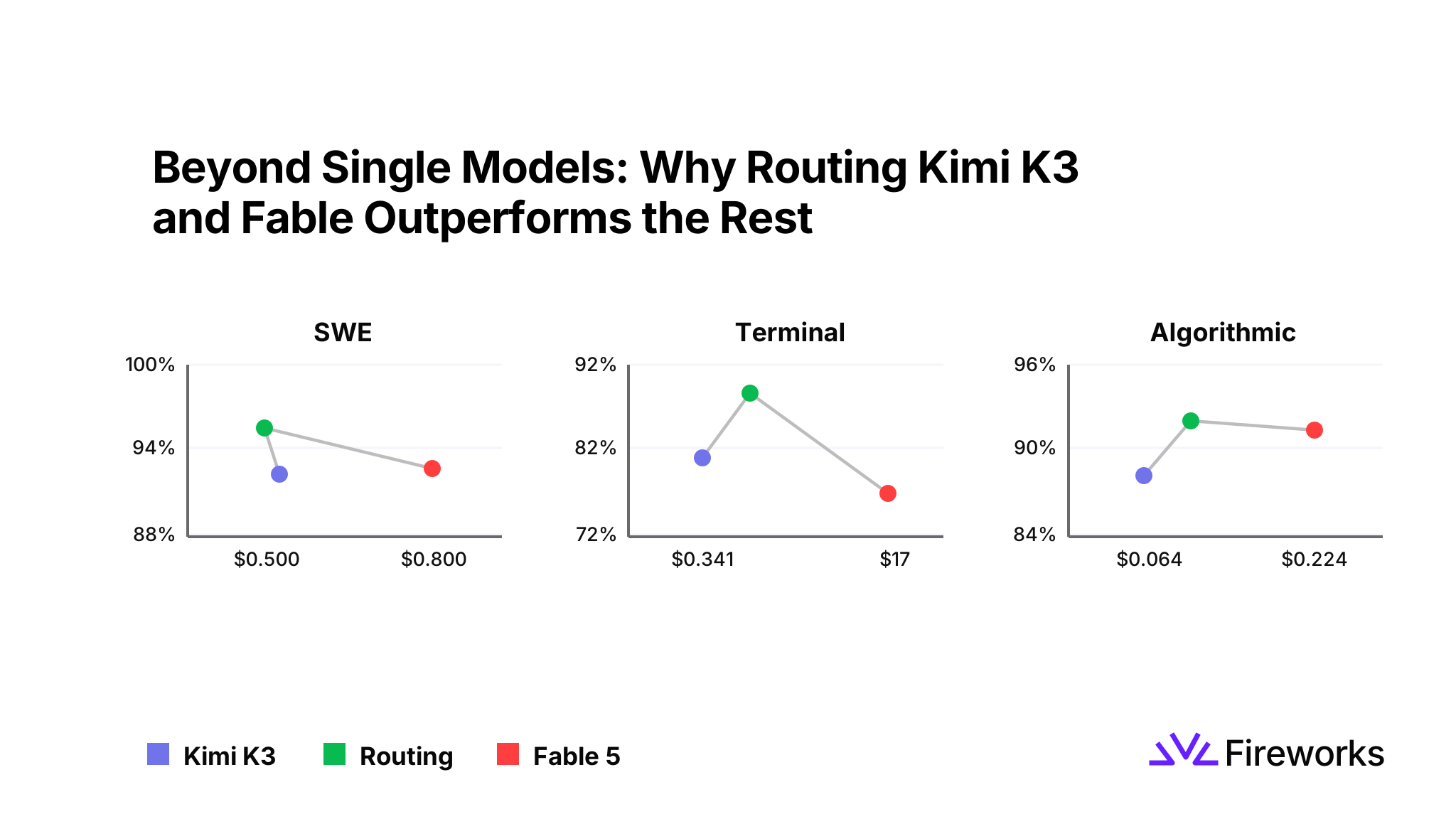
Fireworks Says Its Router Sent 96% of Tasks to Kimi K3, Not Fable (fireworks.ai)

That simulated router sent the bulk of 1,030 real coding, legal and terminal tasks to Kimi K3, up to 96% in one category, cutting Fireworks' own bill by as much as 50x versus running Fable alone on the same work.

A regular Fireworks customer in the thread went further, accusing the company of inflating its own throughput numbers by 50-100% elsewhere, and pointing out that the router this whole post is built around isn't a product anyone can actually buy yet.

A tiny 118B open model just outscored DeepSeek's 1.6-trillion-parameter giant at coding (poolside.ai)

On Terminal-Bench 2.1, Laguna S 2.1 scores 70.2%, ahead of DeepSeek-V4-Pro-Max's 64% at roughly a fourteenth of the parameter count. Poolside built it in under nine weeks and prices it at 10 cents per million input tokens on OpenRouter, weights open in BF16, FP8, INT4, and GGUF.

The catch surfaced on Hacker News fast: several deployment recipes ship with "thinking" switched off by default, and without it the numbers don't reproduce locally — one tester said the model looked mediocre until he forced the flag on himself.

Anthropic's Product Chief Quit Figma's Board Days Before a Rival Launch (emergingtrajectories.com)

The essay under discussion ranks Anthropic as the most exposed frontier lab of all: it rents every data center and power plant it uses, and Fable costs nearly three times as much per completed task as OpenAI's models do, according to the Artificial Analysis benchmarks it cites.

The sharpest pushback on HN wasn't about that cost math — it was that Anthropic's own scramble for a product moat is what blew up the Figma partnership in the first place.

Kimi K3 charges $3 per million tokens; Thompson says that's not the risk (stratechery.com)

Ben Thompson's essay argues Chinese AI panic is overblown: Moonshot's Kimi K3 prices tokens at $3/$15 per million against a frontier rival's $5/$30, evidence he reads as intelligence turning into a plain commodity, not a security crisis.

One reader who benchmarked roughly 50 models for a real production system found the opposite: frontier models were far more token-efficient than open-weight ones, even scoring worse on raw accuracy — the number Thompson's argument never cites.