Tag

Ollama

6 stories

Show HN: Qwen3-4B fine-tuned to drop em dashes cut its 'slop score' from 121 to 12.5 (100toolkit.com)

Erik Markus Kannike released qwen3-4b-deslop-v4, which needs no system prompt. On 40 held-out prompts, em dashes fell from 20.5 to zero and 68% of answers landed in human-writing range.

Commenters found it still reads as AI, and one asked why anyone would want that.

Not just a headline — the discussion unpacked

The top HN threads: facts from the discussions, both sides, insider voices. Email, Telegram, or RSS.

Open-weight AI needs more than weights to get its Kubernetes moment (tobi.knaup.me)

Tobi Knaup argues that capable open-weight models are becoming platforms rather than merely self-hosted alternatives. The emerging stack already includes vLLM, SGLang, llama.cpp, Ollama, MLX, fine-tunes, adapters, and deployment tooling.

HN readers liked the interoperability argument but challenged the analogy’s missing ingredient: frontier model training demands capital on a scale that open-source software never did.

🚀Tech ★ 312 · 💬 254 · Jul 26 · #AI#open source#policy#GLM 5.2#Kimi K3#Kubernetes+2

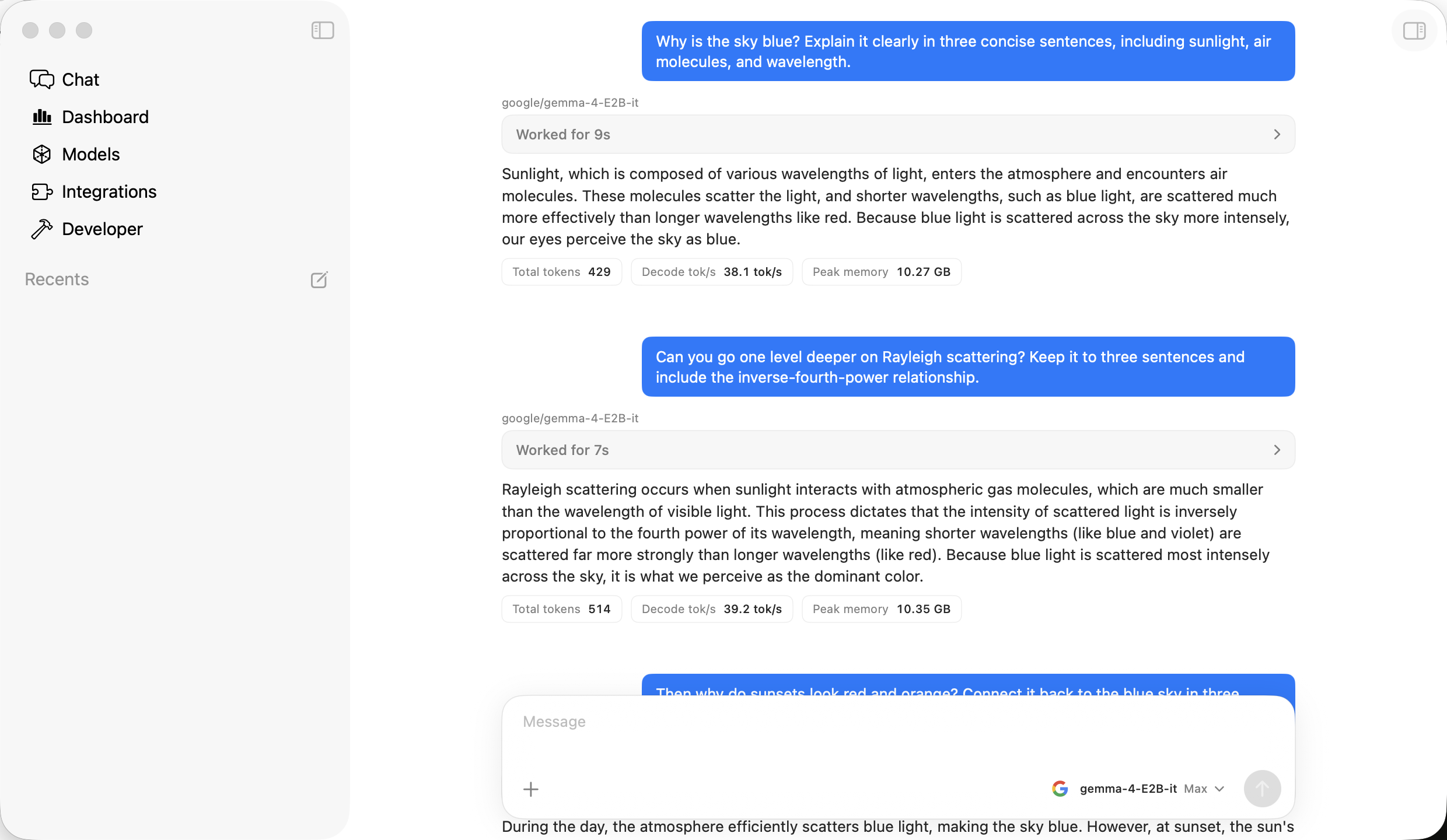
An app named 'Nativ' for native Mac AI ships with a bundled Python runtime (blaizzy.github.io)

The three flagship models are small by frontier standards: Google's Gemma 4 E2B (10.28 GB, 128K context), Cohere's North Mini Code (19.38 GB, 500K context) and Liquid AI's LFM2.5-VL (3.2 GB) — all sized to run comfortably on a single MacBook.

Not everyone bought the pitch: one reader questioned whether 'frontier' still means anything at this size, and another couldn't say what Nativ does that LM Studio and Open WebUI don't already do today.

🚀Tech ★ 184 · 💬 71 · Jul 21 · #AI#dev tools#open source#MLX-VLM#Nativ#Ollama+1

Ask HN: has anyone really replaced Claude/GPT with a local model for daily coding? (news.ycombinator.com)

The closest anyone gets: GLM and Qwen run agentically on self-hosted boxes and feel near Haiku, but the thread's experienced voices agree none of them reach Opus 4.8 or GPT 5.5 for real work.

The most-upvoted reply isn't an answer, it's a complaint about the genre: 'I use Qwen and get great results' tells you nothing without the quantization, llama parameters, context window, GPU and VRAM behind it.

💬Ask HN ★ 694 · 💬 338 · Jun 16 · #AI#dev tools#hardware#Claude#DeepSeek#GLM+2

A guide to 'AI coding without going broke' gets schooled by people who go broke far slower (stephen.bochinski.dev)

One reader running a local Gemma and Qwen setup on a GPU-less box says he does plenty of AI coding for almost nothing; another shipped three client apps this month on 15 cents of DeepSeek API.

The real economics the thread surfaces is blunter: there's no point running local models while VCs subsidize frontier subscriptions to absurd token ceilings. 'Going broke' is mostly self-inflicted by long, unmanaged sessions.

He hit 72 tokens/sec coding locally on a MacBook. The thread asked: why not just use Ollama? (ikyle.me)

The guide wires up an offline coding agent on a 64GB M1 Max: llama.cpp built with Metal, Gemma 4 in Q4, and a Multi-Token Prediction draft model that lifts generation from 58 to 72 tokens/sec.

The thread's sharpest critique wasn't the setup but the metric: every local-AI post benchmarks tokens per second, none benchmark answer quality. 'Quickly serving me slop doesn't make it more useful.'