Auto-download daily
Issue · July 28, 2026

Top of Hacker News

6 stories of the day: AI, technology, business and simply interesting discussions — recapped and unpacked.

GitHub Trending: Today — Immich, Tailscale, microservices-demo, systematic trading, Awesome Lists (github.com)

In today’s GitHub Trending: Immich (self-hosted photo and video management), Tailscale (WireGuard networking), microservices-demo (a Kubernetes and Istio sample), awesome-systematic-trading (quant-trading resources), and Awesome Lists (SOC/CERT references).

The surprise is that the most useful entries are not competing products. They are working systems and maps of accumulated practice, where adoption depends on clarity, maintenance, and the limits the community has already found.

Not just a headline — the discussion unpacked

The top HN threads: facts from the discussions, both sides, insider voices. Email, Telegram, or RSS.

Anthropic says open weights need testing, HN hears a policy moat (anthropic.com)

Anthropic framed the question as a safety standard for capable models, not a closed-versus-open binary. Readers instead focused on the practical leverage hidden in a rule that only large, well-funded labs may be able to satisfy.

One recurring challenge was economic: if distillation can make comparable capability far cheaper to run, why should the compliance burden be set by the companies least exposed to that competition?

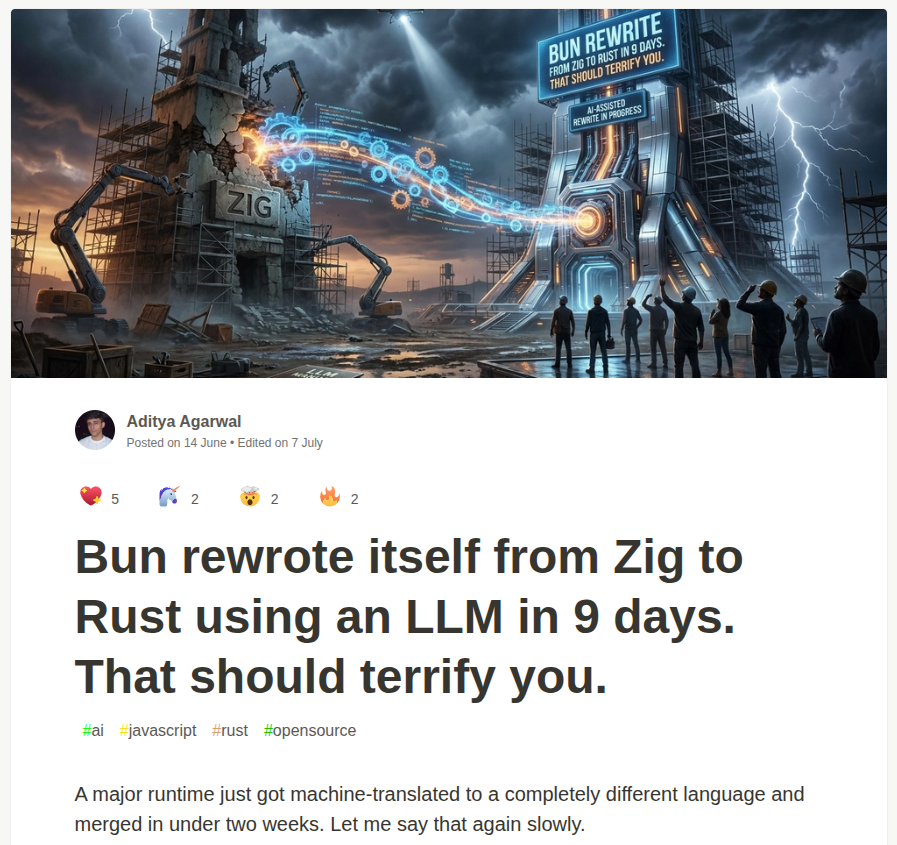
Bun’s Rust rewrite became an argument about what AI actually changed (lockwood.dev)

The source asks how the Bun rewrite is progressing; the thread answered with a more immediate story about AI doing narrowly scoped maintenance in the new codebase.

Some readers treated source-to-source rewriting as a familiar transformation. Others argued that passing integration tests is not enough evidence when an agent chose both the patch and its explanation.

🚀Tech ★ 454 · 💬 349 · Jul 28 · #AI#dev tools#programming#Bun#Rust

Google lost a scraping case, and HN noticed the historical irony (techdirt.com)

The ruling concerned Google’s attempt to stop scraping through a DMCA theory. Readers saw a narrower legal loss and a broader market signal about access to results after affordable official APIs have become scarce.

The thread’s strongest refrain was not that scraping is consequence-free. It was that restricting the interface while leaving demand intact invites exactly the intermediaries Google is suing.

📈Biz ★ 264 · 💬 103 · Jul 28 · #big tech#policy#web#DMCA#Google#SerpApi

Removing React meant relearning where an interface should live (misago-project.org)

The migration moved interactivity toward server-rendered HTML with htmx rather than a large client application. That trade changes the boundary of the system more than it changes a library name.

The useful question from the thread is not whether React is bad. It is whether the product really needs a client-side state architecture before it needs simpler operations.

🚀Tech ★ 231 · 💬 158 · Jul 28 · #dev tools#programming#web#htmx#Misago#React

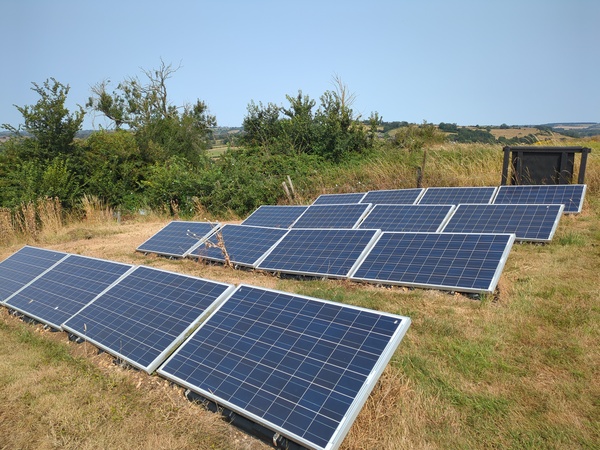
Solar-panel washing has a surprisingly strict burden of proof (incoherency.co.uk)

Panel washing sounds like preventive maintenance, but its value depends on local soiling, rainfall, output loss, cleaning cost, and the chance of damaging equipment or warranty terms.

The thread’s more useful instinct was to measure a before-and-after production difference first. A chore becomes an engineering decision once there is a baseline.

🌍Other ★ 226 · 💬 227 · Jul 28 · #energy#science#Solar Panels