Auto-download daily
Issue · June 23, 2026

Top of Hacker News

30 stories of the day: AI, technology, business and simply interesting discussions — recapped and unpacked.

Bungie found a damage-breaking bug in Destiny 2 — and left it in on purpose (store.steampowered.com)

Destiny 2 is Bungie's free-to-play online looter-shooter, where the whole point is grinding tough bosses for better gear. Right now those bosses melt in seconds, and the studio decided not to rush a fix.

The timing is bittersweet. It lands as veterans are already writing goodbye notes, and the free intro campaign that once hooked newcomers is gone. A great week to raid, a strange week to start.

Not just a headline — the discussion unpacked

The top HN threads: facts from the discussions, both sides, insider voices. Email, Telegram, or RSS.

Capcom played it safe with Resident Evil Requiem. Players love it anyway (store.steampowered.com)

Resident Evil Requiem is Capcom's latest survival-horror entry: scarce ammo, lurking monsters, and a slow-burn descent split between two playable leads, the newcomer Grace and series stalwart Leon.

Reviews are loud and not unanimous — rapturous on one side, a 'played it safe' shrug on the other. Either way, the positive verdicts keep stacking up and pulling in new buyers.

Last Epoch's players are revolting — and it's about money, not the game (store.steampowered.com)

Last Epoch is an action-RPG in the Diablo and Path of Exile mold: kill monsters, farm loot, rewire your build freely, and play fully offline if you want. The combat still earns praise.

What soured: players say the studio, after a buyout, walked back its monetization promises and pushed paid seasons while the single-player campaign sits unfinished. Trust is the casualty.

Sniper Elite: Resistance is selling again — but players attach one condition (store.steampowered.com)

Sniper Elite: Resistance is a stealth-sniping shooter set in occupied France, complete with the series' wince-inducing X-ray kill-cam that follows the bullet into bone.

The recurring verdict: it plays like a smaller expansion to the last game, not a fresh one. Worth it on a deep discount, a hard pass at full price.

Eight years on, Subnautica is back in Steam's top ranks — and still terrifying (store.steampowered.com)

Subnautica strands you alone on a water-world after a crash, with little more than a survival knife and a cramped escape pod. You craft, dive deeper, and try not to think about what's swimming beneath you.

No sale or patch obviously triggered the resurgence; the pull is the game's own reputation. The reward for diving past your fear is some of gaming's best underwater wonder.

Valve's $1,049 Steam Machine ships, and a salvaged mining box has more bandwidth (store.steampowered.com)

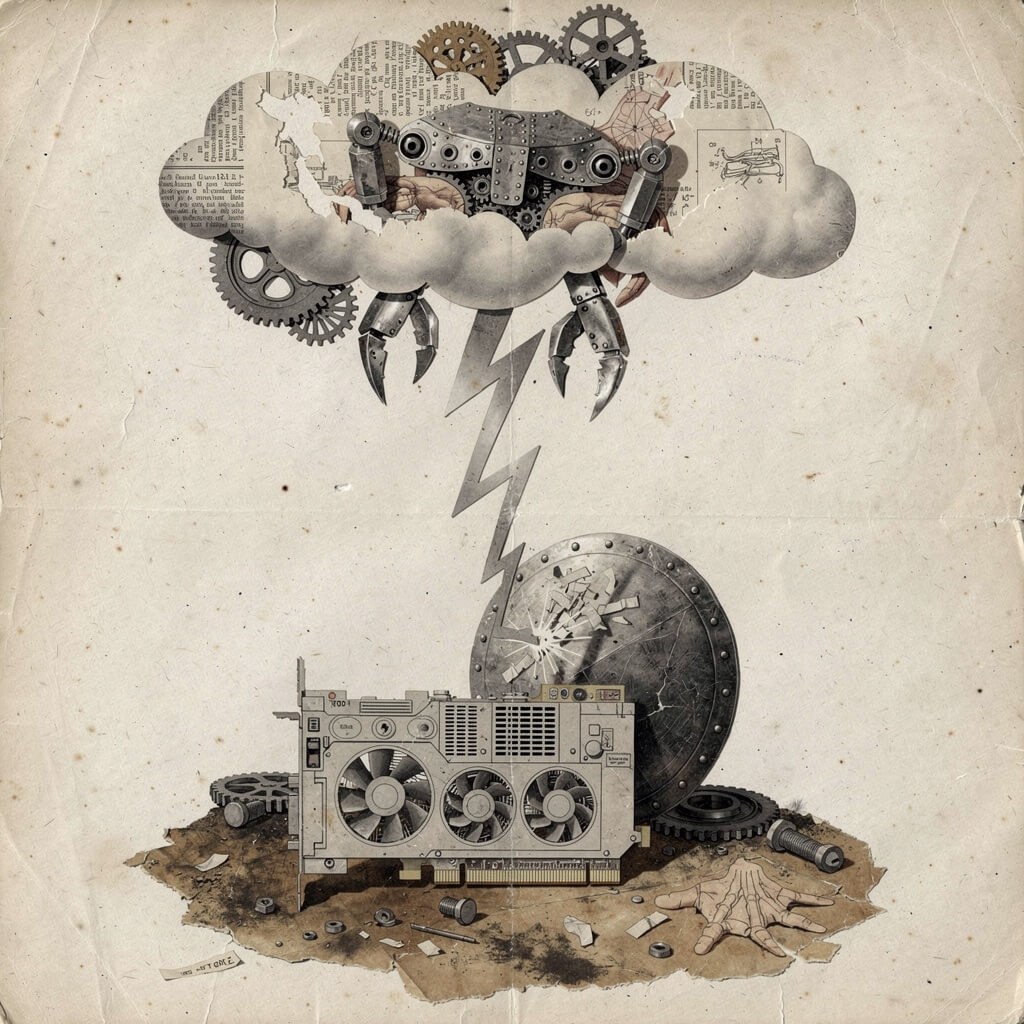
The Steam Machine runs a semi-custom 6nm AMD APU at ~288 GB/s memory bandwidth and ships with 1GbE networking; to dodge scalpers, Valve gates sales through a Switch-2-style reservation lottery that closes June 25. Owners of the BC-250, a salvaged AMD mining card turned SteamOS box, noted theirs clocks 448 GB/s and costs a fraction as much.

A $5 model coded a WebGL game in 70 minutes; Opus needed 33 (techstackups.com)

GLM-5.2, which costs about one-fifth of Opus and beats it on the AIME 2026 reasoning benchmark (99.2 vs 95.7), took 1h10m and produced a buggy game; Opus finished in 33m30s. The split: GLM-5.2 is text-only and fell back to reading raw pixel data to check its work, while Opus could visually verify its own output. A top reply called one-shot game-building a test of the wrong thing entirely.

OpenAI's Codex quietly wrote 640 TB a year to your local SSD (github.com)

The SQLite log kept only ~500K rows, yet its autoincrement counter had passed 5.5 billion: a frantic insert-and-prune churn, 70.7% of it raw TRACE noise. The cause was a one-line default capturing every diagnostic at Level::TRACE. A maintainer who'd hit an identical bug years before pushed back on the slop jokes, then someone found Claude Code doing the same thing.

A laid-off Blizzard veteran says AI didn't break tech hiring, it supercharged the rot (urflow.bearblog.dev)

The essayist argues AI didn't create a broken market but amplified its worst parts: CodePad, HackerRank and AI proctoring screen out honest applicants while being trivially gamed, and companies now fixate on "tokens burnt" over skill. The author also refuses to use AI coding on ethical grounds, citing artist friends and vanishing entry-level roles. A reply countered that this dysfunction is just the pre-AI 2022 layoff experience finally reaching the stably employed.

Deno wants to kill Electron, then ships a 442 MB Hello World (docs.deno.com)

The bundled Chromium backend is optional, but the libcef.dll alone accounts for 247 MB of that build. The whole pitch is that business logic lives in TypeScript instead of Tauri's Rust and Electron's stack. A game dev still thinks it eats Tauri's lunch; another tester took a quick drive and walked away unimpressed.

The 'thinking' Claude Code shows you is a summary; the real chain is encrypted (patrickmccanna.net)

McCanna argues the API returns "a SUMMARY of reasoning, NOT the reasoning itself," with the real trace encrypted locally and full thinking gated behind enterprise agreements, so standard users can't audit their agent's decision logic. He likened the lossy step to "saving a bmp as a .jpeg and then editing the .jpeg" (the thread noted he got the lossy direction backwards). Replies pointed out OpenAI documents the same behavior, and that raw traces may not reflect the model's real thoughts anyway.

An Idaho sheriff ran his wife's plate 700 times. The vendor calls stalking rare (ipvm.com)

IPVM counts at least 18 documented cases of police using license-plate readers to track partners or rivals, including a Sedgwick, Kansas chief who queried an ex-girlfriend's plate 164 times and a Holiday Hills chief who tracked one man up to 178 times. Flock's Chief Legal Officer Dan Haley called such stalking "actually the most common thing" while also calling it rare. A commenter defended him: rare overall and most-common-among-abuses are logically compatible.

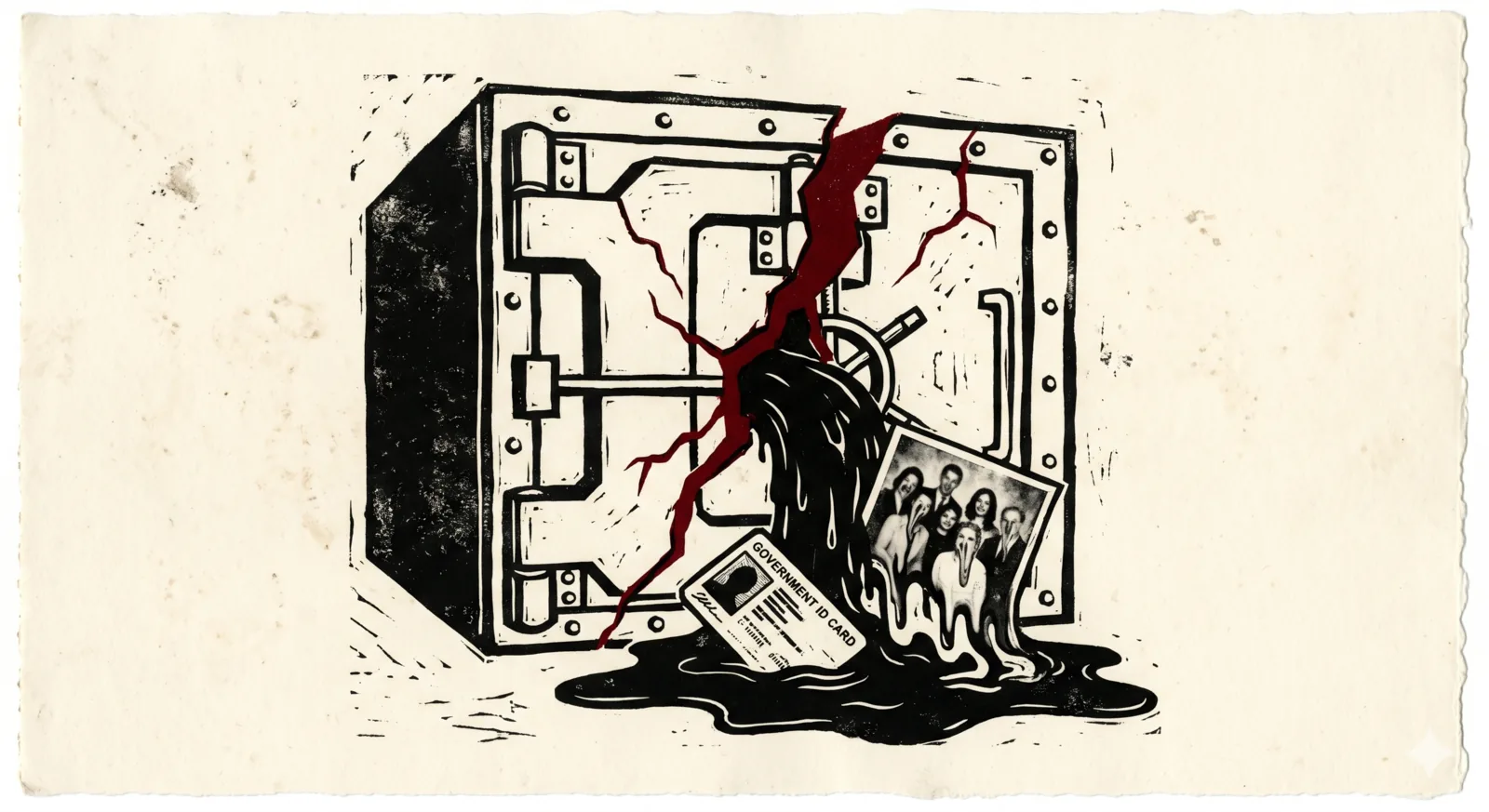
A Manifesto Says Refuse Face Scans Because You Can't Change Your Face (nevergivethemyourface.com)

The site separates age verification (a yes/no) from identity verification, and urges mass non-compliance to deny the schemes their needed cooperation. The flip: a commenter notes 50,000 departures out of 2 billion users is a rounding error, so the leverage simply isn't there.

He Spelled Out the PM's Phone Number, Then Masked Men Cut His Power (twitter.com)

The trigger was a post he titled "my two favorite numbers": a 10-digit and an 8-digit figure written out in letters, which turned out to be Danish PM Mette Frederiksen's social-security and phone number. Frame him as a privacy martyr and the raid looks like state revenge, especially given the same PM's push for warrantless medical-record access and chat-control rules.

But Danes who know him describe an ex-cop turned anarcho-capitalist who has bolted GPS trackers onto ministers' cars and doxed their children.

The Ayn Rand acolyte who ran the Fed for 20 years, dead at 100 (washingtonpost.com)

In 1996 he warned of "irrational exuberance" in the dotcom market; in 2008 he told Congress he was "shocked" that banks hadn't acted in their own rational self-interest. The man who coined the era's signature phrases also presided over the easy credit that critics blame for the crash that followed his exit.

Microsoft buys 20 years of gas power in a state drowning in cheap solar (chevron.com)

The plant sits where natural gas prices at the WaHa hub have gone negative, as low as -$9 per MCF, because there's nowhere to send it. Microsoft pledged to be carbon-negative by 2030, and just signed a two-decade contract to burn stranded fossil fuel at the wellhead instead.

Polymarket's viral big-win videos were staged, and the bets were fake (arstechnica.com)

The Wall Street Journal found the viral videos were produced as marketing, not documentation of genuine payouts. One commenter then downloaded a rival app and placed a real-money bet within five minutes of install, credit-card deposit and all, which is the part that should worry you more than the acting.

Canada Bets $100 Billion and 10 Reactors on a Nuclear Renaissance (cbc.ca)

Investment figures cited run near $100 billion, with Saskatchewan and Alberta's oil sands named as fresh industrial demand. "There is no credible plan to do that without nuclear energy," the strategy argues, listing assets few other countries can match.

Read the fine print and 2040 means start, not switch on — and a UK reactor announced in 2010 to run by 2019 is now hoping for 2030.

Mexico's $8,500 Government EV Tops Out at 31 Miles Per Hour (gizmodo.com)

Built under her six-year Plan México, the car targets a summer 2027 launch with 2,000 charging stations planned across Mexico City, the State of Mexico and Puebla, and domestic content rising from about 50% to 75% by 2030.

The instinct to judge it against US cars misses the target: Mexicans say its real rival is the motorcycle, and getting 100,000 riders off two wheels would cut accident costs more than it threatens Detroit.

NSF cuts core research to fund a venture program that can skip peer review (science.org)

Final FY2026 appropriations say no NSF directorate may be cut more than 5 percent below 2024 levels. The new program can hand awards to venture firms or limited partnerships created solely to receive them, and make follow-on awards without reviewing a new application.

A startup asked for SAT scores, and so, it turns out, does Epic (mrmarket.lol)

Hiring research now ranks structured interviews and work-sample tests above raw cognitive scores, with unstructured "chats" near the bottom. The likely real motive is fishing for raw, non-AI-assisted intelligence, now that every resume and cover letter has been polished by a chatbot.

New Fathers Show the Same Brain Pruning as First-Time Mothers (scientificamerican.com)

A 2014 study found heterosexual fathers, mothers, and gay primary-caregiver fathers all changed in the same "parental caregiving network." Paternal postnatal distress often surfaces as anger, irritability, or substance misuse rather than sadness — and arrives later than the maternal onset.

On the thread, men described the change without the lab language: one ex-forensics worker, long desensitized to abuse footage, found that after his child arrived he simply could no longer look.

A Critic Calls Every Smart-Glasses Model Ugly, Useless, and a Privacy Trap (manualdousuario.net)

The polemic's core claim is that there is no compelling use case beneath the "AI-powered" marketing, just a plain camera pointed at non-consenting strangers, with Tim Cook photographed in his Vision Pro exactly once as the proof.

Then a reader described pressing a button at the Vancouver aquarium and asking "what's that orange fish?" — and getting an answer — which is the use case the essay swore did not exist.

A Rust dev bets agents will retire Git, ships Oak, offers an e-ink display (oak.space)

Its trick is content-addressed lazy mounts: instead of describing each commit, you describe a whole session, and agents skip the clone entirely. The author has been building non-Git VCS since before the agent hype made it fashionable. But the launch shipped a reward gadget and zero benchmarks against Git, and at least one Git lover quietly agrees the incumbent is vulnerable anyway.

The best sync engine you don't manage runs in one Chromium-only browser (steveharrison.dev)

His demos, built with Claude, include a markdown notes app and a node-based video compositor, all editing real local files in-page. The trick is window.showDirectoryPicker(), which lets the user's own cloud-synced folder become the sync layer. The catch the post skips: all three editors of the draft spec are Google engineers, and Jake Archibald showed up to debunk the demo's scariest fear.

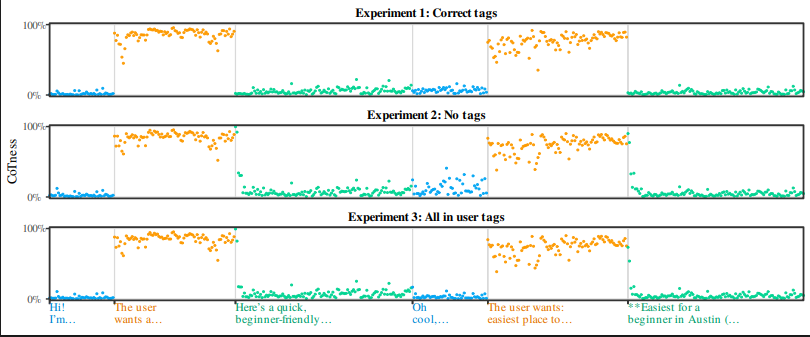
LLMs don't read role tags, they guess your role from writing style (role-confusion.github.io)

Identical text registers as the model's own reasoning even when it's tagged as user input, because the model infers role from surface style, not the tag. Swapping "The user" for "The request" cut attack effectiveness by 19 points. The unsettling part for one reader isn't the attack itself but persistent memory: a malicious instruction summarized into a note sheds its origin and comes back as the agent's own thought.